Old Moor – 23 Jan 2017

Helen and I decided to visit Old Moor today as it was one of those crisp, sunny January days. It was only about 4ºc according to the thermometer in the car but we had wrapped-up warmly and were prepared for it being cold.

Our first port of call on arrival at Old Moor was the Bird Garden. It was our first time visiting there this Winter and it was good to see many of the ‘usual suspects’ on the feeders once again. There were Long Tailed Tits, Blue Tits, Tree Sparrows, Great Tits and a couple of Robins flitting back and forth on the feeders whilst a lone Song Thrush explored the grassy verges, hunting for anything edible. A rather bold Magpie alighted on the rocks just in front of the hide and I took a few pics of it before it moved away. For me, the most important thing I’ve noticed when photographing Magpies in the past is that it can be difficult to get the eyes to show up in the image; black eyes against black feathers is not easy! However, given the close proximity of this bird, I was quite pleased with one or two of today’s shots; the eyes are visible!

Moving on to the Tree Sparrow farm next, and we saw a large variety of small birds here: Goldfinch, Greenfinch, Chaffinch, Reed Bunting, Great Tit, Blue Tit, Bullfinch, Blackbird, Magpie, Pheasant, Stock Dove and Collared Dove. I was hoping to see some Yellowhammer here today, but I understand from Old Moor’s blog that there haven’t been many(any??) at Old Moor so far this Winter. A single Brambling was reported here last week, but there have been no signs of quite a few other over-Winter visitors often seen here, including my favourites: Redwing, Redpoll and Siskin. Let’s hope some of these rather more exotic types get here before the Spring migration.

water-rail

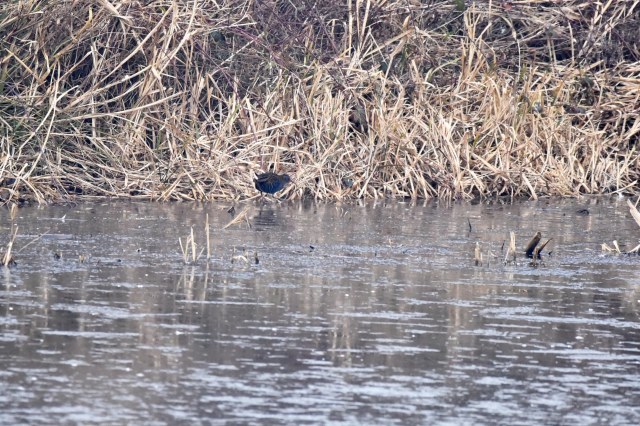
An elusive Water Rail at Wath Ings

The real star of the day, however, was a Water Rail that Helen and I saw up at Wath Ings. It’s always a real pleasure to see such a rare and elusive bird and it was completely unexpected today. This one was dabbling about at the water’s edge on the bank adjacent to the main mere. It was rather distant, but unmistakably a Water Rail. Between this bird and the Short Eared Owls we saw at Lindisfarne a couple of weeks ago, it feels like 2017 could be a really good birding year!

As we walked back down Green Lane we decided we’d earned ourselves a hot drink in the cafe. It’s a bit of a ritual for us to have a cup of hot chocolate following a Winter birding session, and I have to say it was very welcome today. Brrr!!

Bird count for the day – 40 species – a good showing for January!!

Posted in Uncategorized | Leave a comment

Lindisfarne – 05 Jan 2017

178 – Short Eared Owl

short-eared-owls

A pair of Short Eared Owls at Lindisfarne

On our way back to Sheffield following our stay in Edinburgh for the New Year celebrations, Helen and I decided to spend a few days in our beloved Northumberland.

Today we visited Lindisfarne, one of our top photographic spots, both for the wonderful landscape possibilities, but also for the birds.

The causeway which joins Lindisfarne to the mainland is a natural haven for all manner of birds; Curlew, Little Egret, Redshank, Godwit, Turnstone, Eider Duck and gulls of all varieties are usually to be found there in good numbers. As the causeway floods every day, the mud is constantly being replenished with tasty invertebrates and other morsels which bring in the hungry birds.

Today, however, it was something rather different and altogether special which caused us to pull-up abruptly midway across the causeway; as we were driving along a Short Eared Owl suddenly swept low across the road right in front of us.

short-eared-owl

A Short Eared Owl

Grabbing our cameras, Helen and I spent the next twenty minutes or so watching not one, but a pair of SEOs swooping back and forth above the dunes doing mock food-passes just as we’ve seen with other birds of prey including Ospreys and Marsh Harriers. This was our first SEO sighting and it was fascinating to watch as the birds wheeled back and forth over the dunes.

After we’d eventually lost sight of the birds we carried on to the main car park on the island. We walked down to the bay area and photographed a number of other interesting birds including: Bar Tailed Godwit, Curlew, Oystercatcher and Ringed Plover. Whilst all of those birds were a treat to observe, it was the owls that were the definite stars of the day!

Posted in Uncategorized | 1 Comment

Frampton Marsh – 04 Dec 2016

Helen and I visited Frampton Marsh today – almost two years to the day since our first visit there back in December 2014. Our outstanding memory of that occasion was the sight of thousands upon thousands of Brent Geese flying in directly over our heads, from the Wash and onto the reserve. The sight was reminiscent of old Pathe newsreels of ‘thousand bomber raids’ from the Second World War. On our way down in the car we couldn’t help but speculate on whether we’d witness a repeat performance today; with a clear blue sky and lots of sunshine around it was definitely a distinct possibility.

Our first port of call on arrival was the Visitors’Center. It’s always good to check the latest sightings information and to discover where the current birding ‘hotspots’ are on any reserve.
ruff

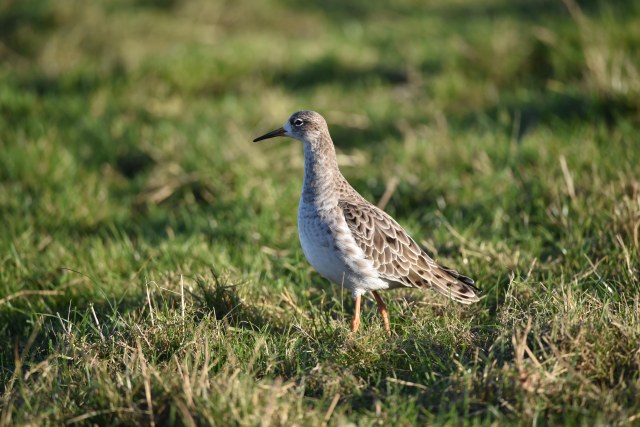
A very confiding Ruff outside the 360 Hide

Having checked the board and seen where the ‘good stuff’ had recently been seen, we elected to go straight down the main path in the direction of the seawall which overlooks the saltmarsh. Most of our best bird photographs from Frampton have been taken down that end of the reserve in any case.

As we walked down the path we saw that there were waterfowl absolutely everywhere on the reserve today; Wigeon and Teal easily numbered in the thousands. There were probably as many Brent Geese either flying in small flocks overhead or browsing on the grasslands. Huge numbers of Lapwing and Golden Plover were also showing well in the Wintery sunshine. Waders were few and far between, today, however; a few Redshank and one lone Ruff were the only waders we saw.

Down at the Seawall, overlooking the Saltmarsh and out towards the Wash, it was only Brent Geese that were evident today. A number of Hen and Marsh Harriers had been reported here recently, but there were no signs of such exotics today.

Next we walked back up the main path in the direction of the 360° Hide. As we walked back up the path we noticed three drake Pintail feeding on one of the ponds near the path. I really love the Pintail as it’s such an attractive bird, and not that common really. I was also very fortunate to grab a couple of frames of a cheeky Wren darting between clumps of reeds on the way up the path.

The sun was low towards the West by the time we got to the 360° Hide, so most of our sightings were looking mainly Eastwards. Again, large numbers of wildfowl dominated the view. However, and this was my highlight of the day, a beautiful (lone) Ruff was grazing on the grass just in front of the hide, and very close in to us. It seemed totally unconcerned about the group of humans oggling it and pointing huge camera lenses in its direction as it browsed the grass, illuminated by beautiful sunshine. Helen and I took a good many shots of this gorgeous bird over the next ten-fifteen minutes.(I was very pleased with my results when I saw them at home later-on).

We looked in at the Reedbed Hide next. We’d spotted a Goldeneye here on the way down the path from the Visitors’ Center and we’d seen on the noticeboard that a first-Winter Scaup had been sighted here earlier in the day. Sadly, however, there was no sign of either bird whilst we were in attendance.

Not to be daunted, we next decided to walk right around the Reedbed Trail. On a previous visit we took some photos of a lovely Corn Bunting here and I’d noted in the Visitors’ Center that a number of Bearded Tits had been reported here lately. Mostly it was their ‘pinging’ that had been heard rather than them being sighted, but you never know…

As we walked along the Reedbed Trail we noticed a large flock of Golden Plover sitting in a field adjacent to the reserve. Also, a Stonechat was flitting about and gave us some really good views; (Stonechats are very prone to sitting atop bushes rather than hiding halfway down in the denser foliage!). No Bearded Tits were heard, let alone seen, but towards the end of the trail, and as were approaching the Visitors’ Centre again, I sighted a Fieldfare at the top of a nearby bush. I wasn’t able to get any good shots of it, but as this was only my second-ever FieldFare sighting, I was very pleased.

As we returned to the car after a well-earned cup of hot chocolate, I took some photos of a Kestrel hovering near the car park; a nice bird to finish on, I thought!

So, no ‘thousand bomber’ Brent Geese flyovers, and no Bearded Tits, but all-in-all we were very pleased with our haul of birds for the day. The Fieldfare, Stonechat, Pintails and Goldeneye were all special-enough  to make us feel that we’d had a very succesful day’s birding! The total number of species I recorded on the day was 35.
Posted in Uncategorized | Leave a comment

Old Moor – 15 Nov 2016

I made another visit to Old Moor today. The days have grown quite short now and there isn’t that much sunshine around. It was a rather gloomy, overcast day in the Dearne Valley when I arrived, but it was reasonably warm at around 10-15°c, which was very pleasant. ‘Big coat weather’ is just around the corner now, but a thin one was all that was required today.

I walked up Green Lane, stopping briefly at the Tree Sparrow Farm on the way. A number of changes have taken place here again, showing that Old Moor is never complacent; lots and lots of improvements have been undertaken in the last few months at various parts of the reserve. A new viewing screen has been installed, along with new feeders, at the Visitors’ Centre side of the viewing area at the Tree Sparrow Farm. It’ll be interesting to see what that brings in the days and months to come.

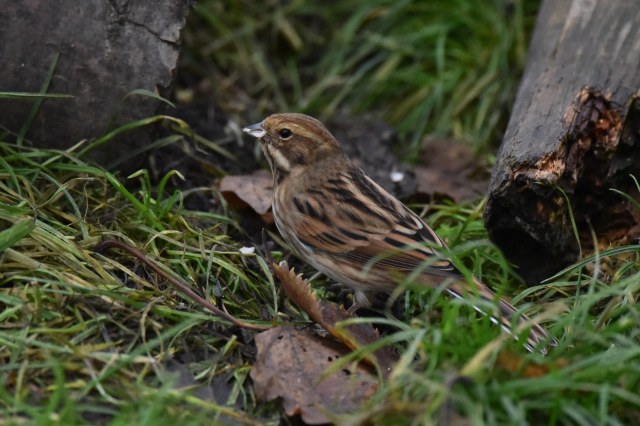
reed-bunting

A female Reed Bunting at the Tree Sparrow Farm

A brief stint in the Family Hide revealed literally thousands of assorted waterfowl, a few Cormorants and gulls, but nothing more exciting than that.

The other big improvement at Old Moor, which I mentioned in my last blog entry, is the revamped Field Pool East Hide and the mere over which it looks. This is a much better experience now. I sat in this hide for a good forty minutes or so today, watching a flock of Dunlin, a couple of Redshank, a pair of Green Sandpiper, a juvenile Pied Wagtail and a Meadow Pipit. That’s by far the biggest haul of birds I’ve seen from that one hide before.

Moving up to Wath Ings didn’t reveal much more; no Golden Plover today – where have they all gone??

As I walked back down Green Lane I noticed the Robins are getting ‘more friendly’ again. They’ll be begging for food and literally eating out of visitors’ hands again very soon now. Helen and I had that privilege at Leighton Moss right at the start of this year, and it’s a magical experience to be physically in contact with the birds, albeit for the briefest of moments. I must buy a bag of bird feed to have in my coat pocket for future birding trips!

Posted in Uncategorized | Leave a comment

Old Moor – 25 Oct 2016

I visited Old Moor today for the first time in over a month. Apart from taking photos of any birds around the reserve I wanted to see all the alterations which have been undertaken recently.

It was quite a sunny afternoon, and being half-term, Old Moor was rather busy with lots of excited kids around the reserve.

I decided to go straight up Green Lane first. An obliging Jack Snipe has been wowing the crowds from the Family Hide over the last few days and I hoped to be in with a chance of seeing it too. Alas, there was no sign of it as far as I could see. I did see a Kingfisher whizz past though, on its way to some other location.

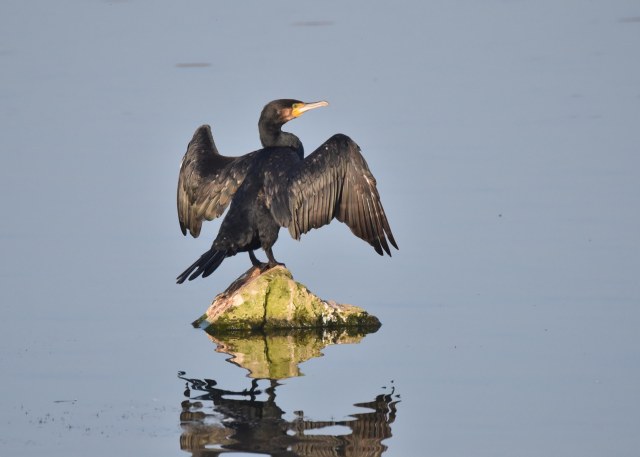
cormorant

A Cormorant dries its wings near the Family Hide

I next went all the way up to Wath Ings Hide at the end of the lane. Last week some major alterations were undertaken here to extend the spit of land in front of the hide to completely separate the lake into two distinct areas which can have the water levels controlled independently. It now looks quite different and I look forward to seeing how the changes affect the birds over time.

As far as birds at Wath Ings were concerned, there were hundreds and hundreds of Golden Plovers on the mudflats today, all looking great in the sunshine. A smaller number of Lapwings were intermingled with the Plovers and there were a smattering of ‘usual suspect’ ducks around too. At one point a huge number of the Plovers all flew up together, did a lazy circuit around the lake and then settled again, back where they had been before. It’s quite a sight to watch a huge flock of birds all acting as one, and it always provides great photo opportunities.

I next had a look at the recently altered Field Pool East Hide. It has been rotated through 45° or so, and is now much better placed to look out on the resculpted landscape of the mere. It should provide excellent views of waders from now on. From here today I saw a Little Egret fishing in one of the pools and a lone Linnet was foraging on the mud.

From the Wader Scrape Hide there were huge numbers of water fowl showing well in the Autumn sunshine. Wigeon, Mallard, Little Grebe and Gadwall were all dabbling near the margins of the lake, and a large group of Cormorant had taken up residence in their usual location on what I refer to as ‘Cormorant Island’. Quite a bit of resculpting work has been undertaken on the islands to the right of the hide here too. Once again it will be interesting to see how that changes the dynamics of the location as far as the birds are concerned.

I had a brief stop in Field Pool West Hide on my way back down Green Lane, but all was fairly quiet here today. There were no signs of any Kingfishers where I’ve previously had great sightings. A group of four Canada Geese were patrolling the water and a few assorted ducks were roosting heads-down along the far-bank margins.

By this time it was getting a bit gloomy so I decided against visiting the Bittern and Reedbed Hides for today. A brief look in at the Bird Garden told me that bird numbers there are beginning to grow again as Autumn takes hold. The hide will soon once again be thronged with birders hoping to see Siskins, Redpolls, Great Spotted Woodpeckers, Willow Tits and Bramblings, all of which are regular over-Winter visitors to the bird feeders set up here.

I made a mental note to also start checking the Tree Sparrow Farm area again on my subsequent trips to Old Moor. Redwings and Fieldfares will soon be around there again, I hope, and I’ll never forget my fantastic Waxwing sighting from here last year.

A good few changes at Old Moor then; it’s a very well managed and maintained reserve which goes from strength to strength. I’m so glad to have it as my local RSPB reserve.

Posted in Uncategorized | Leave a comment

Frampton Marsh – 15 Oct 2016

Yesterday was my first birding trip in about three weeks. Helen and I went to Frampton Marsh because, amongst other reasons, the weather forecast was most settled for there yesterday. It’ll soon be ‘big coats weather’ again now so it was nice to enjoy a fairly warm day (for mid-October!)

When we reached the Visitors’ Centre we discovered that a number of really interesting bird species had been seen on the reserve in recent days; a juvenile Long-Billed Dowitcher had been making regular appearances near the 360° Hide for one. A Green Woodpecker had been sighted early yesterday morning along the hedgerow path along with a Brambling. Also, a number of Bearded-Tits had been seen in the reeds down near the sea-wall. All in all, a plethora of opportunities for good bird sightings!

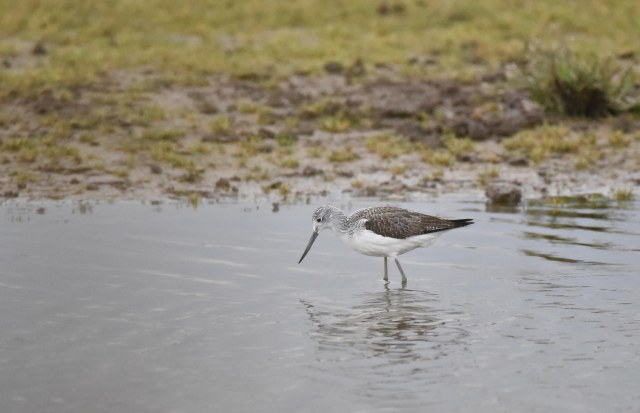
greenshank

A lovely Greenshank

Helen had never been along the hedgerow path which runs along the top of the car-park in a roughly East-west direction, so we decided to try  there first. A Green Woodpecker is high on my ‘deirables hit-list’ now, and I was very much hoping to see the one which had been reported here earlier that morning.

Sadly, and although we could hear dozens of birds as they flit (flitted?) back and forth in the hedgerows, none were showing today. We had occasional, tantalizing glimpses, but no birds wanted to be photographed today. And, although I scoured the field from the open space viewing point halfway along the path, there was no sign of any Woodpeckers, Green or otherwise!

little-egret

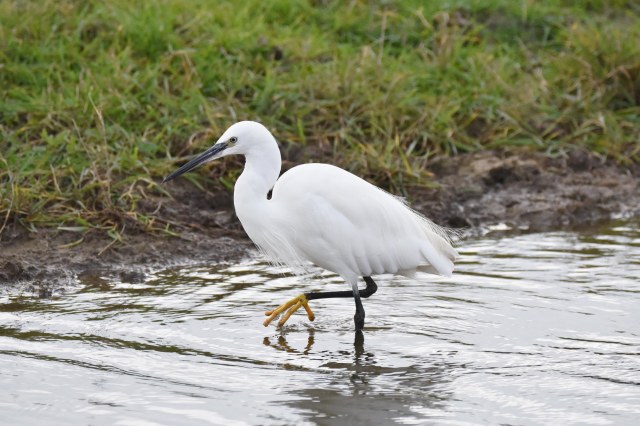
A Little Egret allowing a very close audience!

Next we went straight down the path towards the sea-wall. Most of our best bird sightings have taken place down here on previous visits to Frampton. Water levels had fallen substantially since our last visit, and few birds were around for us to see. One notabble exception, however, was a beautiful Greenshank which we got some lovely close-up shots of before it flew off across the marsh.

On reaching the sea-wall, we scoured the area we could see from our high vantage point. A Curlew, a lone Redshank and a distant group of Wigeon were about all we could see today. There were no signs today of the ‘squadrons’ of Brent Geese we witnessed flying overhead on our first visit to this spot; it must be a bit too early for them to take up their Winter residence at Frampton just yet.

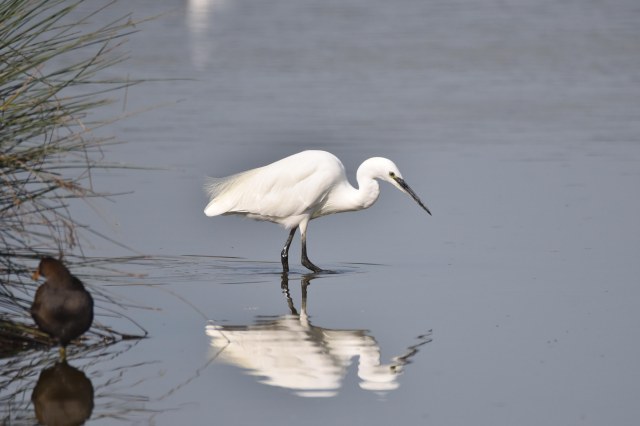
As we walked back up the path towards the car-park we took some great photos of a Little Egret which allowed us our closest-ever viewing of an Egret. I had to zoom my lens right in to its shortest focal length in order to get the entire bird in the frame of my camera – now that is close!

Not our best day at Frampton then, but still a pleasure to visit the reserve and enjoy the fresh air and sunshine.

Posted in Uncategorized | Leave a comment

Rainham Marshes – 26 Sep 2016

Another day and another new reserve: this time it was the RSPB’s reserve at Rainham Marshes in Essex.

I only had only about an hour to spare in the Essex area today, but was glad to have the opportunity to visit this reserve which is bounded on its Southern edge by the River Thames as it flows out of London.

It was not the best of days, weather-wise, but it was still reasonably warm despite being almost the end of September. I was quite comfortable walking around the reserve without a coat. With the days noticeably shortening and the temperatures falling generally, that won’t last much longer now though, alas.

Red Admiral

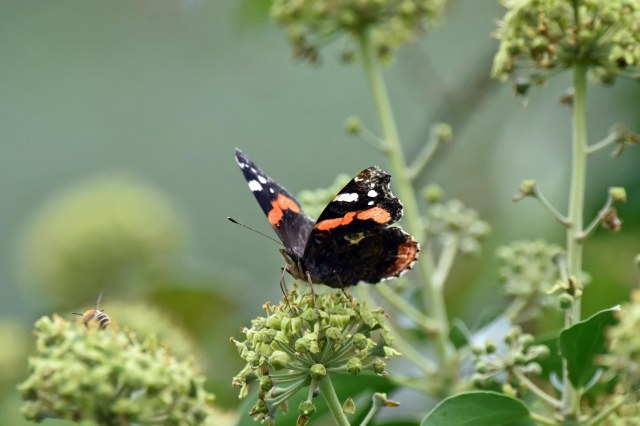
A Red Admiral Butterfly at Rainham Marshes

As I started along the circular trail from the visitor’s centre I could hear loads of small birds singing in the shrubbery. I couldn’t see many of them, unfortunately, because of the density and height of the foliage. However, I could identify a few of the birds from their songs, and heard Robins, Chaffinches, either Great or Blue Tits, and several Cettis Warblers which were singing their hearts out as I proceeded along the paths in the direction of the Ken Barratt Hide.

Unfortunately, when I arrived at the hide I discovered that there was currently no water in front of it. Much of the reserve was bone dry, and all was still and quiet. Suddenly a heron flew over the space in front of me, giving me my first photographic opportunity of the day.

I didn’t stay in the hide long and soon continued along the path until I reached Aveley Pools. This turned out to be the only body of standing water on the reserve just now, and subsequently the only place with numerous birds. It was here that I saw about a dozen Little Egrets accompanied by one Great White Egret. Other birds present were Greylag and Canada Geese, a few Mute Swans, numerous Teal, a Cormorant, a few Herons and an assortment of gulls. Sadly, most of these birds were rather distant however, and with a viewing platform rather than a hide, it wasn’t easy to take photographs with heavy equipment being hand-held.

There were three other birders present at the viewpoint overlooking Aveley Pools. It was nice to exchange a few words with them about what was currently present on-site. Two of these gentlemen had spotting-scopes set-up on tripods and were, therefore, much better-able than I was to identify the smaller, more-distant birds at the far end of the pools. Apparently a Curlew Sandpiper was also present, but I had to take their word for it!

Time was marching-on, as always, and I realised that I needed to retrace my steps back towards the Visitor’s Centre and to the car. On the way back I managed to capture a half-decent image of a Robin singing in a tree, and another reasonably-sharp shot of a mid-flight Starling.

Not a brilliant experience today then for my first (and brief) visit to Rainham Marshes, but I could easily see that the reserve has huge birding-potential when the marshes are all flooded, and especially during migration periods and in the nesting season.

I hope my next vist to this London-based reserve, therefore, is a bit more productive.

Posted in Uncategorized | Leave a comment

Old Moor – 18 Sep 2016

Today was my 80th visit to Old Moor.

It was a warm and sunny Sunday afternoon. The reserve was quite busy and there were several families with eager children trying their hand at pond-dipping as I walked along Green Lane in the direction of Wath Ings. Last time I was here Lapwing numbers were beginning to climb and I saw only a single, solitary Golden Plover amongst them.

From the Recent Sightings blog on the Old Moor website I knew the wader numbers on Wath Ings had begun to grow substantially, and I knew there was always the chance of seeing something a bit special hidden in amongst the large numbers that built-up on the mudflats at Wath Ings at this time of year.

On arrival at Wath Ings Hide I knew immediately that I had a challenge on my hands; there were literally hundreds and hundreds of birds standing on the mud. As expected, they were mostly Lapwings, but there were at least 60-70 Golden Plovers intermingled amongst them. As I studied the mixed flock closely I could also identify a few Dunlin, a couple of Ruff, a Redshank and a Greenshank. A Pied Wagtail was on the mud just in front of the hide, and the ubiquitous and ever-present Starlings, Coots and Moorhens were also there enjoying the September sunshine. Quite a good selection of birds then.

As I studied the huge flock of birds, along with about a dozen or so other birders present in the hide, all at once the entire collection of birds leapt into the air and wheeled-about overhead for a minute or so before landing once more on the mud. I’ve seen these large flocks of mixed birds do this a good many times before; it’s quite spectacular to watch them as they wheel about in synchronicity, catching the light on their wings as they fly in tight turns. Identifying the birds on the photographs later-on allows you to see the clear differences between the species. On the ground Lapwings and Golden Plover look to be similar in size, but in the air the Lapwing’s wing-span is much greater than that of the GP, for instance.

After half an hour or so in Wath Ings I walked down to the Wader Scrape to see what was going on there – not much as it happens! There were about a dozen Little Egrets on the water along with a collection of assorted ducks and geese, but nothing very exciting. I did, however spot a quite distant Wigeon – the first I’ve seen in quite a while. Their numbers will soon dramtaically increase again now though, as Autumn sets in with a vengeance!

It was a similar story in the Field Pool West Hide – quiet, with only a few distant Greylag Geese and one or two ducks. I gave it a little while because I’ve previously had spectacular Kingfisher sightings here. One day last year, about four of us keen photographers, had a great time photographing a Kingfisher repeatedly hovering above the water here and then plunginging beneath the surface as it hunted its fishy-prey. No sign today though, alas.

My last call of the day was to the Bittern Hide where I had great success with a Kingfisher on my last visit to Old Moor. Clearly, that was what all the birders gathered in the hide today were hoping for too. I sat there just over an hour waiting for the tell-tale sign of flashing blue signifying the arrival of the bird we all wanted to see. Eventually, a Kingfisher did come, but it didn’t perch anywhere nearly as close as it had done last week. I managed one or two images – enough to identify it as a male bird, and possibly the very same one I had photographed last week. It was still a pleasure to see a Kingfisher again – even at a distance.

cormorant

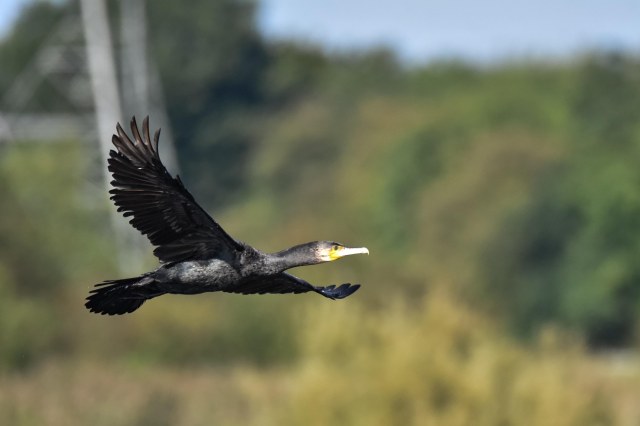
A Cormorant fying near the Bittern Hide

The only other incident of note whilst I was sitting in the Bittern Hide was a Heron struggling to swallow a huge perch it had caught. The fish must have weighed at least a pound – a substantial meal for a Heron. About a minute after having successfully swallowed its fish, the greedy bird gobbled down a frog as well!

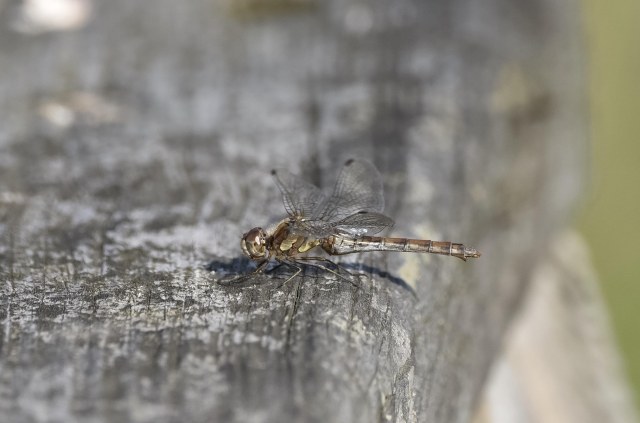
On the way back towards the Visitor Centre and car park, I managed to capture a rather nice image of a female Common Darter Dragonfly. There are loads of dragonflies around at the moment, but it suddenly occurred to me that I can’t remember having seen a single Damselfly this Summer. Strange!!

common-darter-dragonfly-female

A Common Darter Dragonfly (female)

Thanks Old Moor. What will my 81st visit there bring I wonder?

Posted in Uncategorized | Leave a comment

Adwick Washlands – 13 Sep 2016

On what turned-out to be the hottest day of the year (yes, in mid-September!) I paid a short visit to Adwick Washlands today

I subscribe to Birdguides which is an online service for alerting birders to rare bird-sightings nationwide. I check the app on my phone periodically to see what’s been reported both locally and further afield.

One of my current ‘bogey birds’ is the Wood Sandpiper; I’ve never even seen one and given that waders are amongst my favourite birds, I’m very keen to photograph one. A Wood Sandpiper had been reported via Birguides at Old Moor early this morning, with another sighting (of probably the same bird) at Adwick (some 2-3 miles away) this lunchtime, so I decided to go to try to see it at Adwick.

little-egret

A Little Egret fishing for lunch

It was very hot when I arrived at Lowfield Road in Bolton Upon Dearne (some 30°c according to my car’s thermometer), and so I decided I wouldn’t walk any further than I needed to. As I walked down the track which runs through the reserve I scoured the first lagoon eagerly. Last year I got some great close-ups of a Pectoral Sandpiper here, and have seen lots of other good birds here on previous visits.

Unfortunately, today there was nothing here other than a few very distant Mallards, so I decided to carry-on walking down to the second lagoon. Enroute, I heard lots of small birds in the trees and saw a glorious Goldfinch which had completed its moult and was now looking resplendent with its multi-coloured plumage all looking fresh and pristine.

As I approached the second lagoon I could see there were lots of birds present. It turned-out to be mostly Lesser Black Backed Gulls with a few Black Headed Gulls mixed-in with them. I did also see a couple of Cormorants sunning themselves and a large group of Lapwings standing, snoozing in the shallows. The only really good sighting I got here was of a Little Egret hunting near the edge of the water at my side of the lagoon. Sadly, once again there were no exciting waders present.

That left me with one more location to try; up by  the Central Viewing Point. Again, I’ve had good sightings up here in the past, but there was nothing much present here today either; perhaps it was just too hot for the birds! There was one very distant Green Sandpiper visible from the Central Viewing Point, but that was about it!

I made my way back to the car feeling very hot and in need of a cold drink.

Imagine my annoyance when I checked the Birdguides app on my phone back home and discovered that the Wood Sandpiper had returned to Old Moor around about the time I had arrived at Adwick! Grrr!!

Posted in Uncategorized | Leave a comment

Skua & Shearwater Cruise – Bridlington – 10 Sep 2016

177 – Arctic Skua

arctic-skua

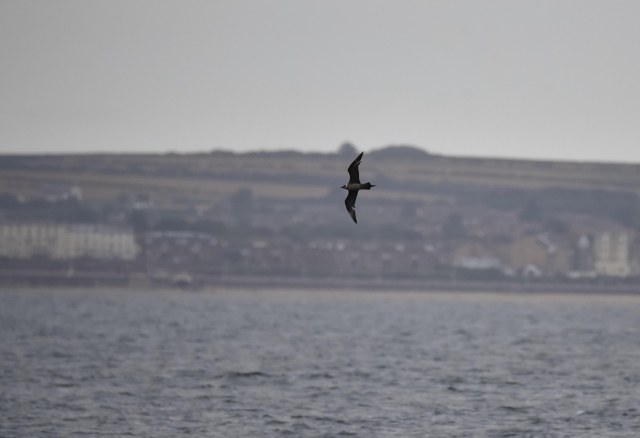
Arctic Skua off the Bridlington Coast

Another new birding adventure for Helen and me today – The RSPB Skua and Shearwater Birding Cruise on the Yorkshire Belle from Bridlington Harbour.

The cruise runs in September each year to coincide with the Autumn migration. Leaving the harbour at 9am, the cruise lasts around three and a half hours and is always heavily-booked.

This was our fourth attempt to get on the cruise; our previous attempts had been thwarted by bad weather causing the event to be cancelled. On one previous occasion we’d even booked-into a Bridlington B&B and stayed overnight only for the trip to be cancelled on us.

Consequently, this time we decided to get up early and drive straight to Bridlington from home. It was something of a shock getting up at 5.45am, but we managed it like a military operation and were on the road by 6am. The drive to Bridlington from Sheffield is about two hours and were comfortably there for about 8am. A large number of keen-looking birders assembled around us on the harbour and we set-off promptly at 9am as scheduled.

I mentioned previously that the weather plays a major role in the success of this cruise. Helen and I had been watching the (near) constantly-changing forecasts for today over the last few days. Most forecasts had predicted heavy rain. Well, it was certainly a grey, non-descript sky above us, but thankfully the rain managed to hold-off whilst we were at sea. Phew! No repeat of our drenching enroute to the aborted Staple Island landing we experienced a few weeks ago!

No, the problem today wasn’t the weather, but rather the distinct lack of seabirds! For what was billed as a Skua & Shearwater Cruise, we saw only one very distant Arctic Skua as we were returning to harbour (early because of some undisclosed on-board medical emergency!). Otherwise, we saw more juvenile Herring Gulls than anyone would every want to see in an entire lifetime(!), some Gannets, a couple of Guillemots and some Cormorants. Only the Herring Gulls came close to the boat, in response to ‘chum’ being thrown off the back of the boat.

What a shame! Obviously it’s no-one’s fault, as the presence (or lack thereof) of any birds is clearly beyong anyone’s control, but this episode serves to illustrate what Birding can be like – totally unpredictable; sometimes very exciting and sometimes a bit disappointing. When all’s said and done, however, Helen and I still had an adventure of sorts. We enjoyed our day out and being at sea on the boat was very enjoyable.

Would we go on this trip again despite today’s lack of birds? Absolutely yes!

Posted in Uncategorized | Leave a comment