It’s about three and a half years since my last post on this birding blog; a long time by anybody’s measure. There are various reasons for the long hiatus, not-surprisingly, Covid being the biggest. Lockdowns put an end to my birding trips at a stroke, and like the rest of the birder-population I had to make do with bird-watching in my garden instead. Covid is still around, of course, but it’s not the global pandemic it once was, and although restrictions on movement, travel and social-gatherings are now a thing of the past (and have been for some time now), I’ve had to overcome a certain level of personal inertia and get myself back into the birding frame of mind!
The other main reason for recommitting myself to my birding trips is that my wife Helen and I have recently traded-in our old Nikon DSLR cameras and we now share a shiny new Nikon Z5 mirrorless camera. We bought two lenses with the kit: a Nikkor 24-70mm standard zoom and a Tamron 70-300mm telephoto zoom. The camera is brilliant and much lighter than either of the two older bodies, with a lot of ‘up-to-date’ features like touch-screen menus etc. The two lenses are also excellent, even if the Tamron is a bit too short for close-up bird photography. I previously used a Nikon D750 and a Sigma 150-600mm lens. The combination was very heavy to lug around, but I must confess that I miss the long focal length!
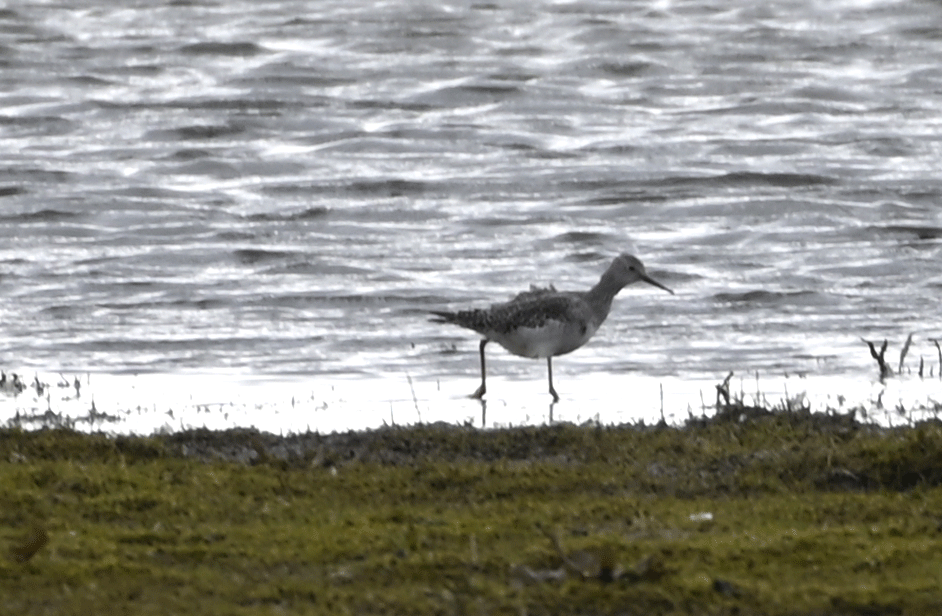
I was desperate to get out and try the new camera, and chose to visit my old favourite reserve at RSPB Frampton Marsh near Boston in Lincolnshire today. I’d been watching the daily recent-sightings reports online for a number of reserves over the last few days whilst deciding where to visit, and was aware that a Lesser Yellowlegs had been in residence at Frampton for an incredible 162 days so far! This extremely rare American visitor to the UK is regularly to be found in the field adjacent to the visitors’ centre car park and, unbelievably, it was almost the very first bird I saw today on my arrival! It was exactly where it was reported to be (a knot of fellow-birders all training their binoculars and spotting-scopes in the same direction is always an obvious sign of a good sighting!) and I quickly took a couple of shots of the bird, albeit from quite far away.
My previous (and only other) sighting of a Lesser Yellowlegs was at RSPB Titchwell Marsh just over on the other side of The Wash back in July 2018. On that occasion I was able to get much closer to the bird which was showing beautifully and in excellent light, allowing me to capture multiple high-quality images of this rarity, (one of which can be viewed on my blog entry for that day). Not so today, alas, on a dull day and shooting against the light so that the bird was almost in silhouette.
Given that this is an extremely rare bird to find in the UK, (probably blown off-course by bad weather during migration), I briefly considered whether there was any chance that this might just be the very same bird? It wasn’t impossible, I reasoned, especially given that Titchwell Marsh is only about 50 miles away by road – and a good deal less if you’re a bird flying in a straight line over The Wash! However, nearly six years? After about a minute I dismissed the notion as extremely unlikely, to say the least. Reading online later on I found a statement on an RSPB website which stated that, ‘…only a handful of these birds turn-up in the UK each year’. It is curious though, that these two examples turned-up on reserves in relatively close proximity.
Despite the BBC forecast assuring me that the weather would be mild at Frampton today, the sky was blanketed by heavy grey clouds and a cold wind was blowing. Given the weather conditions, I only stayed on the reserve about an hour in total, during which time I walked down as far as the sea wall where the reserve meets the salt-marsh that extends out to The Wash.
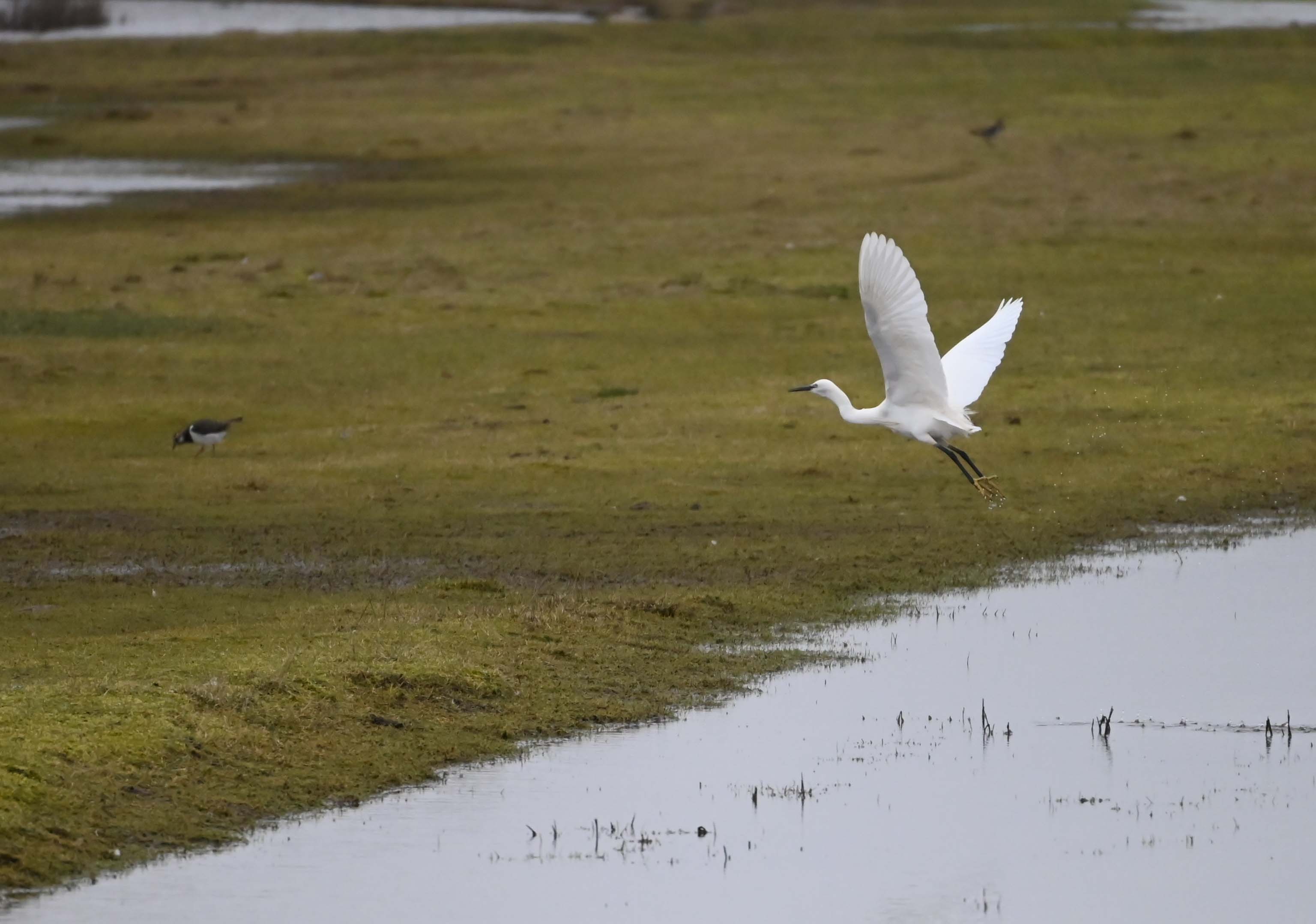
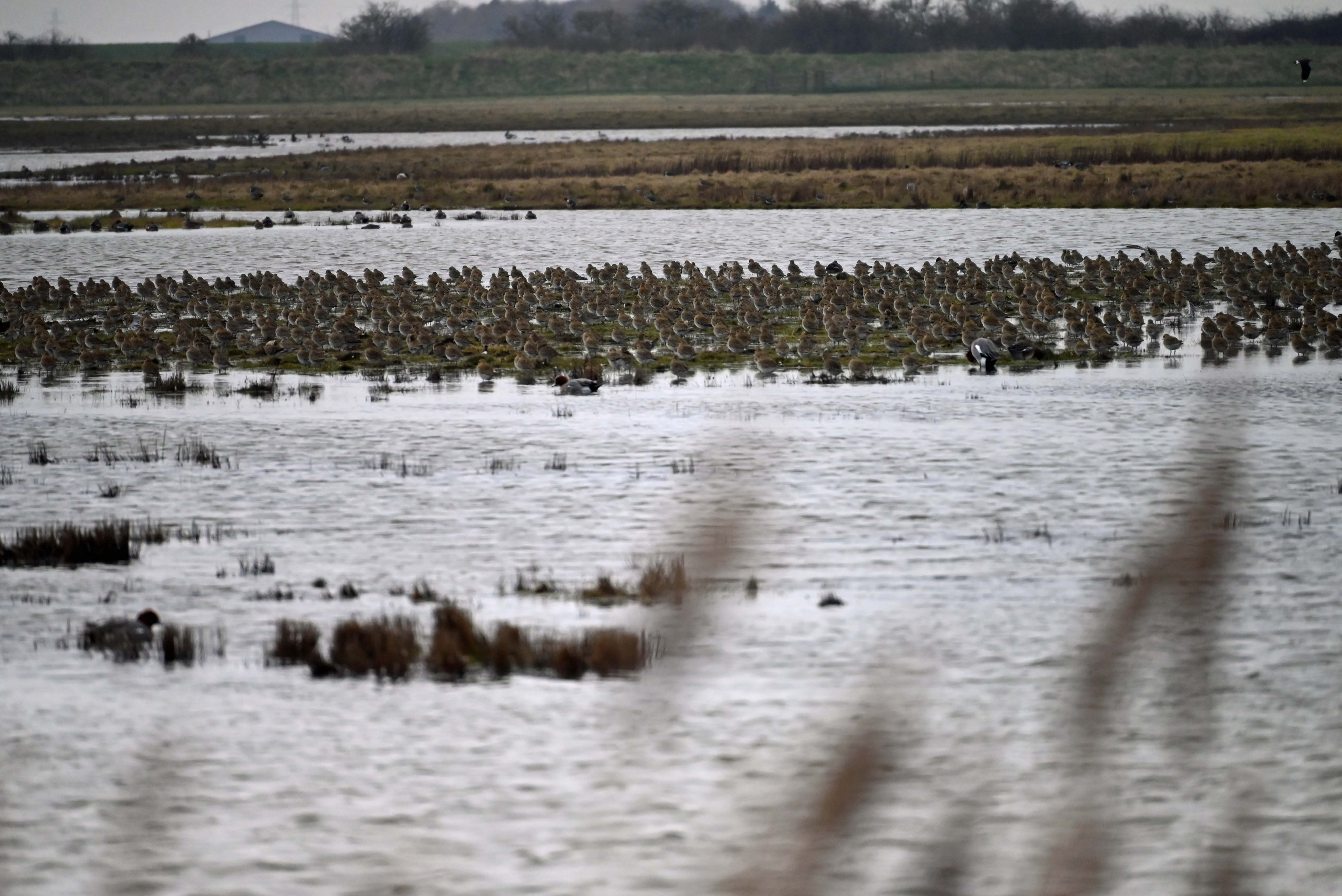
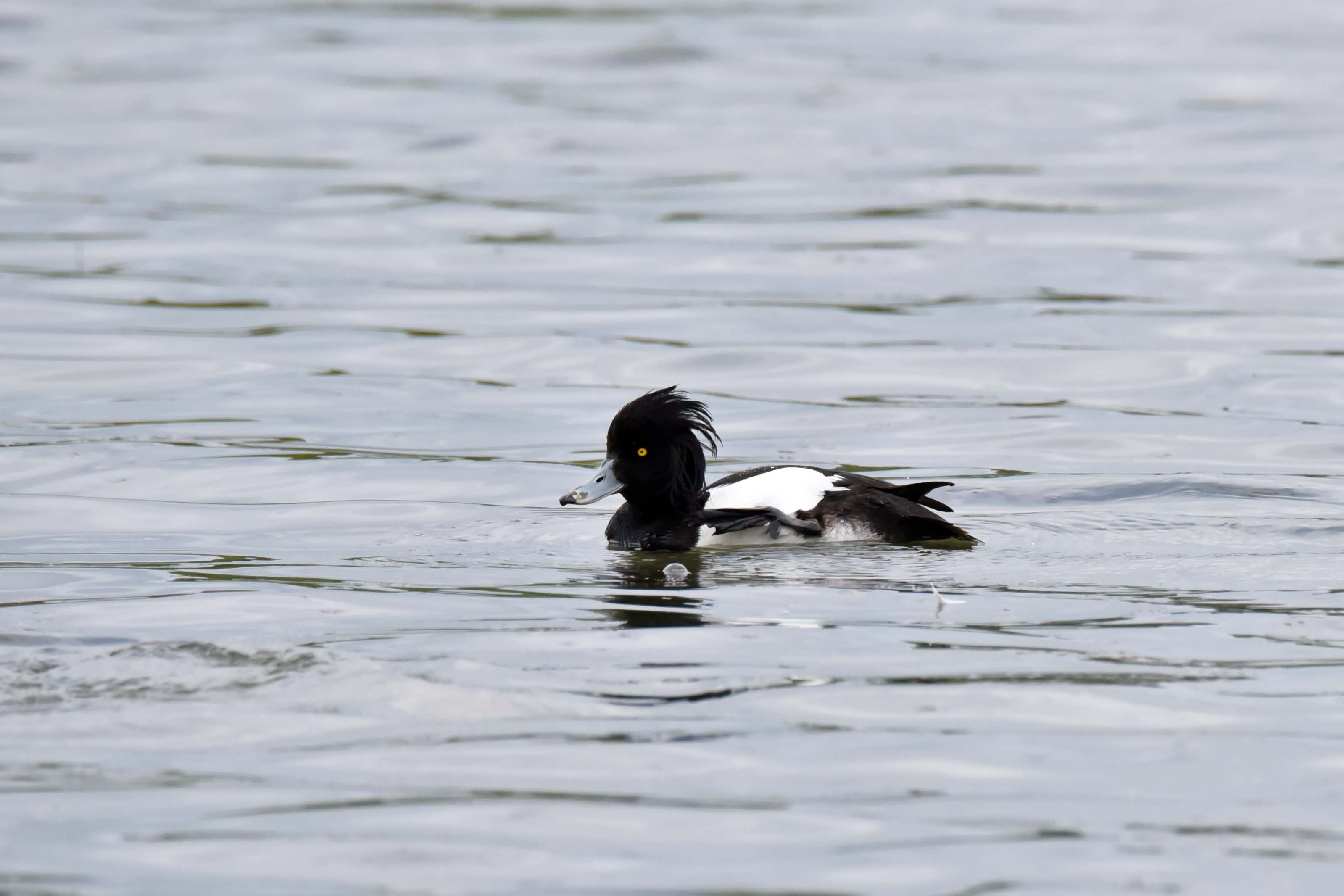
There were numerous different bird species present on either side of the path on the way down towards the sea wall; hundreds of Wigeon, but I also identified: Little Egret, Brent Geese, Tufted Duck, Shelduck, Ruff, Lapwing, Black-Tailed Godwit, Mute Swan and Dunlin. But I was quite awed by a simply enormous flock of Golden Plover located on one of the islands in the mere, the combined ‘pinging’ of which I could hear long before I saw them! Yesterday’s official sightings blog reported that there were approximately 9000 of them in total, and I have no reason to dispute that count! Unfortunately, despite their vast numbers, they were too distant to resolve clearly with the new Tamron lens, (as you can tell from my image below!). I really must look into finding a longer lens for my bird photography again!
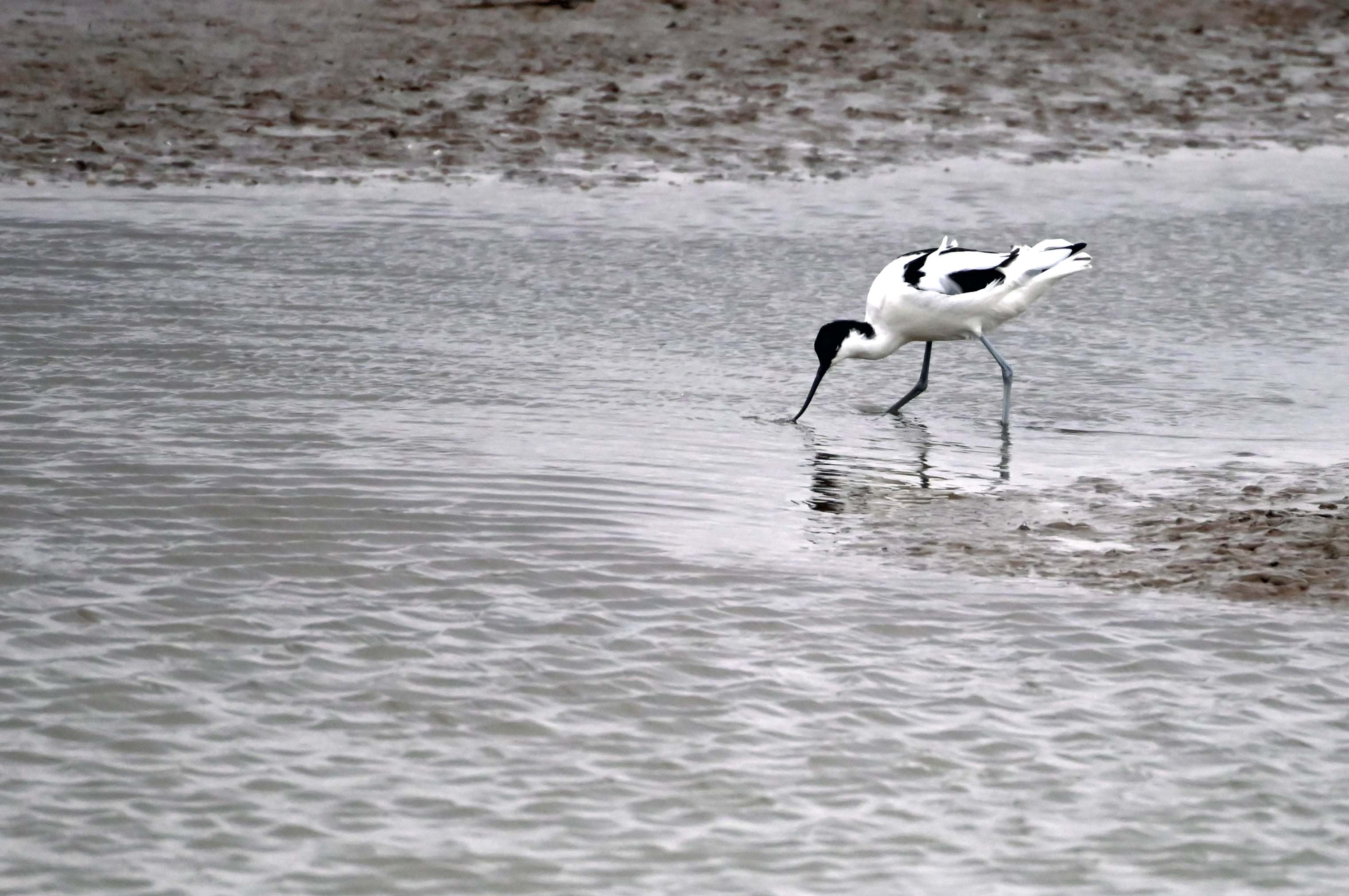
Walking back up from the sea wall end of the reserve, I decided to make my way to the ‘360 hide’, (a great favourite of mine), which almost delivers on it’s name and provides an excellent panoramic view of a vast swathe of the reserve with water almost completely surrounding the hide. It was a relief to get out of the cold wind and sit comfortably in the hide with a number of other birders. Here I photographed a Black-Tailed Godwit and a couple of Avocet which were feeding quite close to the hide.
As I made my way back up towards the Visitor Centre, various flocks of birds flew overhead, Greylag Geese, Brent Geese, Lapwing and even more Golden Plover.
I later discovered that another rare American visitor, a Green Winged Teal had also been recorded on-site today, but in an area of the reserve I didn’t get to during today’s brief visit (Frampton Marsh is a really enormous reserve!).
In my hour’s visit I counted over twenty bird species and am already looking forward to visiting Frampton again once Spring comes and the weather is a bit better! Brrr!!


















 Alan's Ramblings