Bempton Cliffs – 25 Jun 2017

Helen and I visited Bempton Cliffs near Bridlington on the East Yorkshire coast today. Looking back at my records, it’s one year and one week since we were last here.

Bempton is a wonderful place to visit, for the sheer majesty of the cliffs themselves. Being up to 100 metres (330ft) tall in places, they are an ideal nesting site for Gannets (which breed there in their thousands each year), along with large numbers of Kittiwake, Guillemot, Fulmar, Razorbill and a small number of Puffin.

This was our ninth visit to the cliffs, and, as usual, it never fails to impress.

The weather was lovely, if a little breezy, and being a Sunday, the car park was quite full on arrival, However, we were soon parked-up and raring to go.

Swallows

A nest-full of Swallows in the reserve’s entrance-porch

Just as we arrived at the porch outside the visitors’ centre, we became aware of a nest full of rather-large swallow-chicks just above our heads – a good, if unexpected start to our day. After taking a few shots of the Swallows, we headed through the VC and out onto the reserve itself.

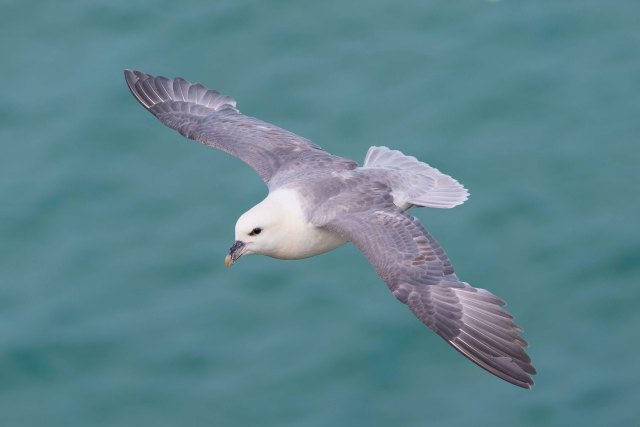
Fulmar

A beautiful Fulmar soars above Bempton Cliffs.

There are no hides at Bempton, only cliff-top viewing platforms. All of them provide fantastic views of the thousands of seabirds, either clinging-precariously to the minuscule ledges they are all crammed-onto, or wheeling about the cliffs calling-raucously as they go. The smell is hard to describe, however – disgusting!!

Many birds had chicks that they were feeding-up, ready for the day when they launch-themselves off the cliff-ledges to begin their lives as fully-fledged seabirds.

Over the course of the next three hours, Helen and I moved between the viewing platforms snapping-away at everything that moved! (Well avian things anyway!). Along with the obvious seabirds, we also saw several Whitethroat (on the shrubbery on the inland side of the cliff-top path), and large numbers of Jackdaws, Rock Doves and Herring Gulls during our visit. On our last time at Bempton, we watched a Barn Owl quartering the landscape around the reserve – no such luck today, however.

It’s always a pleasure to visit Bempton Cliffs – it’s a very popular attraction with both Bird Photographers such as Helen and myself, but also as a general attraction for families and people of all ages. It’s one of the most spectacular bird sites to visit in England.

Posted in Uncategorized | Leave a comment

Inner Farne – 26 May 2017

Helen and I were enroute to Scotland today, but with the weather being so beautiful, we decided to take a detour and visit Inner Farne, the innermost of the Farne Islands, which lie off the Northumberland coastline and are easily accessible by pleasure boat-trips from Seahouses harbour. We’ve been on Inner Farne several times before, so knew exactly what to expect at the height of the breeding season in late May.

The three-hour Inner Farne Cruise starts with a tour around the Islands during which the skipper of the boat gives a running commentary on the history and wildlife of the Farnes. In particular, the story of Grace Darling’s heroic rescue of the survivors of the wrecked ship Forfarshire features strongly in the story.

For me, the highlight of the cruise around the Islands is the visit to ‘The Pinnacles’, a formation of several sheer cliffs jutting out of the sea like jagged teeth at one end of Inner Farne.

At this time of year, The Pinnacles form the nesting-site of many thousands of Guillemots and Kittiwakes. The birds are literally crammed together onto every available ledge, and when one bird flies-off, another immediately lands in its place. The boat can get within a few feet of the birds, which seem to be totally oblivious of the dozens of excited humans gaping at them and snapping pictures of them (from a very rocky boat!)

The real excitement, however, starts from the moment of landing on Inner Farne itself.

As we got off the boat today, we were immediately thrust into the midst of an Arctic Tern breeding colony. Hundreds and hundreds of the birds were either nesting, quite literally at our feet, causing us to take great care where we trod, or raucously-circling around our heads demonstrating their great annoyance at our intrusion into their breeding territory.

Now Arctic Terns are tiny, two-ounce birds that shouldn’t worry a hulking-great human very much. However, you’d be quite wrong if you thought that. The thing about the Arctic Terns is that they will physically attack any creature, humans included, if they feel threatened. On Inner Farne it is necessary to wear a hat to reduce the impact of the bird-strikes.

Today, I must have been pecked around twenty times. On one previous visit, (when I didn’t have a hat on my head), I was forced to hold a hand over my head for protection instead. One particular bird took such a dislike to my presence that it pecked me hard enough to draw blood!

The really cool aspect of all of this, of course, is that you’re in amazingly-close proximity to these beautiful birds as they fly around and round your head. The photographic challenge is to ‘capture’ a bird completely within the frame of your image. Rules of composition go right out the window as you struggle to bring your camera to bear on these fast-moving, dive-bombing ‘hooligans of the sky’, whilst simultaneously praying that your camera had been able to focus on the little blighters in time! Fabulous fun!!

Once you’ve run the gauntlet of the Arctic Terns and passed through their territory,  it’s pretty-much Puffins all the way!

All the way up the boardwalk pathway,  Puffins have their burrows on either side of you. Every now and then you may come on a female Eider Duck sitting tightly on her nest, as we did today. At one point there is a particular spot which is always inhabited by a large group of Sandwich Terns. In short, each bird species pretty-much has its own, established territory which they return to year after year and other species respect that order of things.

The gulls, typically, are the exception to the rule. Each time a Puffin returns to its burrow, laden-down with a beakful of juicy Sandeels (that it may have flown up to sixty miles away to catch!), it must try to evade a phalanx of squabbling gulls which try their best to ‘mug’ the Puffin and steal its hard-won catch. Sometimes the gulls are successful, but usually the Puffins manage to scurry into their burrows to feed their young ‘Pufflings’, relatively unscathed.

Up by the lighthouse on Inner Farne, you find yourself standing atop The Pinnacles. Just on the seaward (wrong!) side of the safety fence, a number of Shag have their nests. Each time Helen and I have visited this spot we are amazed by the fact that we can be literally only a few inches away from these large, primeval-looking, glossy-greeny-black seabirds as they sit on their ramshackle nest-heaps, incubating their eggs. They really do look like their dinosaur forebears when you’re up close to them!

Coming round the bottom part of the boardwalk, on the return journey towards the jetty where the boat is waiting, is an excellent spot for trying (mostly unsuccessfully!) to photograph Puffins in flight. Along with many other photographers, Helen and I have spent time here trying to do just that. During today’s attempt I was rather more successful than usual, and managed to capture some images that I’m very pleased with.

Puffin

A Puffin flying over Inner Farne

All too soon, however, our hour on the island was up and it was time to return to the boat. After steeling ourselves for the relentless onslaught of Arctic Tern attacks on the way back down the boardwalk path again, we made a dash for it! It was only now that I realised their attacks consisted of more than just pecks to the head; by the time we had got back to the boat we were liberally-doused in Arctic Tern poo! The monsters!

The half-hour or so run back to Seahouses harbour gave us a chance to review some of our images of the day. Out of 1200-ish shots I had taken, I eventually whittled that number down to 172 ‘keepers’.  That’s a lot of ‘good’ images for a single day’s birding (well, three hours in fact!), and is a testament to how exciting an Inner Farne cruise can be.
Posted in Uncategorized | Leave a comment

Blacktoft Sands – 23 May 2017

I made a welcome return to Blacktoft Sands today – my first visit there in over six months – how time flies!

On arrival at Blacktoft, I decided to go West from the Reception Hide first of all, and along to Marshland Hide. I’ve had some excellent sightings from there in the past, and it’s definitely a favourite location of mine. However, my real reason for making a bee-line for Marshland first today was that, only yesterday a Spoonbill spent much of the day on the island near the hide. The chap who does the daily blog for Blacktoft’s website had posted some incredible close-up images of the bird. Might it just possibly still be there?

Sadly, no! Oh well, such is the nature of birding, and besides, there’s always something else to see. That ‘something else’ for today was a rather dapper-looking Avocet which was at the front of the lagoon, close-in to the hide. The sun was shining beautifully on the bird and I enjoyed excellent views of this rather super wader. I was very pleased with some of the images I took as the bird sifted its long curved bill back and forth through the shallow water as it searched for its food. A number of Shelduck were also on Marshlands Lagoon, including a pair that had a brief, yet fairly violent-looking altercation!

Leaving Marshland Hide behind, I next walked to Xerox Hide. Whilst in here today, I watched a female Marsh Harrier carrying what looked like nesting materials to a particular spot in the reeds. I made a mental note to check that area again on my next visit.

Between Xerox Hide and my next stop – First Hide, I heard many small birds, (including at least three different Warblers) singing in the reeds and trees along the path. Sadly, however, very few wanted to pose for a photograph today! I did manage a couple of frames of a heavily-obscured Reed Warbler, but the Cettis and Sedge Warblers I could hear in several spots remained steadfastly out-of-view today!

Next, I parked myself upstairs in First Hide, where once again I enjoyed watching a Marsh Harrier patrolling the reeds in front of me. This one seemed to be hunting rather than nest-building though. I also had a few tantalising views of ‘little brown jobs’ flitting between the reeds. I had excitedly rattled-off several frames before I realised they were ‘only’ Tree Sparrows! Now, I know Sparrows generally are on the decline, and I shouldn’t be ungrateful, but Blacktoft Sands is reknowned for its large numbers of Bearded Tits – surely one sighting on a glorious day like today isn’t asking too much, is it?

What was to be my biggest photographic success of the day, however, was to come when I visited Townend Hide. As I sat down and peered out of the window-hatch, I immediately realised a glorious-looking Whitethroat was sitting atop the tall weeds just in front of the hide. Some frantic focussing and shutter-clicking later, and I had several photographs that I was pretty pleased with. The bird was a real beauty! After the Whitethroat had flown-off, I settled-down to watch a Little Egret fishing in the shallows before me.

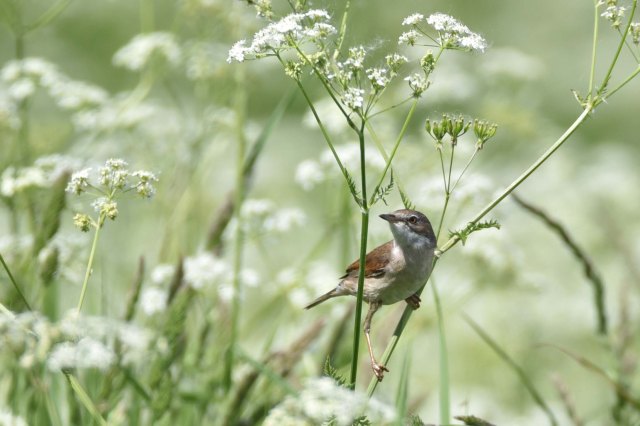
Whitethroat

A beautiful Whitethroat outside Townend Hide

I couldn’t possibly visit Blacktoft without spending some time in Singleton Hide, at the Eastern end of the reserve. This is usually the most-visited hide on the reserve, and certainly the one to visit for the most frequent (and most exciting!) Harrier sightings, in my humble opinion. As well as the near-ubiquitous Marsh Harriers at Blacktoft, a lone, female Montagu’s Harrier is currently present on the reserve once again – I think this makes the third year in a row. Large groups of grizzled-old birders (am I one of those too now?) can often be found in Singleton Hide, scouring the skies for any glimpse of these fabulous birds.

Today, I was lucky-enough to be able to position myself at the far right (Eastern end) of the hide. This allows views over the reeds lying to the North of the hide, but also the reeds to the East as well. The advantage here is obvious – being able to look-out in two different directions without having to move. The other advantage here is that the large area of reeds lying to the East (beyong the end of the boundary path marking the edge of the reserve) is quite often a great spot for seeing little brown jobs, and in particular, Bearded Tits.

Well, I didn’t see (or hear!) any Beardies today, but I did see lots of other small birds – not all of which I was quick-enough to identify before they had flitted-off back into the undergrowth from whence they had come! Once again I spied a Whitethroat here – my third sighting of the day – along with several Reed Buntings and one or two other Warbler-type LBJs. A Cettis Warbler was very close to the hide, singing its distinctive, syncopated song, very loudly indeed. I scoured the bushes and reeds before me, but the Cettis Warbler really is the master of being ‘heard but not seen’.

As I walked back towards the car park a (somewhat tattered) Peacock butterfly was sitting on the path in front of me. What a nice way to finish my first visit to Blacktoft Sands in much too long!

Posted in Uncategorized | Leave a comment

Old Moor – 18 May 2017

It was another glorious, sunny day in the Dearne Valley today, as I arrived at Old Moor. Whilst walking from the car park to the Visitors’ Center, I could hear a variety of birds singing in the trees and bushes near the entrance. There was very little breeze, and so I hoped I might see a few Warblers today.

As I began walking onto the reserve, I was met by a very tame Robin, perched by the path. That’s not so usual at the time of year when there is an abundance of food and they don’t have to come begging. This one obviously didn’t get the memo! It made a welcome start to my bird-photography session though, as I captured a couple of close-up frames of the bird, enjoying the morning sunshine.

As I began to walk up Green Lane, I was pleased to see a family of Tree Sparrows bathing in a puddle on the path. As I approached, they flew up into a nearby bush, which allowed me to count five of them – an obvious parent and some very noisy fledglings!

A quick stop in the Family Hide provided me with some close-up views of several Lapwings – always beautiful birds, with their irridescent plumage. Apart from the Lapwings, the mere in front of the hide was still dominated by the (very noisy!) Black Headed Gulls which are currently breeding on the islands. They’ll soon be gone now, however, and peace will return to the mere!

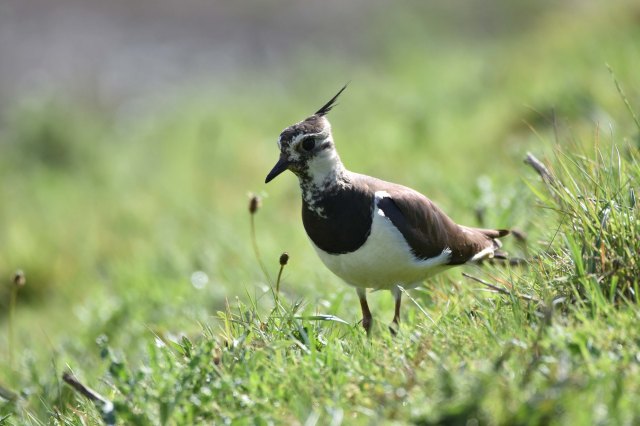
Lapwing

A Lapwing outside the Family Hide

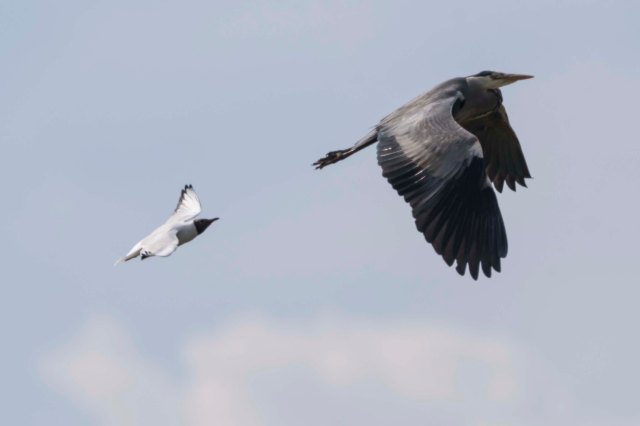
From the hide at Field Pool West, I watched a Grey Heron being harried by a couple of Black Headed Gulls. The Heron was trying to find somewhere to land, but the gulls were having none of it! I have to be honest and say that I never have sympathy for Herons nowadays, not since watching one swallow a Little Grebe chick whole a couple of years back, whilst the distressed parent looked-on, powerless to stop the much-larger Heron devour its (still-living) young.

Gull & Heron

A Grey Heron being harried by a Black-Headed Gull

Further up Green Lane I was lucky enough to take a number of photographs of a lovely Willow Warbler which was perched in a tree, singing its heart-out, immediately above my head! Nearby, a Sedge Warbler was also giving a hearty rendition of its long, elaborate and rambling song.  These birds are unquestionably two of my favourite singers.

Sadly, the Sedge Warbler was rather-more obscured by reeds than I would have liked, so I couldn’t get a clear shot of the first one I’ve actually laid eyes on this year! I’ll have to visit Blacktoft Sands again soon, I’ve always had more success photographing Sedge Warblers there.

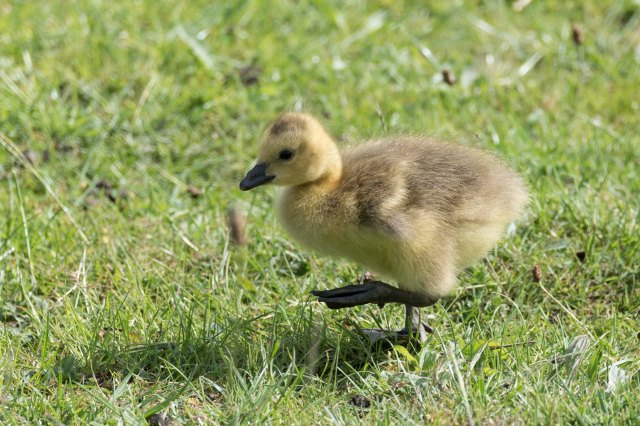
Next, I visited the Wader Scrape Hide. Black Headed Gulls were once again the ‘headline’ species on view. However, on the grass in front of the hide, some Canada Geese were out parading their latest fluffy offspring. I challenge anyone seeing such cute little goslings to be able to resist taking at least one photograph of them!

Canada Gosling

A Canada Gosling – I think I’ll call it Ryan!

I finished today’s short visit with a spell at Wath Ings. Here I watched a Lesser Black Backed Gull as it patrolled around the mere and the exposed mudflats. I couldn’t help but think that it was keeping its eyes peeled for any unattended chicks that it could predate. A pair of LBB Gulls are currently incubating eggs on a nest on one of the Wader Scrape islands, and they’re going to be in need of plentiful food supplies shortly. The Spring is a very special time to visit a bird reserve such as Old Moor, because you can see so many young birds which have recently hatched. However, it can also be very distressing to watch any stragglers being picked-off by any of a good number of predators, hunting for any easy meal.

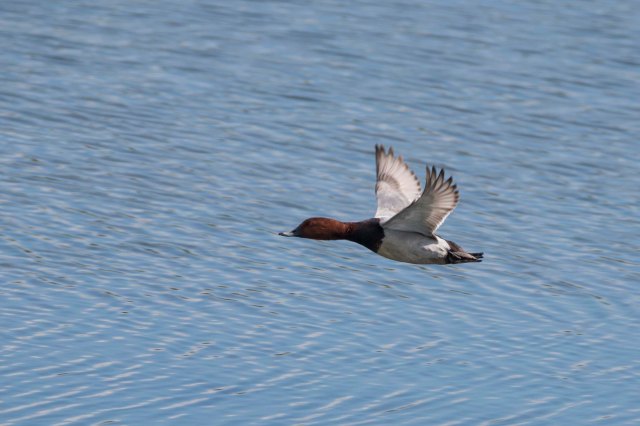
Pochard

Flying Pochard male

My last picture for today is of a male Pochard flying across the mere in front of the hide. I always love to see a Pochard, with its unusual, red eyes and similarly coloured head. They’re usually to be found dabbling-about on the water, their heads under the surface more often than above, in my experience. So I was very pleased to capture one in mid-flight today.

Another enjoyable visit to Old Moor then; it’s still my favourite RSPB reserve!

Posted in Uncategorized | Leave a comment

Old Moor – 11 May 2017

It was a beautiful sunny day in the Dearne Valley for my 86th visit to Old Moor today. I was accompanied by a couple of bird-watcher friends – Ann & Terry Godhard, who hadn’t been to Old Moor for a few years. They were keen to see how the reserve has developed over the years and so we elected to visit both the Reedbed and Green Lane trails to allow Ann & Terry to see the entire reserve as it currently is.

We started our visit by turning left out of the Visitors’ Center and heading in the direction of the Reedbed Trail.

In the Bittern Hide we got into conversation with Ian Butler, who is a very regular contributor of amazing images on the Old Moor blog. What a source of information Ian is! I only realised after we’d spoken to him for a bit that I should have been taking notes of all the places (and useful birding tips) he mentioned! I’ve said it before, but I’ll say it again – Birding is such a social activity! Everywhere I’ve ever been birding in this country, it’s the same thing – Birders love to chat, share information and experiences. Excellent!

As far as birds were concerned, we had some close-up views of three Pochard and a lone Great Crested Grebe from the Bittern Hide whilst we were present today. A full Summer-plumage, male Reed Bunting was flitting around in the reeds in front of us and we could hear (but not see, alas) a Sedge Warbler singing its heart-out somewhere in the reeds just in front of the hide. (This was to be a recurring theme for the day – lots of birds clearly-heard but not spotted!).

Continuing on our way round the Reedbed trail, we visited both the Reedbed Screen and the Reedbed Hide. This end of the reserve was fairly quiet today, unfortunately. I did, however, notice a pair of Lesser Black-Backed Gulls on the spit of land over to the right of the hide, looking resplendent, if slightly threatening, in the sunshine.

We had also hoped to hear (and see!) a Bittern whilst we were here, as at least one individual has been heard doing its characteric ‘booming’ here regularly of late. Alas, this didn’t occur today whilst we were present!

After returning to the Visitors’ Center and enjoying a spot of lunch, we next made our way up Green Lane to visit each of the hides up there.

At the Wader Scrape we spotted quite a selection of birds, many rather distant from the hide, unfortunately. A lone Avocet was mingling in amongst a huge number of nesting Black-Headed Gulls right at the back of the mere, a Lesser black Backed Gull was sitting tightly on a nest – being given quite a wide berth by all the other gulls, and on one island a single Ringed Plover was accompanied by no-less-than a Little Stint (the first time I’ve seen one of those at Old Moor). These last two were very far away from our viewpoint, however,  and so no ‘decent’ photos were possible, even with my zoom lens at its maximum 600mm setting.

One other notable bird I photographed today was a lone Redshank from Wath Ings Hide. I think this same bird featured in the Old Moor blog the other day. What is particularly noticeable about it is that it has been ringed on three separate occasions, as evidenced by the various coloured rings on its legs. Does this bird enjoy being ringed, I wonder, or is just not very good at escaping?? Anyway, if it’s ringed anymore, it may not be able to get off the ground afterwards!

The last bird I want to mention today is a Goose I photographed at Wath Ings. It was probably just a (slight variant) Greylag Goose, but as it had a big white patch behind its beak, I began to wonder if it might in fact be a White-Fronted Goose. Looking at numerous photographs of both types of goose on Google didn’t give me a definitive answer. As is so often the case, bird identification can be very tricky, and causes much confusion and mis-identification. This particular individual might actually be a hybrid – offspring of a mating between Greylag and White-Fronted Goose parents. This is not uncommon, of course – last year I photographed a Pintail-Mallard hybrid which perplexed me for a time. (It doesn’t take much!)

I wish all birds were RFID-tagged with full species information etc at birth! Come on RSPB et al – get it sorted!

PS: Ann & Terry were much impressed by all the developments at Old Moor – hearty congratulations to all the staff and volunteers for their continuing excellent efforts.

Posted in Uncategorized | Leave a comment

Caerlaverock – 11 Apr 2017

Helen and I are staying in the Lake District this week, and we decided to have a session of birding at Caerlaverock today.

We were last here about two years ago – in the depths of Winter. It was much nicer on this occasion – in mid-April – not to be shivering as we walked around the reserve! It was sunny, but a little breezy – nothing we couldn’t cope with.

We first followed the Sir Peter Scott Trail today. On our previous visit here, two years ago, we spotted our first-ever Water Rail. There was no sign of any Rails today, but there were large numbers of small birds on the feeders, including: Great Tit, Blue Tit, House Sparrow, Chaffinch and Greenfinch. Two hides look out onto the mere and a field adjacent to the reserve from here. A number of birds could be seen from these vantage points today: Song Thrush, Pied Wagtail and Carrion Crow were all showing particularly well, along with variously-coloured Feral Pigeons.

Next we visited the Peter Scott Observatory. In the Winter months the pond here is full of Whooper Swans, which are fed daily, to the delight of the great many visitors who come to see these lovely over-Wintering birds. There were no Whoopers here today, of course, but we did see one rather unexpected, lingering Winter-visitor – a lone Wigeon – amongst the other waterfowl on the pond which comprised mostly Tufted Duck and Mallard.

On our last visit to Caerlaverock we were unable to follow the trail down to the Tower Hide due to severe flooding. We were, indeed, very lucky to be able to visit the reserve at all on that occasion, as the North-West of England had suffered tremendous flooding over an extended period and large parts of nearby Carlisle were submerged under flood-water necessitating a huge rescue and clean-up campaign in the days which followed – all covered extensively by national television.

On this visit, however, we had no such difficulties, and were able to visit the Tower Hide. On arrival we were very impressed to discover how large the hide is, with its three floors and a great many viewing ports. Helen and I wanted the best views, naturally, so we climbed all the way to the top. From here we had a panoramic vista which took in sweeping views including the Solway Firth and the distant Lake District.

Birdwise, the large flocks of Barnacle Geese browsing the local fields provided the best views from the Tower Hide. These birds must have been fattening-themselves up for their return to their breeding grounds in Svalbard, we reasoned. Most of the area’s many thousands of over-Wintering Barnacle Geese had already left for Scandinavia by this time and these must surely be the last batch yet to leave.

As we walked back up the path towards the Visitors’ Centre for a much-needed cup of tea, we could hear a great many songbirds singing in the trees around us. They are becoming harder to spot again now due to the sprouting foliage on the trees. However, a beautiful Wren with some nesting material in its beak gave us a good photo-opportunity.

After our hot drink, (and erm…large piece of cake!) we finished today’s visit with a quick stop in the Folly Pond Hide. A few distant Redshank and various waterfowl were all that we spotted here today, unfortunately.

Not one of our best days in terms of spotting ‘exciting’ birds then, but it was a great pleasure to be out and about in this excellent reserve again. Roll-on our next visit here.

Posted in Uncategorized | Leave a comment

Old Moor – 02 Apr 2017

I visited Old Moor again today. The Spring breeding season is well underway by now and the reserve echoed to the screeching of thousands of Black-Headed Gulls, as always at this time of year.

As I walked onto the reserve I was first met by a rather tame Wren perched in a tree at (my) head-height and only a few feet away. Unfortunately, it didn’t give me sufficient time to get my camera ready before it flew off though! A very melodious Chiffchaff was singing its heart out a few trees farther-on and this bird did allow me to take some pictures. What a good start to my visit!

After passing through the Visitors Centre and out onto the reserve, I had a quick look in the Bird Garden. It was very quiet at the time I looked in, so I made a mental note to look-in there again later-on.

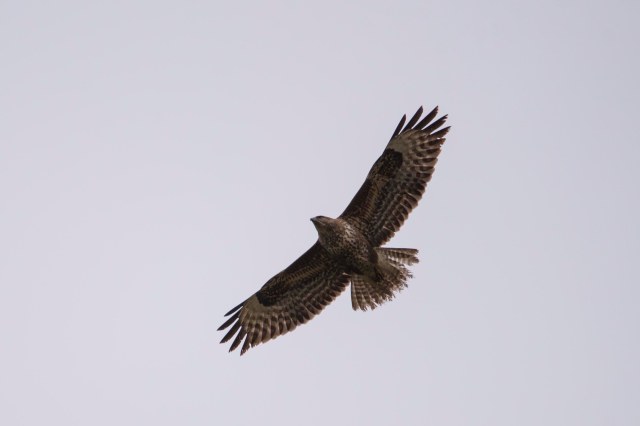
Next I decided to follow the Reedbed Trail; it has been simply ages since I was last round this part of the reserve and I was keen to try my hand at a bit of Bittern-spotting. As I reached the fork in the path which leads to the Reedbed Trail, I became aware of a Buzzard flying lazy circles above me. I took a few shots of it which were able to show that it had very raggedy tail feathers. A bit of a scruff really! Perhaps it had been in a fight recently? Or perhaps it was a bit of a ‘punk’ Buzzard?

Buzzard

A raggedy-tailed Buzzard flew over my head near the Visitors’ Centre

I spent a half hour or so in the Bittern Hide from which I saw a pair of Great Crested Grebe. I was hoping to witness their elaborate courtship rituals, but alas, not today!

Round at the Reedbed Screen and Hide I saw a few Tufted Ducks looking resplendent in the sunshine. A Little Grebe was dabbling near the front of the hide and an assortment of other waterfowl, Swans and geese were off in the distance. No Bitterns, Water Rails or Bearded-Tits to report from here today!

After returning back towards the Visitors Centre, I now made my way up Green Lane. I could hear several Chiffchaff singing away in the trees, and one lone Willow Warbler somewhere. I also heard the unmistakeable ‘Tee-cher, tee-cher’ of a Great Tit somewhere in the undergrowth.

The water levels at Wath Ings and on the Main Mere are quite high at the moment so there were no waders around today, alas. However, I saw a good many birds at Wath Ings today, including a few Oystercatchers, Lapwing, a pair of Shelduck, an assortment of Greylag and Canada Geese, along with Gadwall, Shoveler, Mallard and Teal.

As I returned down Green Lane, I made a quick stop at the Tree Sparrow Farm, but didn’t see much there in my brief stop. All the action was back in the Bird Garden where I was treated to some very close-up views of a pair of Bullfinches and a beautiful male Reed Bunting.

My species-count total for the day was 36.

All in all, a good day, and nice to be back at Old Moor again.

Posted in Uncategorized | Leave a comment

Titchwell Marsh – 11 Mar 2017

Today was our second day at Titchwell. Once again it was a bit grey and cloudy, but there was no sign of rain in the sky or on the BBC’s weather forecast for the day. It was about 14 degrees temperature-wise, so no big coats were required.

This time we decided to walk along the Fen Trail and then the East Trail past Patsy’s Reedbed. There were dozens and dozens of small birds singing in the bushes and trees as we traversed the boardwalk along the Fen Trail. Each pond that we looked into was full to bursting (well nearly!) with frogs and spawn. Spring had very definitely arrived at Titchwell!

Our first stop was at Fenland Hide. Here two beautiful Mute Swans were lazily feeding and looking very graceful, as always. A sudden movement to the right of the hide heralded a very brief sighting of a Sparrowhawk as it swooped over and disappeared behind some bushes. A distant Marsh Harrier could also be seen over the reeds some way ahead of us.

Next we walked on to the viewing screen overlooking Patsy’s Reedbed where we glimpsed, amongst other birds, a Red Crested Pochard. Several of them could be seen, obscured in the reeds, but only the one bird showed itself for a quickly-snapped photograph.

Next we walked along the path as far as we were allowed to go at this time of year, (an Autumn-only trail begins here, from which Helen and I viewed some Spoonbills on a previous visit.) Here we were lucky-enough to see some Stonechats and a very-unexpected Chiffchaff!

After returning back the way we had come, we stopped at the cafe for a much-needed drink and snack. Suitably refreshed, we decided to return to the Beach Trail again, as we had done yesterday. Once again the Water Rail was dazzling the crowds. Today it was in a more open part of the ditch than yesterday, and was therefore much easier to photograph without distracting foliage in the way!

We decided that, by this time, the best of the day had been and gone, so we wouldn’t go all the way to the beach. Instead we only walked as far as the Parinder Hide where we had had such unexpected success yesterday. Once again it was the salty Volunteer Marsh that provided the ‘good stuff’ today. A flock of Dunlin repeatedly flew past us, all wheeling in perfect unison; great to see, but very hard to photograph! Numerous Avocet, Curlew, Shelduck and Grey Plover were all showing-well, and some of them were even closer-in to the hide than yesterday.

We finished the afternoon in the other half of the Parinder Hide looking out onto the Fresh Marsh. Here we saw a couple of Golden Plover, a Ruff and a Black Tailed Godwit along with dozens of Avocet, Black Headed Gulls and assorted ducks. Meanwhile, a gaggle of racous Greylag Geese, only a few feet from where we sat in the hide, provided their own version of an audio commentary on the day’s proceedings!

On the way back down the trail towards the car park we heard the unmistakable sound of a Skylark somewhere over the marsh to the right of the path. Another sure sign that Spring was here.

Another great day at Titchers, and our total of different bird species seen over the weekend had swelled to 67 species.

Posted in Uncategorized | Leave a comment

Titchwell Marsh – 10 Mar 2017

Today was the first day of our Titchwell weekend for Helen and me. We arrived at around 1.30pm on what was a rather gloomy afternoon, wondering just how successful the visit would prove to be. A few Robins greeted us with their beautiful singing as soon as we got out of the car, and a Wren flitted about in the scrub just a few feet from where we stood. So, not a bad start then!

In the Visitors Centre we looked at the recent sightings board and learned that a good many bird types were currently around on the reserve. As we were about to leave the VC to go out on the reserve, a volunteer in the shop advised us to look carefully in the ditch at the start of the beach trail as a Water Rail was being spotted there very regularly at the moment.

Sure enough, the Rail was just where we had been told, and it was showing very well just fifteen feet or so from where we stood. Helen and I were able to take a good number of photos of it before we decided to move on up the trail towards the beach.

In the Island Hide we saw our first Avocets of 2017 along with an assortment of other birds including a large group of Brent Geese. There were other birds present, but most were too distant to be easily identified.

Moving on up the trail, we next visited Parinder Hide. One side of this large double hide overlooks the fresh marsh, whilst the other side looks out onto the saltwater Volunteer Marsh. On previous trips we’ve not had a lot of success looking out onto the saltwater marsh, but today was very different.

As we surveyed the marsh we could see large numbers of Dunlin, a few Grey Plover, Curlew, Redshank, Avocet, Shelduck and Oystercatcher.

The next marsh on the way towards the beach is the Tidal Marsh. The highlight here today was a lone Bar-Tailed Godwit which was preening itself on one of the islands.

On reaching the beach we managed to get very close to some Turnstones and Sanderlings. What a day this had turned out to be!

It was getting a bit chilly by this time and rain was threatening so we decided to return down the path to have some hot chocolate at the cafe.

By the time we had counted up the number of different bird species we’d seen today we reached a total of 52. A very good haul for a single day. Titchwell really is a fabulous reserve!

Now, if that’s what we achieved in just an afternoon, what will a full day on the reserve produce tomorrow?

Posted in Uncategorized | Leave a comment

Old Moor – 06 Mar 2017

Helen and I paid a visit to Old Moor today: our first in about six weeks. It was a beautiful sunny day for the time of year and were eager to see some birds.

I was aware from Birdguides that there had been a group of waxwings showing in the trees by the car park earlier in the day, and we were very much hoping they’d still be present. Well, on this occasion we were not to be disappointed; as soon as we arrived in the car park we could see lots of people with cameras and binoculars gathered below the trees on the way towards the main reserve entrance. Grabbing our cameras, we quickly joined them and were soon snapping away at a group of five beautiful waxwings which seemed totally unconcerned by the presence of lots of people excitedly clicking camera shutters just a few feet away from them. What a brilliant start to the day’s birding!

On entering the reserve proper, we made our way first of all to the Bird Garden. There were lots of birds here today, including Collared Doves, Stock Doves, Woodpigeons, Magpies, Long Tailed Tits, Great and Blue Tits, Chaffinches and a pair of Mallards(!). There was no sign, whilst we were present today, of the regularly-visiting Great Spotted Woodpecker. However, we’ve been fortunate in seeing GSWs here on many occasions in the past, so we weren’t too dismayed.

Moving on to the Tree Sparrow Farm we found that the predominant species here today, as is often the case, was the Goldfinch. There were a few other birds around too, of course, including a single Greenfinch and a male Reed Bunting.

Our final stop today was at the Family Hide. It was teeming with Black Headed Gulls in varying stages of moulting back into their titular breeding plumage. Some had completed the moult whilst others hadn’t even started to regain their black head feathers yet. All were very noisy, of course! Other birds of note on show from here today were a rather distant drake Goldeneye which was diving for food, and a single juvenile Common Gull which I initially hoped might be a Ring-Billed Gull, until I discovered that dark rings on the bills of juvenile Common Gulls are em.., well, common!

Outside the hide a beautiful (and very confiding) Dunnock was perched on one of the bushes singing its heart out. Helen and I both have a real soft spot for the Dunnock, and so we were very pleased to be able to take some good close-up shots of this little beauty.

As we made our way back towards the Visitors Centre, we spent a few more minutes in the Bird Garden hide taking shots of Long-Tailed Tits feeding on a coconut-half which had been strung-up alongside the feeders. A rather bossy Blue Tit sent the LTTs packing on at least two occasions so that it could take a turn at the coconut. I had rather thought that Blue Tits were much too small to ‘bully’ any other birds, but you live and learn!

It’s birding at Titchwell Marsh in Norfolk for Helen and me on Friday and Saturday. I hope to goodness the weather is as good as it was in the Dearne Valley today. Fingers crossed!

Posted in Uncategorized | Leave a comment