Old Moor – 24 May 2016

I was at Old Moor again today, just a quick visit on this occasion. As I had spent all my time at the Bittern Hide two days ago, (when I finally saw a Bittern for the first time), I decided to wander up Green Lane today to see what was going on up there.

I wanted to spend a bit of time down the path to Field Pool East where I have recently seen so many warblers etc. I’d really like to get some more and improved images of both Blackcap and Whitethroat, and this spot is great for both of those birds.

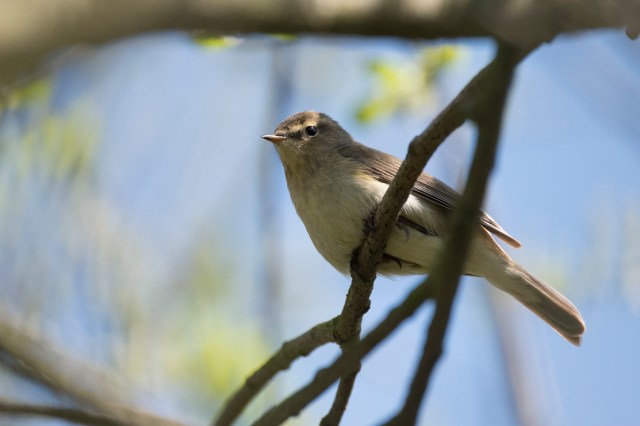
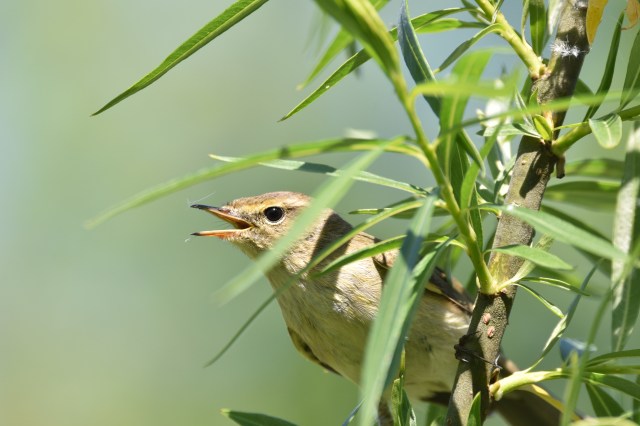
My first success of the day was on Green Lane, and is either a Willow Warbler or a Chiffchaff. As it didn’t make a sound, I had no easy way of telling which species it was; I had heard each of those on my way up the lane, so that was no help either. The bird alighted in a tree about ten feet away from me, and at about my eye-level. Despite its being partially obscured (as you can see from the image below), I am quite pleased with the photograph. I just wish I knew what the bird was! I think Willow Warbler, so it’s probably a Chiffchaff!!
DSC_6204

I can see you!

I next went into Wath Ings hide where I watched a Coot pottering about its island nest, adding more weed etc to further-strengthen the structure. I could see three eggs in the nest from my vantage point. There could be some really attractive photographic opportunities to come over the next week or so, assuming they hatch successfully.

The water levels are still too high on Wath Ings for waders, alas, so the only other birds I could see here weresome Greylag Geese and a few waterfowl including Tufted Ducks and Gadwall.

Walking down the path behind Field Pool East I could hear a number of warblers in the trees, but once again the birds proved to be elusive on this occasion and I didn’t see a single one in the fifteen minutes or so that I remained there.

Once more walking along Green Lane on my way back to the Visitor’s Centre, I stopped to listen to the singing of a fabulous Sedge Warbler, which can only have been a few short feet from me, but was completely hidden in the reeds. It was singing its long, rambling song so loudly and clearly that I decided to record it on my phone. The full song lasts approximately 50 seconds in duration. How on earth does such a little bird manage to sing continuously for such a long time? How does it breathe??

My next port of call was the Wader Scrape. Here I could once again see a Med Gull on one of the islands, mixed-in amongst many hundreds of nesting Black Headed Gulls. Other birds here were Greylag Geese with many goslings in tow, a pair of nesting Oystercatchers, an Avocet and an assortment of ducks.

I next spent a few minutes in Field Pool West Hide. Once again it was all the usual suspects only today. I realised whilst there that I have yet to see a single Kingfisher so far this year. I was reminded of the occasion, whilst sitting in this same hide one day last year, when several other photographers and I were treated to a stunning fishing display by a Kingfisher. Let’s hope it’s not too long before I see one again.

I completed today’s short visit in the Family Hide. It’s still very raucous in there just now with the nesting Black Headed Gulls dominating all the islands of the Main Mere. It’ll be calm again there in another couple of weeks once all the gulls have departed, but for now earplugs wouldn’t be completely unwelcome for a visit to this hide!

Posted in Uncategorized | Leave a comment

Old Moor – 22 May 2016

171 – Bittern

Yabadabadoo! Today, my 75th visit to Old Moor, was finally ‘Bittern Day!’ At long, long last the elusive Bittern is my ‘bogie bird’ no more!

Bittern

My very first ever Bittern!

Helen and I had been having our usual Sunday – lie-in before breakfast and then a few bits and pieces of jobs. We didn’t decide to go birding until well after 3pm and by then Old Moor was really our only reasonable option. The weather was alternating between sunny and cloudy, but it was quite a warm day for a stroll round the reserve.

Before we’d even arrived we’d chosen to go only to the Bittern Hide today and spend about an hour there. At reception the lady who checked our membership cards took one look at our long camera lenses and asked, “Have you come for the long haul then?” I immediately knew what she meant: she was asking if we had come to sit-it-out in the Bittern hide, possibly right through till closing time at 8pm, in the hope of seeing a Bittern. I mumbled something to the effect that, perhaps we had. “It’s been seen several times today,” she added encouragingly. That filled me with hope that today might finally be the day.

When we got into the hide at 4.45pm there was only one other person there: a lady who was just preparing to leave. “If I go now it’ll surely appear,” she said with a smile as she departed. The auspices were all favourable! *

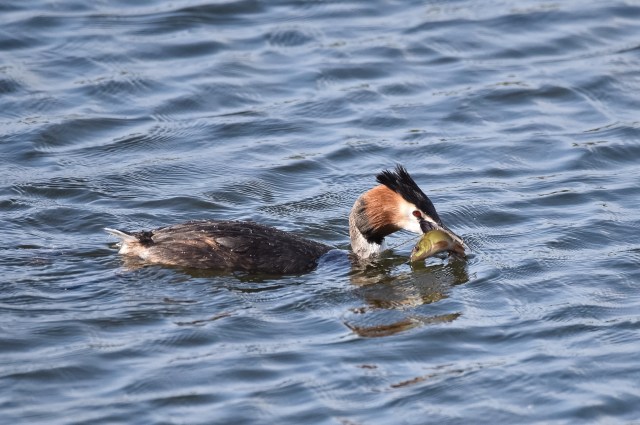
Helen and I settled ourselves in the hide and hoped for the best. There weren’t all that many birds around except from some Black Headed Gulls and a rather fine-looking Great Crested Grebe which was fishing quite close to the hide. With a lovely warm sun shining on the bird, it looked glorious as it continuously dived under the water only to reappear a few seconds later some yards further away.

As we continued to watch the grebe it suddenly surfaced with a rather large fish it had caught. Both Helen and I rattled-off some good images of the bird with its prize catch before it disappeared into the reeds, only to reappear a couple of minutes later minus the fish but with a satisfied look on its face (not really, of course, but that’s how I think I would have felt in its place!)

Great Crested Grebe

This Great Crested Grebe won’t be hungry again for a bit!

Every now and then something ‘different’ would fly overhead, temporarily making me excited that perhaps this would be the bird. A Cormorant flew over at one point and ‘had’me for a split-second before I realised what it was.

When the Bittern did come I nearly missed it altogether! Out of the corner of my eye I suddenly became aware of a gull harrying a brownish-looking bird of roughly similar size so I decided to take a few shots of it. I quickly fired-off three frames at the brownish bird before it suddenly dawned on me that it was a Bittern that had appeared out of nowhere, and completely without warning. I was able to take one more frame whilst simultaneously blurting-out to Helen that it was a Bittern that i’d seen, before it was gone as quickly as it had appeared! Poor Helen didn’t have time to react and missed seeing the bird entirely. Whilst being happy for me, I could tell she was a pig-sick at missing-out. If I’m honest it took the edge of it for me too, really.

Not much more to report on today really, the Bittern was the only sighting of any great significance. Poor Helen, better luck next time!

* – One online dictionary I checked defined the word auspice as:  ‘a divination or prognostication, originally from observing birds‘ – How appropriate was that?

Posted in Uncategorized | Leave a comment

North Cave & Blacktoft Sands – 20 May 2016

Today I visited two of my favourite nature reserves: North Cave, a Yorkshire Wildlife Trust reserve, and Blacktoft Sands which is run by the RSPB. Weather-wise it was a fairly reasonable day for the time of year; warm, but a bit cloudy and breezy. It was one of those days, typical of this time of year, when I wasn’t quite sure how many layers to wear!

On arrival at North Cave I decided to walk down Dryham Lane to look principally for waders on Dryham Ings, which is a large area of wetland lying to my left as I walked along the lane from the car-parking area. Amongst other good birds, a Wood Sandpiper was reported here recently, and I’ve yet to see one of those.

I spent about twenty minutes in South Hide on my way down the lane, watching hundreds of nesting Black Headed Gulls sighting-tightly on their incubating eggs, whilst scores of fluffy, recently-hatched chicks scrambled around on the crowded islands of Main Lake exploring everything in their strange new world. A couple of Coots were dabbling in the water just in front of the hide, collecting nesting material and sorting-out the best bits for their nearby-nest. I also observed them sharing an…ahem…’romantic interlude.’ Breeding season, it would seem, is in full-swing!

After leaving the hide to resume my walk down the lane, I soon discovered that much of Dryham Ings had dried-up with the recent sunshine, and unfortunately, all I saw there today were a pair of Shelduck, a few Lapwings and several Avocets sitting on their nests. No exciting waders today!

Not to be daunted, however, I began scouring the trees on the other side of the path for warblers and other small birds. I could certainly hear plenty of birds singing all around me, but it has become ever-harder to spot them now that the trees are covered in mature leaves and blossoms. I did manage to glimpse several small birds, but the only reasonable photographs I managed to take were of a more-obliging Willow Warbler, singing loudly, and leaving me in no doubt of its identity; none of that ‘Chiffchaff rabble’ today!

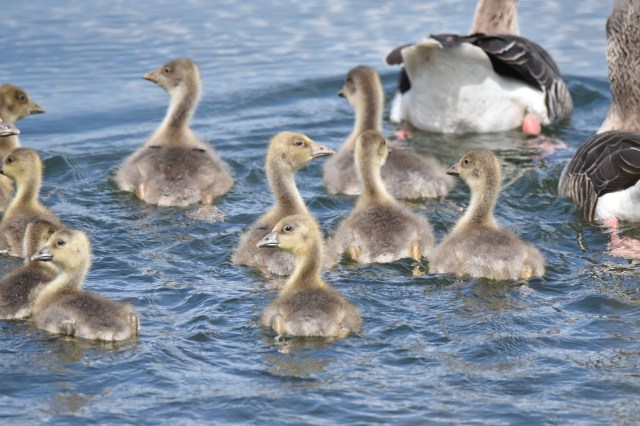
As I rejoined the main path next to Main Lake, I inadvertently disturbed a large group of Greylag Geese and goslings. I hadn’t seen them as they had been well-camouflaged in the dense undergrowth on the bank right by the path prior to my blundering arrival. After apologising profusely to the birds, (yes, really!) I quickly snapped a few photos of the downy chicks learning to swim and feed themselves under the watchful eyes of their ever-alert parents. Thankfully, the goslings already seemed large-enough to be safe from the majority of would-be predators around the reserve, however.

DSC_5768

No fewer than eleven goslings…quite a challenge for the parents to keep safe!

After returning to the car, I made my way to Blacktoft Sands which is only two M18 junctions away and pretty-much on the way home for me from North Cave.

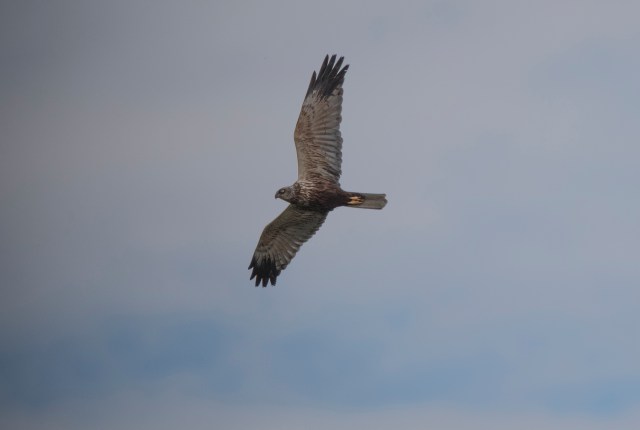
There have been numerous and regular sightings of Bearded Tits in the reeds by Singleton Hide at Blacktoft recently, so I made my way straight there. A number of other birders were already there, vigilantly watching the reeds for the slightest tell-tale movements. I settled myself down to wait my turn on ‘Beardie-Watch’ and managed to capture some good images of a pair of Marsh Harriers displaying over the reedbed in front of me. At one point a male Marsh Harrier was ‘shooed-away’ by both a Black Headed Gull and an Avocet. The harrier looked pretty-well ‘harried’ himself!

I overheard some other Birders discussing the lone, female Montagu’s Harrier which had returned to Blacktoft in the past week or so. The perceived wisdom was that, in the absence of a male, she had most likely left the area altogether.

When the other birders had departed and left me alone in the hide, I was able to reposition myself at the reedbed-end of the hide, which was where the best Beardie sightings had recently been reported. I did my best to keep a close eye on all that was happening before me; many times I caught fleeting glances of small ‘things’ moving in the reeds, and a persistent Chiffchaff was singing very loudly in a willow tree right by the hide. Over a period of about an hour I was able to capture some images of a Sedge Warbler, a pair of Reed Buntings and a somewhat-obscured Wren. No Bearded Tits, unfortunately, but that’s so often the way with Birding. It’s all about being in the right place at the right time – with the right equipment, the right settings on your camera, the right light, the right vantage-point…..I’m sure you get the point, right?

DSC_6044b

A fabulous male Marsh Harrier by Singleton Hide

By this time it was nearly 5pm. I was beginning to feel hungry and was mindful of the Sheffield rush-hour on a Friday, so I decided to call it a day and head home. I’d enjoyed my two birding sessions of the day and look forward to my next sojourn, wherever and whenever that might be.

Posted in Uncategorized | Leave a comment

Frampton Marsh – 12 May 2016

Another beautiful Spring day saw me visiting Frampton Marsh once more. I chose to come here today because the weather forecast for the Boston area was very favourable (if a bit breezy), but also because of the recent sightings which had been recorded at Frampton.

Only yesterday a Wryneck was seen along the sea-wall path which separates the reserve-proper from the salt-marshes leading out to The Wash. Other ‘good’ birds recorded on the reserve yesterday included Wood Sandpiper, Little Stint and Garganey. Well, I’ve never seen a Wryneck or a Wood Sandpiper so the prospect of possibly getting one or both of those was a powerful motivator!

I began by parking down at the old car park near the sea-wall. The path between here and the sea-wall itself has water on each side. I’ve seen some really exciting birds down here before such as one occasion last Summer when Helen and I saw a full breeding-plumage Spotted Redshank just a few feet away from us.

Well, today was every bit as exciting: within two minutes of leaving the car I was photographing Dunlin, Ringed Plover and a Little Stint – all showing beautifully with the sun shining on them to display their plumage to great effect. The Dunlin, in particular, looked fabulous in its full Summer garb.

After this great start I decided to walk along the sea-wall to the lone bush where the Wryneck had been spotted yesterday; sadly there was no sign of it today though!

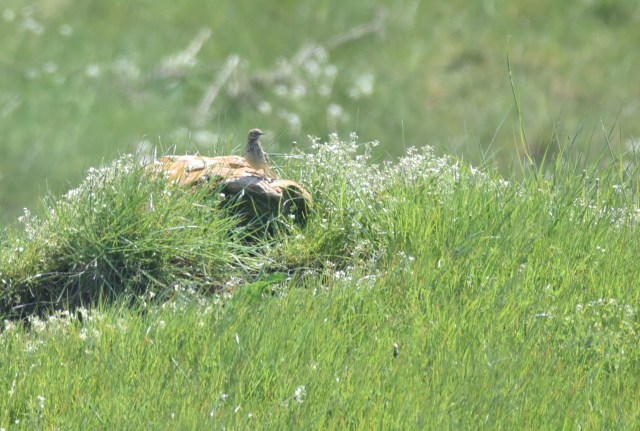
After walking along the sea-wall a bit further, I came to what I refer to as the ‘Wheatear Rock’. (It probably shouldn’t be too hard to work out which bird I’ve previously spotted perched on top of that!). I could see that there was some kind of Pipit or possibly a Skylark on the rock today, and I quickly fired-off three frames before the bird vanished as quickly as it had appeared.

DSC_5646

A Pipit, but which variety??

It was only when I got home later in the day and looked at the images on my big computer screen that I began to realise that I had a bit of a puzzle on my hands. Using my trusty RSPB book, I soon discounted the Skylark as a possibility, but the pipit variety that it most-closely resembled was the Tree Pipit, due to the minimal markings on its belly. I was very wary about that identification though, as the Frampton area isn’t a particular hotspot for Tree Pipits, and neither is a salt-marsh habitat! (There’s a major clue in the bird’s name!). The only other reasonable option is that it is a juvenile Meadow Pipit which hasn’t got fully developed markings on its flanks as yet. This is a much more likely explanation and serves to highlight just how tricky bird identification can be.

After returning to the car, I re-parked in the proper car park by the Visitors’ Centre so that I could take a walk along ‘Warbler Way’. I’d not been along this path before, but quickly realised how appropriate the name was; there were loads of small birds twittering about me along the path! That said, it’s very hard to spot them now though due to the density of the vegetation by this point in Spring. I did manage to capture a Sedge Warbler with a big insect in its mouth in one tree, however, and a fine Linnet in another. This is a great path and I’ll certainly come along here again.

At one or two points, where there are breaks in the trees, I could look out onto large marshy areas. I stood quite near a couple of fellow-birders who were watching a pair of Wood Sandpipers through their spotting scopes. However, it was a narrow gap in the trees and I couldn’t see them from where I was, alas. Not to worry, there’s always next time isn’t there?

Posted in Uncategorized | Leave a comment

Old Moor – 09 May 2016

‘Old Moor never disappoints!’ I said that to Andrew Leggett in the Visitor’s Centre at Old Moor as I was leaving today. I had just come from Wader Scrape Hide where I’d been photographing a beautiful Grey Plover, resplendent in full-breeding plumage. I’d only seen a Grey Plover once before, at Titchwell Marsh, and that one was a bit distant. Today’s bird was a beauty! Poor Andrew, who is one of my birding ‘heroes’, taking the most marvellous bird photos as he does, hadn’t seen the bird at that point and was soon scurrying-off to the Wader Scrape in the hope of finding it still there…

Anyway, back to the start, I suppose…

It was really warm today – 29°c on the car’s thermometer when I set off from home for Old Moor. However, it was quite breezy once I was on the reserve, and this was keeping many small birds out of sight today.

I walked up Green Lane first of all, and met Andrew, (who co-writes the Old Moor Blog with Nicola, one of the other Old Moor volunteers), in the Wader Scrape Hide. At that point there wasn’t much around, (so long as you ignored the hundreds and hundreds of nesting Black Headed Gulls, that is!), just a Med Gull sitting on a nest on one of the islands in front of the hide and a rather attractive Redshank combing the mud for food. The breeze was blowing straight into our faces, and whilst welcome on a warm day, was making it rather hard to breathe!

Following a discussion with Andrew about our recent Birding adventures, we ended up standing outside Field Pool East Hide together trying to photograph warblers in the trees. There were a good many butterflies around today: notably Brimstone and Orange Tip, but not too many warblers.

However, that was all to change when I eventually bade farewell to Andrew and made my way back down Green Lane. I managed to photograph a beautiful Chiffchaff in one of the trees. Andrew and I had been discussing how difficult it was to distinguish between Chiffchaffs and Willow Warblers; well, there was no doubt with this one as it was singing its heart out! The iconic ‘chiff-chaff-chiff-chaff’ song is the giveaway!

DSC_5275b

‘Chiff-chaff-chiff-chaff’ – yes, it’s a Chiffchaff!

I felt pretty pleased with the Chiffchaff, but as I made my way back to the Visitor’s Centre another birder informed me that a Grey Plover had recently alighted on the Wader Scrape, so back I went! As you can see from the pictures below, I got some decent shots of the bird.

When I got back to the VC, Andrew was updating the sightings journal with today’s birds so far. That’s when I discovered he hadn’t at that point seen the Grey Plover…

Back to the top of the page please…

Posted in Uncategorized | 1 Comment

Adwick Washlands – 08 May 2016

I paid a very quick visit to Adwick Washlands today. It was very hot (28 degrees!) but it was nice to hear lots of birds singing in the trees.

The most interesting thing I saw today was some Lapwing chicks skulking in the long grass near the central viewing point on the reserve. Mum was keeping a watchful eye on me throughout!

A number of Redshank and Avocet were on the main mere, with Grey Heron and Little Egret fishing on the margins of the water.

On my way up the path I caught sight of a nice Whitethroat in one of the hawthorn bushes.

Just a quick visit, as I said, but it’s always a pleasure to be out enjoying nature on a sunny day.

Posted in Uncategorized | Leave a comment

Blacktoft Sands – 05 May 2016

On a fabulous and sunny day I knew I had to get out somewhere. It is always difficult to choose where to go when there are so many brilliant reserves within an hour’s drive of home. In the end I decided to go to Blacktoft Sands; I knew a Montagu’s Harrier had returned to the site and I wanted to try to get an improved image of it, if possible.

As I left the car and walked up the path to the Reception Hide, I could hear a good many garden birds chirruping and singing in the trees. On reaching the reedbed I could hear Sedge Warbler, Cetti’s Warbler and a Chiffchaff – all singing their hearts out in the glorious sunshine.

I stood a while by the two pools visitors have to pass just before reaching the hide and was soon rewarded with a brief view of a Cetti’s Warbler down near the water’s edge. I managed a few frames of the bird before it flew across the water and disappeared into the reeds just near me; a good start to the day.

I turned right at reception and visited each of: First Hide, Townend and then Singleton. At each of these hides in turn I watched numerous Marsh Harriers patrolling the reedbed.  They were showing very well with the sunshine on them. Some of the birds came quite close to the hides and there was a noisy chorus of shutter-clicks from the assembled photographers each time this happened. Sadly, there was no sign of the Montagu’s Harrier even though one of the birders in the hide announced that he had seen it earlier in the day.

Not to be daunted, I returned along the path past Reception Hide and visited Marshlands Hide next. Here there were a number of Greylag goslings pecking away at the grass just in front of the hide. They provided a good photographic subject for me for the next few minutes until suddenly, all the Avocets and Black Headed Gulls on one of the islands flew up into the air in an en-masse panic. This usually means that a bird of prey has come close-by, and sure enough, a Marsh Harrier promptly swept low over the lagoon in search of prey.

As I watched the bird, it flew low over the reeds at the far-side of the lagoon from me and suddenly plunged into the reeds and out of sight. After about fifteen seconds, it took off again and was clearly carrying something in its talons, which it had caught in the reeds. As it flew close to the hide I snapped a few frames which I reviewed on the screen on the back of my camera once the bird had passed beyond view. Zooming in on the clearest one I realised that the Harrier had captured a Bearded Tit. Bother! My first confirmed Beardie photograph at Blacktoft and it was a (hopefully by now!) dead one destined to be a Marsh Harrier’s dinner!

The final hide I visited today was Xerox Hide where I watched a Grey Heron preening itself in the sun before lazily flying off. I’ve never felt the same about herons after a previous visit to Blacktoft, last Summer, when Helen and I watched (possibly the very same bird!) plucking a Little Grebe chick from its nest and swallowing it whole – all whilst the poor parent bird looked on helplessly. Gruesome, I know, but that’s nature at work, red in tooth and claw!

As I walked back along the path past the reedbed towards the car park, I was treated to more warblers singing deep in the undergrowth. I did manage, however, to capture some good shots of a Sedge Warbler perched at the top of some weeds. I couldn’t help thinking about the poor ‘Beardie’ I had just seen being despatched up at Marshlands. I was almost tempted to shout to the ‘Sedgie’ to keep its head down!

Posted in Uncategorized | 3 Comments

Welney Wetlands Centre – 02 May 2016

Day 5 of our five-day ‘Birding Adventure’ took Helen and me to Welney Wetlands Centre which is operated by the Wildfowl & Wetlands Trust (WWT). We’ve been very lucky with the weather over the last few days, and whilst it was dry during our time here today, the breeze was making it difficult for the birds. This meant that, although we could hear any number of warblers in the reeds, we had almost no sightings of them at all.

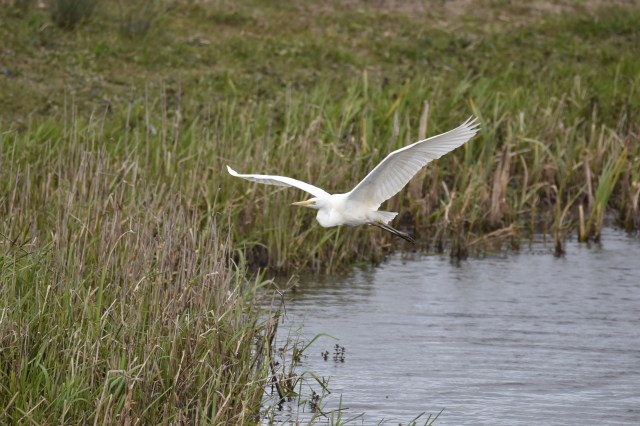
The headline news from Welney today was that a Great White Egret was onsite and showing very well from Nelson-Lyle Hide. Sure enough, when we got there we soon found the bird, but unfortunately it was quite distant and lying down for a snooze! A few minutes on though, and a Mute Swan flew close to the egret and disturbed it. It took off and flew right towards the hide whereupon it settled only about 30-40 feet in front of us and began fishing in the pond. This gave us great views and photographic opportunities over the next ten minutes or so, before it once more took to the air and flew beyond our view. It was a magnificent bird, and clearly much larger than its much more common cousin, the Little Egret.

Great White Egret 01

A Great White Egret

A number of other sightings at various hides along the trail, including a brief view of a Common Whitethroat and a group of Ringed Plovers, took our total bird species count for our five-day adventure to a grand total of 86. Not bad going at all.

Sadly, our Norfolk trip had come to an end far too quickly, and we reluctantly headed for home.

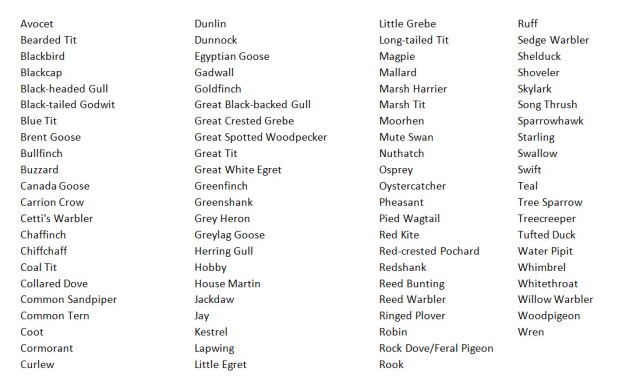
Here is the complete list of the 86 different bird species we saw:

Bird List

Posted in Uncategorized | Leave a comment

Sculthorpe Moor – 01 May 2016

It was about 11 months ago when we last came to Sculthorpe Moor, which is operated by the Hawk & Owl Trust. That day was damp and a bit gloomy. Today was a much nicer day for Helen and me, with loads of birds around. One of the first birdcalls we heard was that of a cuckoo somewhere in the distance!

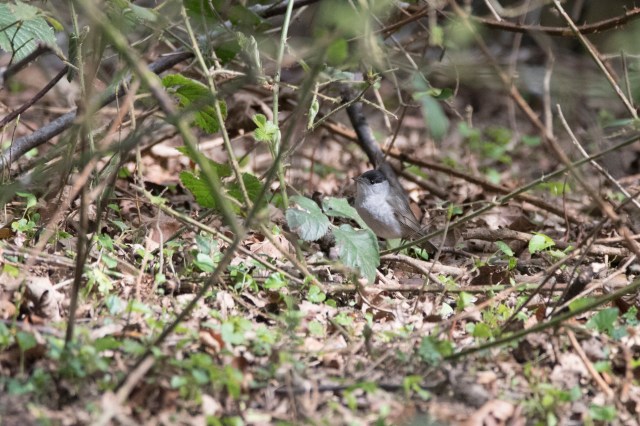
We started down the boardwalk path towards Frank Jarvis Hide, which is in a woodland area. Here we saw a great range of birds including: Blackcap, Marsh Tit, Coal Tit, Nuthatch, Great Spotted Woodpecker, Long Tailed Tit and a troupe of Mallard ducklings. That alone  was a good ‘haul’ of birds from the first hide of the day.

Blackcap

A male Blackcap skulking in the undergrowth!

Next we visited Whitley Hide which is an elevated hide facing up a long stretch of water. Here we viewed no fewer than three raptors: a Sparrowhawk, a Hobby and a Kestrel, all flying overhead. We also saw some Bullfinches and a couple of warblers in the trees. A Little Grebe was ducking and diving under the water just in front of the hide in the lovely sunshine.

The next hide we visited is the newest one on the reserve, the tree-top Volunteers’s Hide. This hide provides a panoramic view over a large part of the reserve. One side faces into the woodland and a number of small birds were showing very well on bird feeders which had been positioned high in the trees by a system of pulleys! As we approached the hide, Helen spotted a Treecreeper on one of the trees; our list of birds seen this week had by now grown to 82 birds!

We completed our walk to the farthest part of the reserve by visiting Victor’s Hide. However, we didn’t stay here long as closing time for the reserve was fast approaching, and besides, all we saw here was a lone Coot dabling in the water by the reeds.

As we walked back towards the car park we observed another Nuthatch scaling a tree, with a mouthful of insects. Another Marsh Tit and a Coal Tit were by the feeders as we left the reserve trail.

Sculthorpe did us proud today. It’s another super Norfolk nature reserve.

Posted in Uncategorized | Leave a comment

Cley Marsh & Titchwell Marsh – 30 Apr 2016

170 – Cetti’s Warbler

Day 3 of our ‘Birding Adventure’ and Helen and I went to Cley Marsh NWT on the North Norfolk coast. Wow, what a place!

It was a glorious warm and sunny day with very little breeze today – just perfect for bird photography!

No sooner had we started along the path to the first hides when a Sedge Warbler exploded into song right near us – a great start to the day!

The first three hides we visited were beautiful – thatched rooves and ideally located for seeing lots of waders on the mere in front of us. We could see: Ruffs, Redshanks, Greenshanks, Avocets, a Common Sandpiper, several House Martins (quite unexpected!), some Dunlin and a host of assorted wildfowl. All of these in glorious sunshine – fabulous!

After spending an hour or so here we walked back towards the Visitor Centre to have some lunch. On the way we photographed several more warblers, a Wren and a Reed Bunting.

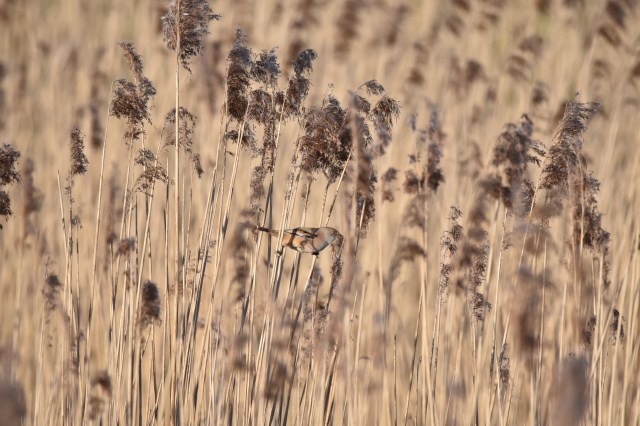
After lunch in the magnificent, modern Visitor Centre, we headed out again along the path which led to the beach. Again we were treated to loads of sightings: warblers (including a new one for me – a Cetti’s Warbler), waders (the photos below include two Ruffs in quite different plumage), a Little Egret, Swallows, Swifts, Skylarks, Greylag Geese, a curlew, a Water Pipit, a distant Marsh Harrier, and, best of all – another Bearded Tit! That made two Beardie sightings on two consecutive days, on two different reserves. One other notable sighting along the trail was a brief glimpse of a Chinese Water Deer – very unexpected!

By the time we got back to the car, around 4pm, we were feeling really buoyed-up. The weather was still great so we decided to call-in at Titchwell Marsh again on the way back to King’s Lynn.

By the time we reached Titchwell it was quiet. There were still a good few people around on the Beach Trail as we walked along the edge of the Reedbed towards Island Hide. There were more warblers around for us to try to photograph before they inevitably flew away quickly!

I couldn’t believe it when I managed to capture photographs of yet another Bearded Tit – unbelievable; two different Beardies in two different reserves on the same day!!

Bearded Tit

My second Bearded Tit sighting of the day

Norfolk is truly living-up to its well-deserved reputation for superb birding!

Sculthorpe Moor tomorrow – that was fantastic on our previous visit too. What will tomorrow bring, I wonder!!

Posted in Uncategorized | Leave a comment