Blacktoft Sands – 07 Jan 2018

After a three month hiatus in our birding trips, Helen and I made a very welcome visit to Blacktoft Sands today.

It was a beautiful (if cold) January afternoon, with barely a cloud in the sky. On arrival we discovered a bus-load of visiting birders had come-up from the Leicester area for the day – no doubt hoping for a glimpse of the recently-returned Hen Harriers.

Helen and I decided to walk up to Marshlands Hide first. It’s one of my favourites at Blacktoft, and the scene of many great bird sightings over my 30 visits to this reserve. Unfortunately, today was a disappointment; a single, distant Shelduck and a juvenile Little Grebe were the only birds that we spotted here today. I scoured the distant reeds, as I generally do here, trying to spot some Bearded Tits, but none presented themselves today. Our next ports of call to Xerox Hide and First Hide were similarly bereft of avian-life today. I did manage to grab a few shots of Magpies and Woodpigeons flying across the front of the hides with lovely sunshine on them, but there wasn’t much else to get excited about today.

By the time we reached Singleton Hide at the bottom of the trail, we had finally caught-up with all the visiting birders. Singleton was absolutley packed to the point where it was standing room only. This is not uncommon for Singleton, as it’s easily the best location for spotting all the varieties of Harriers that are present at Blacktoft.

True to form, we didn’t have to wait long to see our first Marsh Harriers of 2018. A number of them were coming in to roost, with at times up to four of them in one tree!

It’s always very exciting to watch these magnificent raptors as they soar above the reeds in search of their prey. A quick bit of memory recall reminded me that out of 30 visits to Blacktoft Sands, I have only failed to see any ‘Marshies’ on one single visit so far.
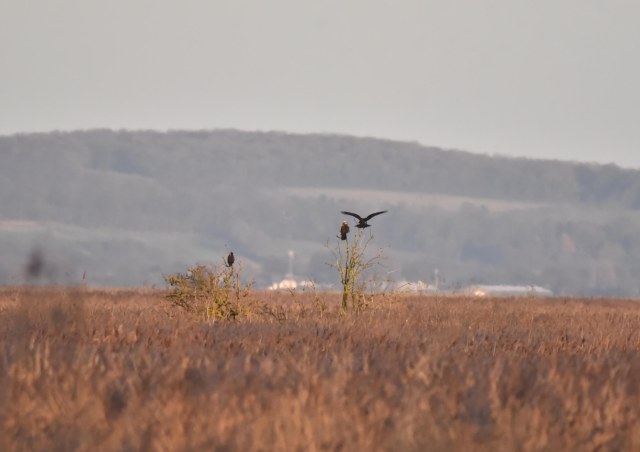
Marsh Harriers

A number of Tree Sparrows and assorted other garden birds were very voluble at the feeders as we took our leave of the reserve. I scoured the trees in this area for Fieldfares and Redwings, but alas, none were to be found today.

We had a lovely walk around Blacktoft Sands, despite the paucity of bird-life, and we were glad to feel the fresh air in our lungs at the start of what will hopefully be another exciting birding-year.
Posted in Uncategorized | Leave a comment

Old Moor – 28 Sep 2017

It was a beautiful, sunny, late-Summer day today and I was lucky enough to be able to spend an hour at Old Moor this afternoon.

With only an hour available to me, I had to choose between Green Lane and the Reedbed Trail. I was quite tempted by the Reedbed Trail because Kingfishers and Bearded Tits are still showing well from the Bittern and Reedbed Hides respectively, but, in the end it was Green Lane with its plethora of choices that won out. Being a big fan of waders, in particular, the Main Mere and the hides along Green Lane that serve it are an almost irresistible draw for me.

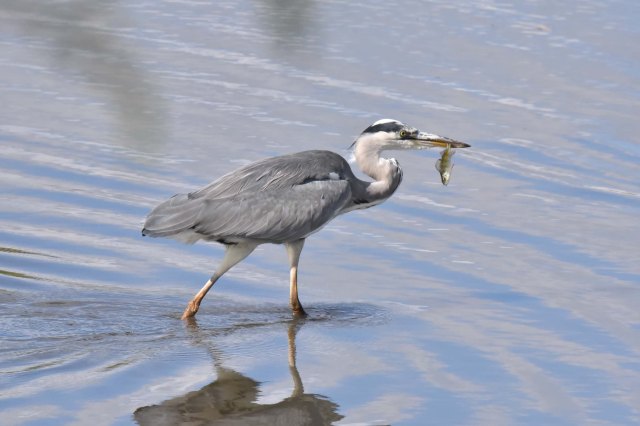
Grey Heron

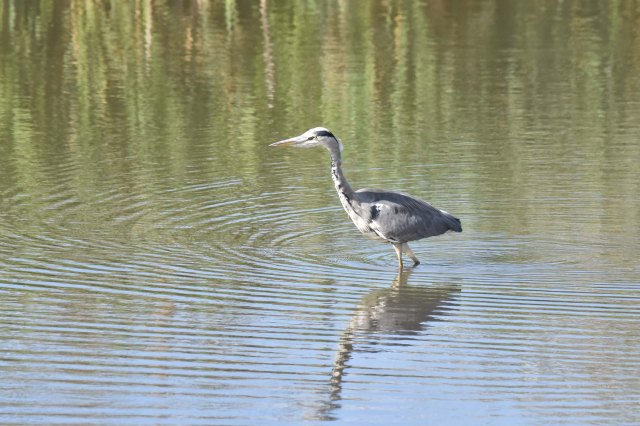
A Grey Heron fishing near Wath Ings Hide

I called-in at the Family Hide first of all. As I sat down at the windows overlooking the mere, I immediately noticed that the water levels had sunk quite a bit since my last visit. The mud at the front of the hide is nicely exposed now, and looks ideal for waders. No longer dominated by Black Headed Gulls by this time of year, the predominant species here today was Lapwing – loads of them – and although they can make quite a racket in large numbers, they’re nowhere near as noisy as the gulls! A large number of Canada Geese were also present on the mere, and today only a single Cormorant was sunning itself on the rocks near the hide; normally, there are several of these strange, prehistoric-looking birds perched on the rocks here, drying out their wings.

Next, I walked up Green Lane, hearing a good many small birds singing in the trees as I went. Alas, as usual, the birds are much easier to hear than to see, let-alone take photographs of!

From Field Pool East, I could see my first Wigeon of the Autumn; a group of them were scratching about in the grass at the margins of the Main Mere. As I looked along to my left, I could make out a smallish wader amongst a large group of Lapwing. I decided I would see it much better from Wath Ings Hide, so I quickly relocated up there.

The hide was quite full, on my arrival, and there was some excited chatter going-on from the birders gathered there; they had also spotted the bird I had seen from Field Pool East, and it was a Curlew Sandpiper. I hadn’t seen one of those for quite some time and so I was pleased to take a few images of what turned  out to be a pair of them. Later-on, after I had departed, a total of three of them were reported on the blog later in the evening.

Another good sighting I had today, was of a number of Ruff, looking resplendent in the sunshine. I was very surpised when a fellow birder informed me that a recent count had found some 55 Ruff on the Main Mere – a record number for Old Moor.

The afternoon sunshine was just perfect as I realised a Grey Heron was fishing in the shallow water very close to my position. Over the next ten minutes or so, as I watched the bird, it caught several small fish, and then one fairly large one that I was able to identify as a perch. The bird was in no immediate rush to swallow its prey, and I was able to fire-off a sequence of images, with the unfortunate victim desperately-wriggling in the Heron’s beak, before it disappeared down the bird’s gullet. ‘Nature red in tooth and claw’, is an Alfred Lord Tennyson quotation that frequently comes to mind when I watch predatory birds catching and dispatching their prey. I know they’re only doing what comes naturally to them, but Herons, seem to be particularly and ruthlessly-efficient killers, who effortlessly catch and swallow a large variety of birds, fish and amphibians.

Heron with Perch

A writhing perch, soon to be no more…

Time was against me, so I made my way back to the car park, pleased with my visit once again. Old Moor never disappoints.

Posted in Uncategorized | Leave a comment

Harewood Estate – 15 Sep 2017

Helen and I were staying in Leeds last night and today we took the opportunity to visit Harewood, a few miles to the North of the city, in order to look for the Red Kites, for which the area is well-known.

We parked at Muddy Boots Cafe in the village and walked along the tree-lined Church Lane, which runs next to the boundary wall of Harewood Estate. After about half a mile we came to a clearing and the landscape opened-up before us, providing a lovely view of the surrounding area.

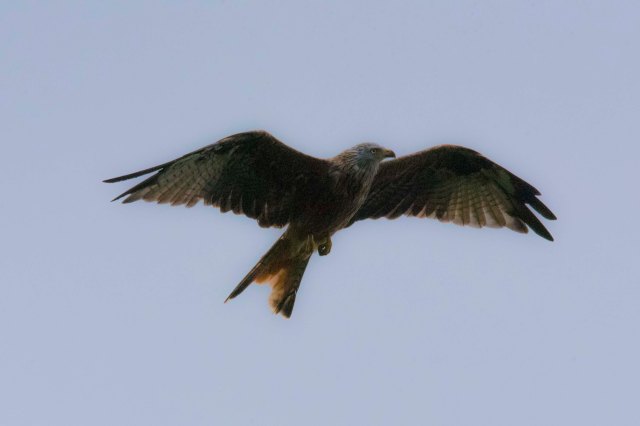
Within five minutes we saw our first Red Kite, which was circling around the edge of the woods that we had just past. The bird was a little bit distant from our position, but it gave us confidence that we had chosen a good spot to look for the Kites.

Red Kite 01

A beautiful Red Kite on the Harewood Estate

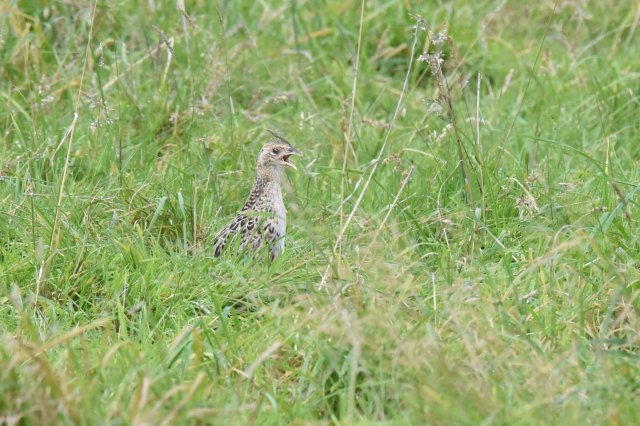
As we stood waiting for our next sighting, we became aware of a quite plaintive ‘cheeping’ coming from somewhere not too far in front of us, in the field where we stood. After scouring the landscape before us for a few moments, Helen spotted a pale shape in the long grass about fifty feet from our position. It was a juvenile Pheasant. The bird was well-camouflaged, but we were able to get a few photographs of its head sticking up from its place of cover.

Pheasant

A juvenile Pheasant calls for its parent

After about five more minutes, a pair of  Kites appeared overhead, this time providing rather better views. Unfortunately, the sky was rather grey, which made it difficult to photograph the birds well, but over the next few minutes we took a number of photographs as the birds circled overhead.

We walked back along to the cafe and enjoyed a cup of tea sitting at one of the picnic tables outside the cafe.

Next time we visit this location, we’re going to be at the cafe in time for the afternoon feeding session, when the staff of the cafe put out food which draws the birds right down to the cafe building itself!

Posted in Uncategorized | Leave a comment

Old Moor – 12 Sep 2017

I visited Old Moor for the first time in a while today. There had been a favourable weather forecast and I hadn’t visited my ‘home’ reserve in several weeks, so today was finally the day.

Unfortunately, the weather was a bit of a disappointment – there were a few brief sunny interludes, but mostly it was grey and rainy.

Not to be daunted, I set off towards the Bittern Hide, hoping to see some of the recent regularly-spotted Kingfishers and/or Green Woodpeckers on display there. There were quite a few serious birders present in the hide, and the hot topic of conversation amongst them was the Kilnsea Wetlands reserve near Spurn Point. I made a mental note to visit there as soon as possible.

Unfortunately, things were very quiet from the Bittern Hide today – a Kingfisher flashed across in front of me briefly, but it didn’t land at all, so no photos were possible during the three seconds or so the bird was visible! After about half an hour, I decided to walk up Green Lane to try my luck there instead.

Green Sandpiper

A lone Green Sandpiper at Wath Ings

My first call was at the Family Hide, where I was very pleasantly pleased to see that the mud-scrape area in front of the hide has been hugely improved since my last visit. There’s plenty of scope for waders to be there now, and indeed, a good number of Lapwing were present at the water’s edge today. Several Cormorant were also present, drying their wings, perched on the few boulders near the hide.

Next, I moved up to Wath Ings to see what was going-on up there today. Once again, the dominant bird-species present was the Lapwing, with several hundred being present on the mud here. A few Golden Plover were also present, and numbers of those will surely increase in the next few weeks. After I had scoured the large flock for a few minutes, I noticed a single Black-Tailed Godwit amongst them, and whilst I was watching that,  a small wader flew across and landed quite near the hide. I was pleased when I quickly recognised it as a Green Sandpiper – I hadn’t seen one of those for ages! As it was to turn out, that bird was to prove to be my greatest photographic success of the day.

The last hide I visited today was the Wader Scrape. Hundreds of Canada Geese were on the islands and the grass bank just in front of the hide. A small flock of Starlings were flying around, presumably practicing for the murmurations that, hopefully, will soon be thrilling the early-evening visitors to Old Moor again soon.

As I left the reserve and walked over to the car park, I spotted a Kestrel flying overhead and managed to fire-off a few shots of it before I departed for home.

Posted in Uncategorized | Leave a comment

Loch Garten – 01 Sep 2017

It’s a year to the day since Helen and I first visited Loch Garten in the Cairngorms National Park, so it was quite fitting that we should have returned there today.

As last year, we were too late in the Summer to see any Ospreys, as they have all set-off on their return trip to Africa by September each year. However, with lots of other enticing species on offer at this superb reserve, we were both quite excited to be there again.
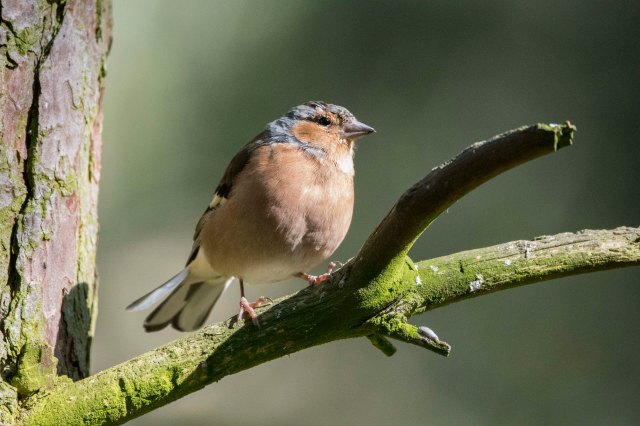
Chaffinch

A lovely male Chaffinch

We first stopped at the kiosk near the car park, where we had excellent views of a Crested Tit last time. There were literally dozens of birds on the feeders there today: Coal Tit, Great Tit, Chaffinch and Blue Tit were all present in good numbers. No Crested Tit there today though, alas.

It was fairly quiet as we walked through the beautiful woodland towards the Visitors’ Center and I began to get the feeling that today was going to be a bit of a let-down. However, the feeders at the VC were thronging with birds and the light was very good, it being a lovely, sunny day.

Over the course of an hour or so we took photographs of Coal, Great, Blue and Crested Tits, a Great Spotted Woodpecker, Greenfinch, Chaffinch, Siskin, and a very tame Woodpigeon. We were particularly pleased to see a Crested Tit again, of course, especially given that the Cairngorms National Park is the one and only place they occur in the whole of the British Isles. The one we saw today regularly visited the feeders at the VC, but never stayed more than a few seconds on each visit, which made it all the more challenging to photograph!

Helen and I both agreed that we need to spend longer at Loch Garten next time, to explore some of the woodland trails. Let’s hope it won’t be another full year before we come back here again!

Posted in Uncategorized | Leave a comment

Loch of Kinnordy – 08 Aug 2017

I’m up in Scotland again at the moment, and paid a short visit to the RSPB’s reserve at the Loch of Kinnordy this afternoon.

Kinnordy is a fairly small reserve with just three hides. However, I’ve seen some really good birds here in the past, (including fishing Ospreys on two occasions) and hoped that today would be equally productive.

The Gullery Hide is only a few, short yards from the car park, and I was soon sitting in the hide scouring the loch, the reedbed and the sky above for whatever birds were on offer.
Unfortunately, the loch itself was very quiet today – apart from some seventeen mute Swans gliding gracefully around the water, and a couple of Lapwings sitting on the island in front of the hide. However, within about five minutes I spotted an Osprey to the West of the Gullery Hide, and watched it flying around in circles for the next ten minutes or so, during which I was able to capture several reasonable images of the bird before it disappeared from view.

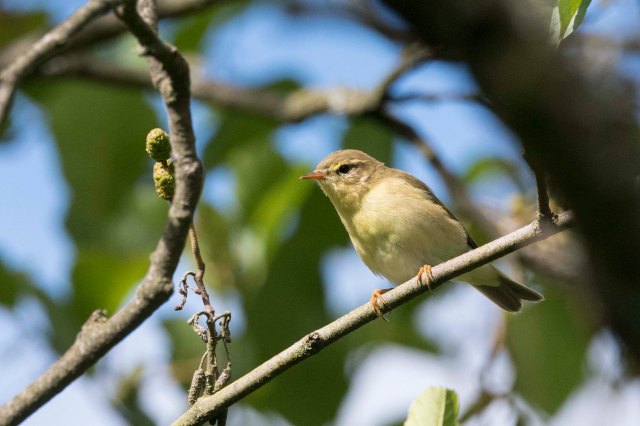
Next, I walked up to the Swamp Hide at the Western end of the reserve. Whilst again the view of the loch from the hide was somewhat devoid of birds, I was delighted to observe several Willow Warblers in the trees on the way back from the hide. They flitted around in the willows just a few feet from me, during which I rattled-off a good many photographs.

DSC_7754b

A beautiful Willow Warbler

The East Hide was also quiet today, so I made my way back to the car, nonetheless pleased with the photographs I had taken.

Posted in Uncategorized | Leave a comment

Middleton Lakes – 14 Jul 2017

Yet another new reserve today – the RSPB’s Middleton Lakes reserve near Tamworth in Staffordshire. Helen and I had been meaning to visit here for some time and today was the day it came to pass.

It was late afternoon on a fairly warm day when we arrived. There aren’t a lot of facilities at Middleton Lakes, as yet, but tents and gazebos were busily being erected at the entrance point to the reserve, by the car park, as we arrived. One of the RSPB staff informed us that they were in the process of setting-up for a barbecue for the reserve’s volunteers. And why not – good for them. They’d certainly chosen a very pleasant evening for it!

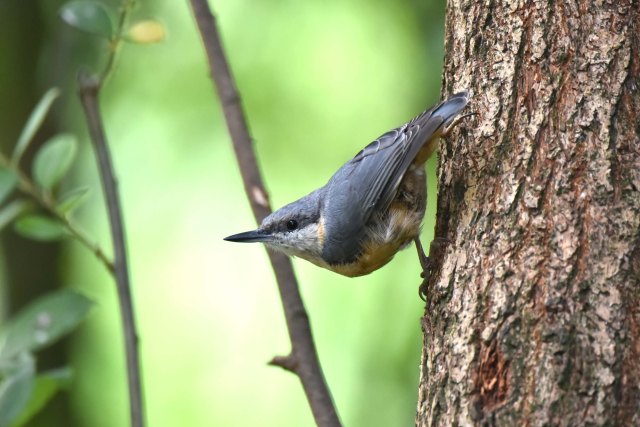
Nuthatch

A Nuthatch poses briefly

Starting out on the trail leading around the reserve, we soon came on the location of a large heronry, as marked on the site map. Although there were no Herons currently breeding here, we could see that it would be an interesting place to visit when they were.

From the large viewing point adjacent to the heronry, we soon moved around the corner to the viewing screen infront of a number of bird feeders. This was a fabulous spot; the feeders were swarming with birds, whilst in the nearby trees a Great Spotted Woodpecker was flitting up and down the branches. We stayed here for around twenty minutes watching Sparrows, Goldfinches, Blue Tits, Great Tits, Chaffinches and a single Nuthatch, all busy at the feeders, whilst underneath them, a Mallard and some ducklings hoovered-up the grains that were falling from above.

As we carried-on along the woodland path, we saw (and heard) a variety of small birds flitting around in the undergrowth. At one point we stopped by a stream to photograph a group of Wrens by the water’s edge. It was unusual to see a group of Wrens together, as they’re normally solitary birds.

Whilst watching the Wrens, we suddenly heard a very distinctive birdcall from the trees around us; the unmistakeable ‘yaffling’ of a Green Woodpecker. Due to the sheer density of the foliage on the trees amongst which we were standing, I decided it was very unlikely we’d actually spot the bird itself. However, as neither of us had ever seen a Green Woodpecker before, it didn’t stop us from eagerly scouring the trees.

We followed the path a bit more until it opened up into a bit of a clearing, and then, very briefly, I spotted the bird flying up into the branches of a large oak tree, and out of sight. After holding our breath for a few seconds, it reappeared and flew off into some other trees. No time to catch it with a camera, alas, but it was nonetheless exciting to have finally seen a Green Woodpecker for the first time.

Next we walked up to the West Scrape, viewing Common Tern and catching a brief glimpse of a Sedge Warbler on the way. The viewing point at the scrape is a large and impressive structure, where we sat and watched a variety of waterfowl for about twenty minutes before we decided to return back towards the car park.

Back at the car park, the staff barbeque was in full-swing, and the burgers smelled fabulous!

Just as we were packing our equipment away in the car boot, we suddenly heard the Green Woodpecker again, off in the distance somewhere. We decided we’d come back to Middleton Lakes for a full day visit next time.

Posted in Uncategorized | Leave a comment

Alkborough Flats – 08 Jul 2017

It was a brand new reserve for me today – Alkborough Flats in North Lincolnshire. I first heard of Alkborough about three years ago and have been meaning to visit there ever since. Well, today was the day when it finally happened!

Of course I’ve been geographically very near to Alkborough on numerous previous occasions, given that it’s only about a mile West of Blacktoft Sands. Being located on opposite banks of the Humber-Trent confluence, however, with no convenient river-crossing, the two reserves are a good distance apart by road – 22 miles according to Google Maps.

From the Western-most hide at Blacktoft – Singleton Hide – you can easily see Alkborough village and it’s impressive church tower standing on the hillside.

On arrival at Alkborough I first had to find the church and follow the steep downhill road which leads to the car park.

It was a bright, sunny day and I was determined to see the Spoonbills which have been onsite here for some time. The other species that I’ve heard Alkborough is renowned for is it’s Bearded Tits. I was full of anticipation!

Well, I didn’t have long to wait.

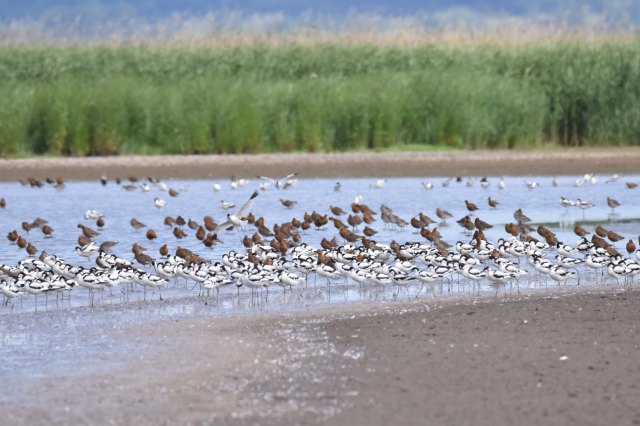
Avocet & Godwit

A portion of the massive flock of Avocet and Black Tailed Godwit

On entering the ‘Main Hide’, which is only a few hundred yards from the car park, I was immediately struck by two things – I was looking out onto a mud-flat with the biggest mixed flock of Avocet and Black Tailed Godwit I’d ever seen, and, in the distance a group of Spoonbills were sifting the water for food. There must have been at least 300 hundred Avocet and more than a hundred Godwits in the mixed flock. A number of Spotted Redshank, Black Headed Gulls and Shelduck were also present.

I knew immediately that I’d be visiting Alkborough more frequently!

Although the spoonbills were rather distant from my location, I soon noticed an old, dead tree that they used as their roost. About six more Spoonbills were arranged on the branches, mostly dozing, but one or two seemed to be preening. Too distant for a decent photograph, but clearly identifiable as Spoonbills.


After spending a good half hour or so in the Main Hide, I decided to walk further up the West-facing path I had embarked upon. All the way up the path there were vast reedbeds and hedgerows on either side of me. I could hear any number of birds singing: Sedge Warblers, Reed Buntings, Reed Warblers, Chiffchaff and Skylarks. A Kestrel was hovering over the arable fields to my left. Further up the path a Heron was standing rigidly to attention, watching the water for movement. In short, it was glorious; a birder’s paradise almost!

I walked all the way up to Trent Falls hide which overlooks the confluence of the Ouse, Trent and Humber rivers. Although there wasn’t a lot to see there today, I’ve read that this is a fantastic spot from which to view passage migrants, and I could certainly see why. I shall have to make a point of returning here in September when the Autumn migration is in full-swing.

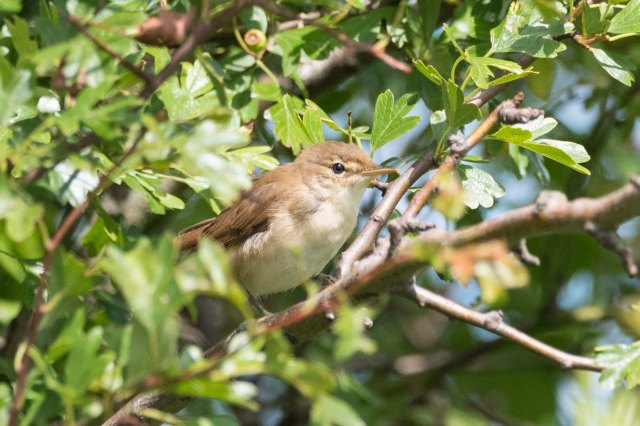
Reed Warbler

A lovely Reed Warbler looks out from a hawthorn bush

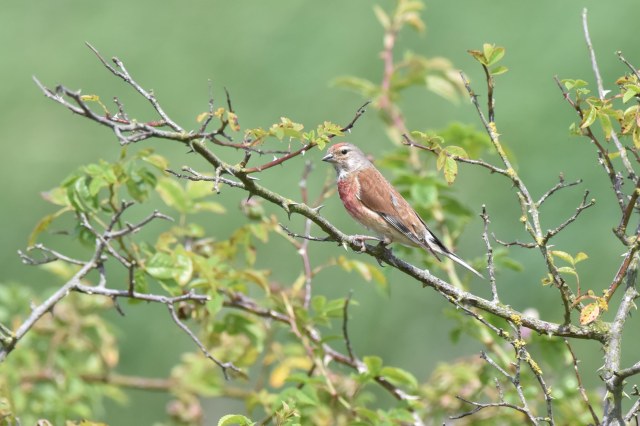
As I returned down the path towards the Main Hide again, I photographed a number of birds: several Reed Bunting, a Reed Warbler, a Wren, a skylark rising into the air whilst singing its long-unbroken song, and a beautiful male Linnet sat atop a Hawthorn bush, resplendent in full-summer breeding plumage. This bird was quite a poser and sat still for me for a good five minutes worth of photograph-taking.

Linnet

This Linnet posed for me for a good five minutes or so

Back in the Main Hide once again, I photographed a Sparrowhawk flying by with a rather large dead bird in its talons – at least I hope the poor victim was dead by this time!


A flurry of action in the tall reeds to my left and a juvenile Bearded Tit flew across right in front of the hide. I did my best to capture the bird, but unfortunately it was rendered completely out of focus by my camera during the few brief instants it was visible to me.

So, Alkborough really lived-up to its reputation today. I will no doubt be returning there before very long – watch this space!

Posted in Uncategorized | Leave a comment

Blacktoft Sands – 07 Jul 2017

It was a lovely, warm afternoon as I arrived at Blacktoft Sands on the Humber today. Blacktoft has long been one of my favourite birding locations, and I was excited to be there once again. Next to Old Moor, (my local reserve), Blacktoft is the one I have visited most often.

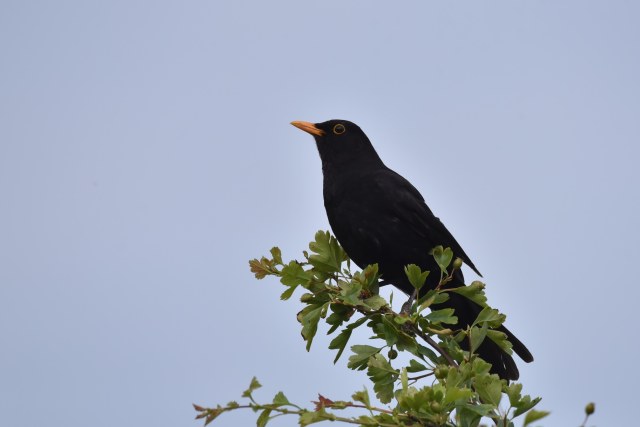
Blackbird

Today’s ‘greeter’ at Blacktoft was this very vocal Blackbird

I decided to start at Marshlands Hide first today, as I usually do.  There have been reports of lots of good waders and some Spoonbills on the reserve recently, and Marshlands is an excellent hide for seeing waders, so it seemed the obvious place to start.

Over the course of the next forty minutes or so I watched a variety of birds; a pair of Little Egrets having a noisy dispute; a Cormorant diving repeatedly for food; a juvenile Barn Owl leaving an Owl box and flexing its wings, and a possible glimpse of a pair of very distant Bearded Tits.

Next I moved down to Xerox Hide. From here I had an excellent view of two Ruff browsing the mud along the water’s edge. A couple of Greenshank and at least one Redshank were also present.

However, my real photographic thrill of the day was to come down at Singleton Hide, at the Eastern end of the reserve. This is normally the best hide from which to view the resident Marsh Harriers, and is usually the hide where I spend the longest time during my visits to Blacktoft. Curiously, the harriers weren’t much in evidence today, with only two very brief sightings, lasting only a few short seconds each. The thrill came instead from a number of Whitethroats which were flitting around in the tall weeds just in front of the hide. One individual, in particular, landed on a bush quite close to me and gave me time to rattle-off a good few frames, clear of any obscuring bits of reed or bushes (for once!). By the time the bird had gone, I knew I had captured some really good images.

Whitethroat

A beautiful, confiding Whitethroat from Singleton Hide

I hope it won’t be too long before I get back to Blacktoft again.

Posted in Uncategorized | Leave a comment

Old Moor – 04 Jul 2017

I went to Old Moor again today. It was warm but a bit cloudy as I walked around the reserve, and, as it was a Tuesday afternoon, it wasn’t too busy.

I first went to the Bittern Hide, the source of so many Bittern sightings over the last few weeks. The birds have had another successful breeding season at Old Moor this year, and multiple feeding flights are witnessed most days at the moment.

I stayed for about half an hour but there was very little about; a lone Little Egret fishing off in the distance, and the regulation Great Crested Grebe were the most exciting things I witnessed during my brief stay here today.

Next I took myself off up Green Lane in the direction of my favourite Old Moor hide – Wath Ings. I sat in the Field Pool West Hide for a few minutes and watched a family of Canada Geese foraging for food on the far bank. A large number of juvenile Black Headed Gulls were noisily-pestering their parents for food (a recurring theme over most of the reserve at the moment), and an assortment of Mallard, Coot and Moorhen were also in attendance.

Moving up to the Wader Scrape next, I was amazed to see just how many BHH Gulls (with nearly full-grown chicks in attendance), were present. There were very few other birds around due to the sheer numbers of gulls – they were just everywhere today!

Back on the path, on the short walk to Wath Ings from the Wader Scrape, and I was treated to the sight of a rather nice pair of Linnets on the path ahead of me. At last something good, I thought to myself! I managed to take a few quick frames before the birds departed again, but I was pleased to have seen them, at least.

In Wath Ings Hide, the star performer of the day was a Little Egret which was fishing in the shallows just below the hide. As I watched the bird over the next few minutes, it must have caught at least half a dozen small fish, which very quickly disappeared down its gaping jaws each time.

On the way back down Green Lane again, I took a brief detour to look for small birds at the recently-installed viewing screen. The spot has long been a great location for a variety of small woodland birds such as Blackcap, Willow Tit and Chiffchaff. As I approached the viewing screen, I became aware of a Linnet perched at the top of a nearby tree, giving me excellent views of its full breeding plumage, resplendent with its red chest feathers. The bird stayed put for a good few minutes, graciously allowing me plenty of time to get some good shots before it finally decided it had posed long-enough and flew off. I was very pleased as my previous ‘best Linnet shot’ was not as good as I would have wanted, and today I achieved a much better image.

Linnet

A Linnet in full breeding plumage

As I continued down Green Lane, I passed a spot where on numerous previous occasions I had heard (but never seen!) a Sedge Warbler singing in the reeds immediately adjacent to the path. Today it was there again – singing its heart-out whilst I stood only a few, short feet away, peering hopefully at the Reeds, hoping for a sight of the bird. The Sedge Warbler is an amazing singer and it always fills me with awe as its song rambles-on for ages, seemingly without end!

On this occasion I managed a few tantalising glimpses of the bird through the reeds, but couldn’t see enough of it to capture a photograph. I wasn’t too disappointed though, it was exciting-enough to be so close to such a fabulous bird.

I left Old Moor feeling very pleased to have seen some really good birds. Old Moor never disappoints.

Posted in Uncategorized | Leave a comment