Titchwell Marsh – 29 April 2016

Day 2 of our Birding Adventure took Helen and I to Titchwell Marsh RSPB in Norfolk. We’ve been here a few times before, and it’s definitely one of the best RSPB reserves there is – we love it!

The weather was sunny on arrival but there was a stiff breeze blowing. The forecast was for poorer weather later in the day, so we went prepared with our big coats, scarves and gloves.

We decided to walk along to the Fen Hide and Patsy’s Reedbed first off. Last time we were here we photographed a fabulous Sedge Warbler in the reeds in front of the Fen Hide and we were hoping for a similar experience today. However, a quick stop at the bird feeders behind the Visitor Centre gave us a great view of a Jay as our first bit of excitement for the day.
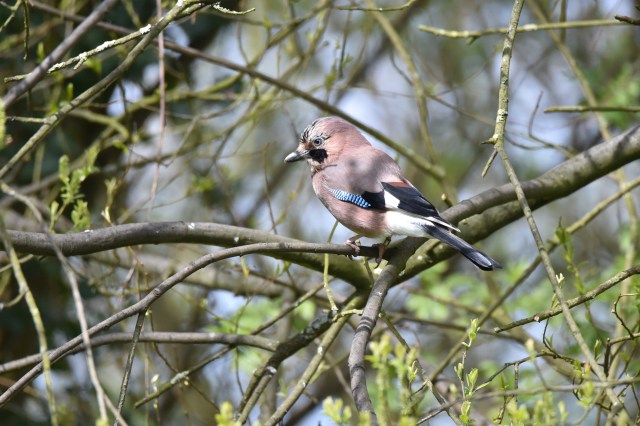
Jay

As we walked along the new boardwalk leading to the Fen Hide, we met and had a brief discussion with another birder who was returning in the direction of the Visitor Centre. He informed us that there were some Red Crested Pochard on Patsy’s Reedbed so we decided to go up to the viewing screen there to start.

Right as we had been told, a group of three male and one female Red Crested Pochard were on the water not far from us. Whilst we were watching the Pochards we suddenly realised a Red Kite was flying overhead. A new bird for Helen and an improvement in my Bird List for me! A couple of Marsh Harriers were also patrolling the reedbed. Today was shaping up really well so far!

When we walked into Fen Hide we were immediately, slightly disappointed because the reeds in front of the hide had been cut down and the new ones coming through weren’t yet tall enough for any birds to perch on, as we had hoped. However, as we sat looking out we began to see small birds darting in and out of the mature reeds about 80-100 metres in front of us. Imagine our surprise when Helen managed to capture one on camera and we discovered they were Bearded Tits! Over the next 45 minutes or so, Helen and I both managed to capture some images of the Beardies. All our images are a bit distant and probably won’t  win any prizes, but they are good enough to show without any doubt that at least one male/female pair of Bearded Tits were bringing back food to hungry chicks in a nest somewhere in the reeds. Our only other Bearded Tit photos were from Minsmere last year, so we were very glad to see these ones today.

After a drink and quick snack back at the Visitor Centre we headed down the path which leads eventually to the beach. We could hear various warblers in the reeds adjacent to the path, but the stiff breeze today was keeping them low down and out of sight, unfortunately.

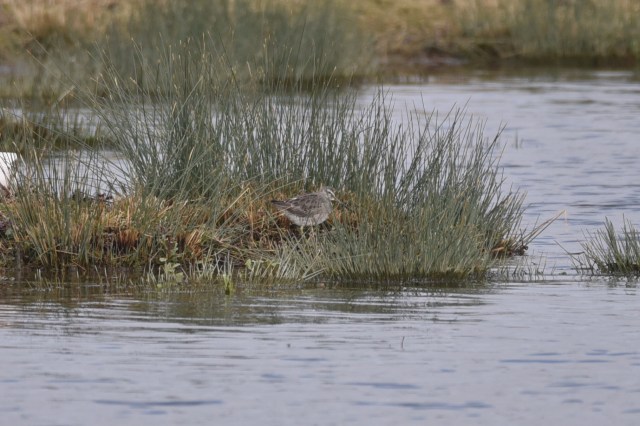
In the Island Hide we could see a huge group of Black Tailed Godwits on an island out on the Fresh Marsh. They were all in full, orange-breasted breeding plumage and looked great. A single Dunlin was weaving in and out of the group, dwarfed by the much larger Godwits. A few Avocet were wading in deep-ish water sifting away through the mud at their feet.

Next we went into Parinder Hide where we continued to watch the Godwits and Avocets out on the muddy marsh. A Water Pipit landed briefly to one side of the hide but didn’t stay long.

It had become very windy by this time, and rain was trying to fall, so we decided not to go all the way up to the beach on this occasion. We were both really beginning  to feel the cold, so we decided to return to the Visitor-Centre end of the reserve again and the comparative shelter of the Meadow Trail.

We soon found ourselves back in the Fen Hide again, once more trying to take shots of the Bearded Tits!

By 5pm we felt we’d had enough adventure for one day, so we headed back to the car. As usual, Titchwell Marsh had proved to be a fabulous and exciting reserve, even on a cold and blustery day like today!

Our species total for the trip so far had risen to 59 different birds.

Roll-on tomorrow!
Posted in Uncategorized | Leave a comment

Rutland Water – 28 April 2016

Today was Day 1 of a five-day Birding ‘Adventure’ for Helen and me. We are going to be visiting some of our favourite Norfolk nature reserves, but today we visited Rutland Water on the way before heading for our hotel near King’s Lynn.

It was bright and sunny when we arrived, if a little breezy. We wanted to see the Ospreys on Manton Bay so we headed up to Lagoon 4 and settled ourselves in Dunlin Hide.

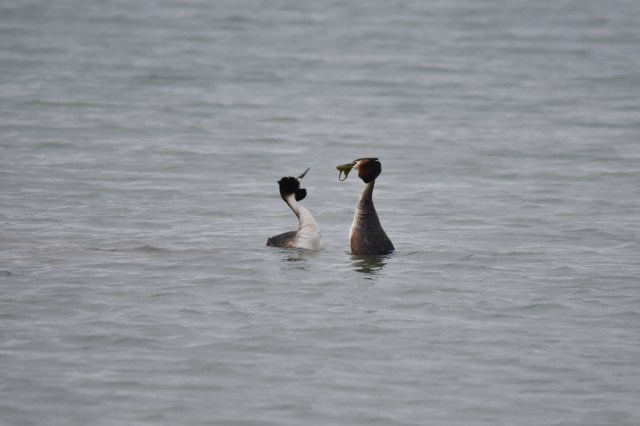
The first sighting we had was of a pair of Great Crested Grebes which were carrying out their distinctive courtship display, rearing up in the water whilst facing each other complete with mouthfulls of weed. This was the first time Helen and I had witnessed the full courtship display and it was great to watch.

DSC_1894

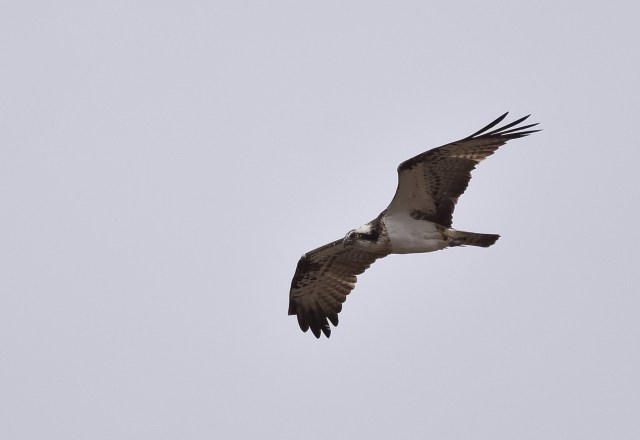
A few minutes later an Osprey appeared and began fishing over the lagoon. We were excited to have another opportunity to photograph a specimen of this very special bird. Twice, whilst we were watching, the Osprey dived into the water, but neither time was it able to catch a fish. Mind you, the poor thing was being continually harried by groups of  either lapwings or gulls, which must have been distracting to say the least!

Following our stay in Dunlin Hide, we next visited Shoveler Hide and the other hides on Lagoon 3 where we saw a few Common Terns, a Long Tailed Tit and a Wren, amongst other birds.

Unfortunately, by this time the weather had broken down; it was now raining and had become quite cold so we didn’t stay long before returning to the Visitor Centre for a much needed hot chocolate.

As we sat in the Visitor Centre we began to make a list of the birds we had seen. 38 species, on what turned out to be quite a nasty day, was good going!

Posted in Uncategorized | Leave a comment

Blacktoft Sands – 21 Apr 2016

Another magnificent and sunny Spring Day today – so I decided to visit Blacktoft Sands. Two kinds of birds really get me excited – waders & warblers. Blacktoft usually has both in abundance.

Just of late there have been reports of mass migrations of huge numbers of Black-Tailed Godwits, so I wasn’t sure what I’d find in the wader department, but I’d read only yesterday that there were warblers singing all over the site, so I felt confident about those, at least.

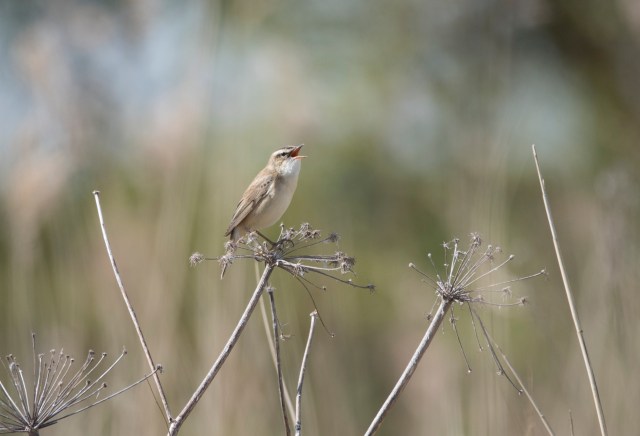
Before I’d even made the obligatory check-in at Reception Hide, I could hear songbirds and warblers singing all over the carpark area and approach-path through the reeds. Almost immediately, I spotted a beautiful Sedge Warbler singing its heart out atop a clump of weeds in the reedbed about 50ft away. Click, click, click went my camera shutter, and the first good bird was in the bag for today!

DSC_1364b

A cracking Sedge Warbler near Reception Hide

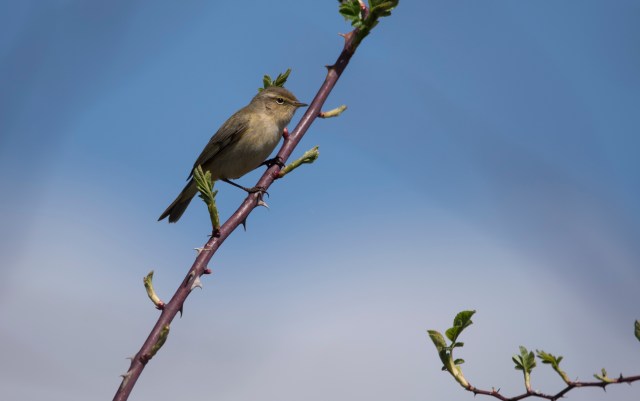
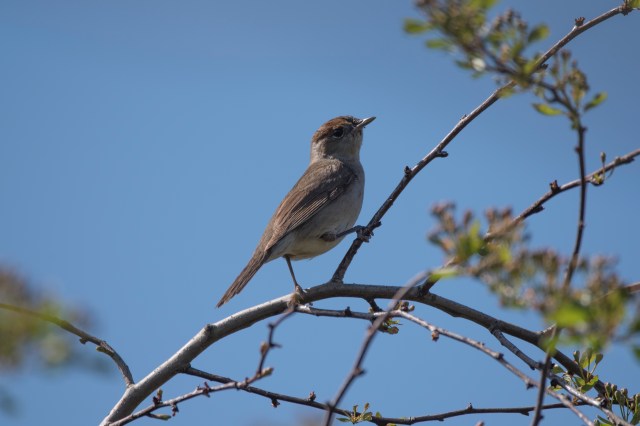
After reporting-in, I made my way to each of the three hides to the East of the Reception Hide first of all today. All the way up to Ousefleet I could hear, and occasionally glimpse, Sedge Warblers, Willow Warblers, Chiffchaffs, Cetti’s Warblers and an assortment of other birds including Blackcap, Dunnock and Blue Tit. It was just great to hear so many fabulous birds announcing their presence on the reserve. Photographically, of course, it’s very hard to capture these small ‘flighty’ birds; they are well camouflaged and constantly flit about through the bushes; the only Blackcap shot I got today was of a male, and it was desperately out of focus! However, if it wasn’t hard it wouldn’t be nearly as much fun!

Wader-wise it was a bit of a disappointment again due to the continuing high water-levels in the lagoons. However, there were a great many Avocet around, and I took a few photos of a huge flock of them flying over Marshlands Lagoon once I had walked down to the three hides at the West end of the reserve.

The other bird that Blacktoft is particularly noted for is the Marsh Harrier. Today was my 21st visit to Blacktoft and only once in all of those visits have I not seen at least one harrier. A magnificent male bird flew quite close-in to First Hide whilst I was in there today. It settled on a fence post about 150 yards away and I was able to watch it for a good few minutes before it took of again and continued to patrol the reedbed looking for prey.

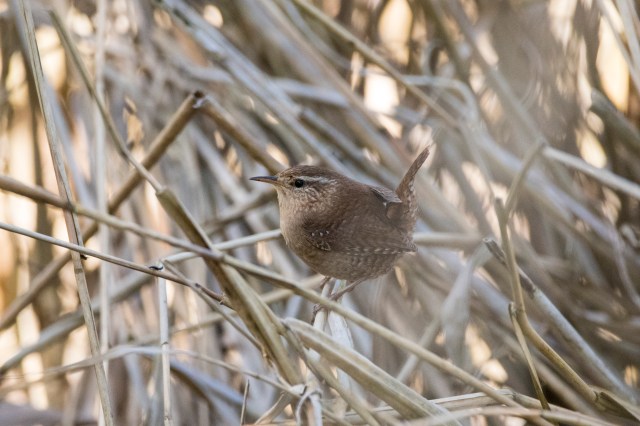
As I walked back towards the car-park I was once again able to see, and photograph, a variety of small birds including Chiffchaff, Willow Warbler, Sedge Warbler and a very tame and obliging Wren. I was hoping to spot a Whitethroat – I got a photograph of a really nice specimen here last year, and I’ve yet to see a Whitethroat this year. However, I’ll have to keep looking.

DSC_1871b

A beautiful Wren in the reeds.


One final note: once again I heard a Bittern booming in the reeds near First Hide. One day…

Posted in Uncategorized | Leave a comment

Old Moor – 19 Apr 2016

It was the most glorious day today and I could think of nowhere I’d rather be than in the Dearne Valley at Old Moor.

A Bittern has been seen quite a lot round at the Reedbed area of late and I decided to try my luck again. When I got to the Reedbed Screen the light was just great and I promised myself I would give it at least a full hour in the hope of finally seeing a Bittern.

Whilst sitting there I struck up conversation with a friendly chap named Mike Good, who, like me, turned out to be a retired teacher turned keen birder. Mike had already been there an hour when I arrived and hadn’t seen hide nor hair of anything much at all. Sadly, that was to remain the case for the next hour too!

Next I made my way along to the Reedbed Hide and stayed there for at least the next half hour. Highlights here were: a pair of Coots squabbling and doing their feet-fighting for a bit, a pair of Great Crested Grebes looking resplendent in the sunlight, and a quite tame Little Grebe which was fishing so near to the front of the hide that I had difficulty making my long lens focus on it since it was so close!

I next made my way round to Green Lane and first looked in at the Family Hide. There are still hundreds and hundreds of Black Headed Gulls dominating the Main Mere, but I did manage to get a few good shots of a Lesser Black-Backed Gull, and a beautiful Gadwall which was showing well with the sunlight showing up its feather-detail to great effect. Also, it was great to see the ‘Sand Martin Hotel’ busy with lots of Martins zooming in and out of the various tunnels provided for them. I snapped a few shots of them, but they were so fast and so distant that I didn’t expect much, and as it turns out – I was right not to!

Next I spent a few minutes in the Field Pool West Hide photographing the only Wader I saw all day – a solitary Redshank, before I emerged and met up with Mike again on the path just outside the hide. From here we walked up Green Lane together sharing various birding experiences. It turned out that Mike and I had visited a great many places in common. He was looking forward to a forthcoming first-visit to the Farne Islands, and I was glad to share some of my experiences there which I hope will be of use to him when he gets there.

As we walked up Green Lane in the direction of the Wader Scrape and Wath Ings Hides, we began to realise just how many small birds were singing around us in the trees. We photographed Chiffchaffs, a Blue Tit, a Robin and a Willow Warbler along the lane before meeting another regular Old Moor birder who told us that he had just been to Field Pool East Hide where there were Blackcaps in the trees nearby. Mike and I spent the next forty minutes or so photographing a female Blackcap, a couple of Long Tailed Tits and another Willow Warbler in the trees by the hide. All in beautiful, warm sunshine.

Willow Warbler

A glorious Willow Warbler on Green Lane.

My knees were beginning to ache a bit after standing still for so long, so I decided to call it a day. Since I was so close to Wath Ings I thought I’d just have a quick look in. Sadly, the water level is higher than ever, so no waders at all for now.

Blackcap

A female Blackcap outside Field Pool East Hide.

As I made my way back down towards the Visitor’s Centre, I met and had a brief conversation with a lady called Amanda, who is one of the reserve’s volunteers. She informed me that there was an ongoing issue with the Environment Agency in trying to get a pump to reduce the water level at Wath Ings. Let’s hope that situation is soon resolved so that Wath Ings can resume its status as ‘Wader Heaven’ – in my mind at least!

Last bird of the day – as I was talking with Amanda near the entrance to Field Pool West Hide, a fabulous Sparrowhawk zoomed overhead. There was no time to get my camera up for a photo, but It was the only raptor I’d seen all day, and a welcome addition to the day’s count.

Posted in Uncategorized | Leave a comment

Frampton Marsh – 17 Apr 2016

I went to Frampton Marsh today. It was quite a nice Spring day when I arrived; the sun was shining again and there was very little breeze.

No sooner had I left the car when I spotted two Ruff about 50ft from me on a pond by the car-park. I quickly got my camera ready and took a few shots of them. There are usually a good many Ruff at Frampton, and at certain times of the year they really confuse some less-experienced birders with the range of variability of their plumage. This was a handsome pair with the male, in particular, showing signs of his moult into breeding plumage.

I walked down towards the sea wall hoping to catch a glimpse (or more!) of the Spotted Redshanks that had been reported there this week. Helen and I had great views of a male Spot-Red in full breeding plumage at the same spot on a previous visit, last year. Alas, no Spotted Redshanks today; the water levels in the various ponds and lagoons around the reserve still seem a bit high to me, which means that there are currently far fewer islands for waders to land on (and feed from) than I’ve seen here before.

I next walked along the sea wall itself, keeping a watchful eye out over the salt-marsh in the hope of seeing a Wheatear – they had also been reported here this week, (along with Yellow and White Wagtails), and once again Helen and I had seen one here on a previous visit. Well, I had no trouble finding the White Wagtails, but I didn’t see any Wheatear or Yellow Wagtails today. I did see a rather distant Meadow Pipit, however. They’re always a pleasure to see.

At around this point I found myself dogged by a group of about half a dozen little girls aged about six or seven, who were running excitedly along the sea wall (near where I was), well-ahead of their parents, and shouting their heads off. Several birds that I was ‘stalking’ were put to flight. As I realised I wasn’t easily going to get away from the noisy little ratbags, who somehow seemed to want to keep pace with me, I decided to abandon walking all the way round the sea wall and returned the way I had come. I know, I know, it was a Sunday, and it’s really good for youngsters to be out in the fresh air enjoying the nature around them etc etc, but still – grrr!

After that I walked to the 360° Hide, which is usually a great spot for watching waders. Today I watched some Avocet and Black Headed Gulls, both of which species were nesting on the islands near the hide. There were a few Redshank and assorted ducks including Teal, Shoveler and Gadwall about as well. In the distance I could see large groups of Brent Geese still present on the reserve. There was also a solitary Ringed Plover sitting at the edge of one of the islands.

Next, I spent a few minutes in the Reedbed Hide, where I scanned the various islands in front of me. I knew there were a couple of Mediterranean Gulls out there somewhere, but it was much too difficult to pick them out amongst the thousands of breeding Black Headed Gulls that have completely swamped the islands currently. 

As I walked back up the path to the car, I photographed a lovely Reed Bunting perched in a tree against a beautiful blue sky. That was probably my best bird of the day, photographically speaking.

Not one of my best birding photography days then, but it was nonetheless great to be out in the fresh air, listening to Skylarks floating high in the sky above me and assorted warblers lurking somewhere in the hedgerows, just out of sight. Frampton Marsh remains one of my favourite reserves.

Posted in Uncategorized | Leave a comment

Blacktoft Sands – 10 Apr 2016

169 – Long Eared Owl

It was Blacktoft Sands today – my 20th visit there. It was a lovely day when Helen and I arrived; the sun was shining and it was around 13°c. Lots of birds were chirping in the car-park trees.

DSC_0382

You have to screw-up your eyes a bit, and use your imagination, but there really is a Long Eared Owl behind all that vegetation! Not one of my best bird pics!

We decided to head-up to Ousefleet Hide first. There have been a number of good wader sightings up there of late, and we wanted to try to see the much-reported Long Eared Owl at roost near there.

We had no difficulty finding the spot as there were a number of other people there too, all trying to glimpse the magical bird behind a veritable thicket of trees branches – you’d almost think the bird wanted privacy whilst it roosted! Helen and I jostled with the others, (politely of course!) and took loads of shots of the area of the trees where we were reliably informed the bird was located.

It was extremely difficult, to say the least; because of the amount and density of the obscuring vegetation, it was necessary to use manual-focussing on our cameras. Auto-focussing was hopeless with all the branches etc in the way of the bird. Now, trying to hand-hold a very heavy camera/long lens combination with one hand whilst simultaneously trying to manually-focus on a bird you can’t really see properly with the other, is quite a challenge! As you can see from the image above, I wasn’t very succesful!

Ah well, wild bird photography wouldn’t be much fun if it wasn’t hard sometimes – or perhaps that should be most of the time?

Up at the hide we saw lots of Avocet and a few Eurasian Teals; I routinely scan all Teals now in the hope of spotting a rare, Green Winged one. There had been one reported at Blacktoft a few days earlier, and you never know!

Next we visited Marshlands Hide, followed by Xerox Hide, First Hide and finally Townend Hide. (By this time the weather had altered significantly and we were begin to get quite cold, so we decided not to visit the final hide – Singleton – on this occasion.)

At each hide we visited today we had sightings of Marsh Harriers – for which Blacktoft is renowned. It’s always great to watch these majestic raptors as they patrol the reedbeds looking for their next prey-victims, or display-flying with their mates in the air above. Watching their regular food-handovers is always quite exciting.

There were a number of warblers audible in the reeds today, and most notably, Helen and I heard a Bittern booming on no fewer than three separate occasions. Still no Bittern sightings, alas, but I’m a bit more convinced now that they are real after all!

Posted in Uncategorized | Leave a comment

Loch of Kinnordy – 05 April 2016

Raptor Day! That’s the only way to describe today’s visit to the Loch of Kinnordy’s RSPB reserve. In the hour or so that I was there I saw four different raptors: Marsh Harrier, Peregrine, Osprey and Buzzard. Not bad at all!

As I was visiting my mum in Forfar, it was nice to be able to fit in a quick visit to Kinnordy today. The weather was a bit dull and damp but it wasn’t cold at all.

Within five minutes of entering Gullery Hide, I spotted a pair of Marsh Harriers over the reedbed at the far side of the loch. They were patrolling the reeds, watching out for something to prey on. A number of Oystercatchers on an island in front of the hide flew up into the air when a Peregrine Falcon flew overhead. A good start to today’s birding session.

On moving up to Swamp Hide, I next saw a group of Whooper Swans fly over and land on the loch. It’s always good to see Whoopers. As I was gazing out the window of the hide, I suddenly spotted a dark shape in the sky out of the corner of my eye. It was an Osprey showing really well, and not too far from me. I rattled off a good number of shots before it was lost to view. Three raptors so far…

Osprey

Next I walked down to East Hide. From here I was able to watch the Osprey again. Well, I think it was the same one – I couldn’t read its number plate from where I was! Whilst I was watching it flying around in lazy circles, watching the water with its keen eyes, a Buzzard flew into view from my right. This was a beautiful specimen, and once again not too far from my location. Four raptors photographed today now! What a good haul.
An assortment of the ‘usual suspects’ were showing nicely on the bird feeders. I watched for a while in case there were any unusual birds present. Blue Tits, Great Tits, Chaffinches and a Tree Sparrow – all nice birds but nothing more exciting, alas. (Last time Helen and I visited Kinnordy we watched a red squirrel at one of the feeders).

Returning to Gullery Hide again, I once more watched the pair of Marsh Harriers displaying over the distant reedbed before I decided to call it a day and head home.

Kinnordy is another super reserve.

Posted in Uncategorized | Leave a comment

Old Moor – 25 Mar 2016 – Good Friday

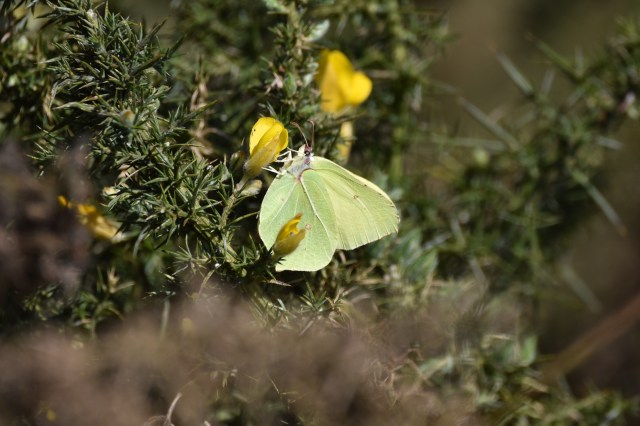
It was an absolutely glorious day at Old Moor today. For the first time this year I saw several butterflies around the site, including a Brimstone, in the bushes near the Field Pool West hide.

dsc_9853

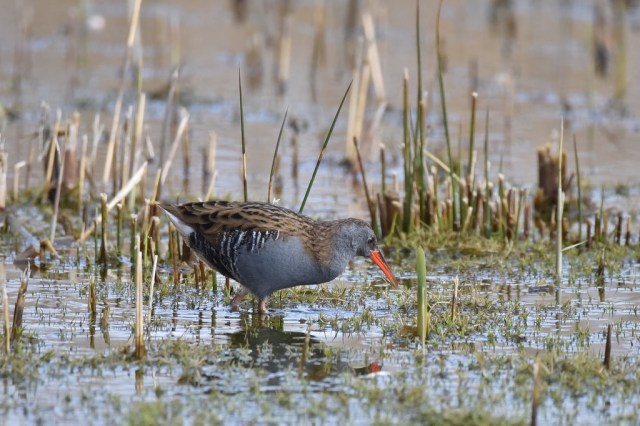
However, the real draw for today was the fact that an ‘early bird’ Barnsley Birder had tweeted a report of a Water Rail showing well in the channel in front of the Reedbed Screen at 08.30 this morning. I had seen photographed a pair of Water Rails at Caerlaverock on a cold, grey day back in December, but could I do better still today in glorious sunshine?

Helen and I had a brief stint in the Tree Sparrow Farm first, and we were very pleased to see a Brambling in one of the trees. Sadly, and as frustratingly usual (grrrr!), it was partially obscured by twigs and so the photos aren’t brilliant.

Moving on to the Reedbed Trail was definitely a wise move. We didn’t have to wait more than about ten minutes at the Reedbed Screen before the Water Rail showed itself; a gorgeous individual this one, with the sun shining on it to show it off to great effect, just as we had hoped. Over the course of half an hour or so we had several sightings of it during which we rattled of loads of photographs showing it either mooching-about in the reeds or swimming across the channel.

25981547301_efd6d084df_b

From here it’s only a few yards to the Reedbed Hide. Here we watched two Great Crested Grebes performing part of their elaborate courtship display. By the time we left the hide we were feeling quite pleased with the photographic opportunities we had enjoyed already.

On passing the Reedbed Screen again on the way back, the Water Rail was once more performing for the assembled birders. So we just had to take a few more shots of this usually very timid and rarely-seen bird!
Next, we walked around to the Family Hide in the hope of spotting the Med Gull which has been here for some time.

Black-headed Gull numbers at Old Moor must have just about reached their maximum by now though, and if there was a Med Gull in amongst them, we couldn’t find it! Sadly, time was against us and we had to leave to attend to some other things we had planned for the day. We both felt as though we could have stayed much longer. This was made much worse when we discovered later in the day that a Bittern had flown over the Reedbed just where we had been, about an hour after we had left! (Double grrrr!)

A great birding day for us though, nonetheless. We will get a Bittern one of these days!

Posted in Uncategorized | Leave a comment

Bempton Cliffs & North Cave – 20 Mar 2016

It was in July last year when Helen and I last visited Bempton Cliffs, and we’ve just been itching to get back there for ages. Well, today was the day!

The forecast was quite favourable, and we set off in high spirits looking forward to a great day of bird photography. The weather when we left Sheffield was much better than had been predicted by the BBC Weather app on my phone; the sun was shining and soon after departing the temperature had climbed to 14°c. Not only that, but the forecast for the Bridlington area was even better still. Had we skipped Spring altogether and gone straight for Summer?? Imagine our disappointment then, when the weather grew steadily worse on the way there, the sky had clouded over, the rain began to pour down and the temperature had fallen a full five degrees!

Bempton was bitterly cold! Poor Helen hadn’t even taken her big coat, let alone a scarf and gloves. Neither of us had assumed we’d need anything like that. Fortunately, i had taken my big coat with me even though i’d been sure it was not going to be needed. I really could have done with my scarf and gloves too though; it was seriously raw on the edge of the cliffs!

At least there were good numbers of seabirds for all that it was early days in the season as yet. There were plenty of Gannets, Kittiwakes, Fulmars and Herring Gulls buzzing around the cliffs. A few Razorbills and Guillemots rounded-out the seabird species for the day. No sign of any Puffins today, but they’ll be present soon enough. At the height of the breeding season Bempton truly is an incredible spectacle; around 250,000 seabirds are crammed onto the cliffs with every nook and cranny being used to perch on or as a precarious nesting site. The sky is packed with birds and it’s an amazing sight. The smell is truly horrendous, however!

Gannet

A Gannet flying over Bempton Cliffs

The reserve was looking very spruce, and there was much evidence of a lot of improvements to the paths and viewing platforms having taken place in preparation for the huge numbers of visitors who ‘flock’ to Bempton over the Spring and Summer months. The new visitor centre will soon be a year old now, and is a massive improvement on the old one. The volunteer staff are brilliant – very knowledgeable and welcoming.

After about an hour, we decided we needed a cup of hot chocolate to get our circulation going again – and to thaw-out our freezing hands! It also gave us an opportunity to look through the images we had taken so far today. I really wanted to capture a pin-sharp image of a Fulmar in flight. That had proved to be even more challenging today than usual. As you can see from the image above, there isn’t a huge contrast in colour between the Fulmar’s wings and the background sea on a dull day like today. My camera had struggled to acquire focus on the fast-moving birds. Couple that with the weight of my camera/lens combination and the buffetting winds… well, you get the idea!

We decided we’d call it a day at this point, and come back again in a few week’s time when the weather was likely to be more reliable(!) and there’d be even more birds. As it was still only about 2pm, we decided we had time to make a quick visit to North Cave Wetlands on the way back home. Helen still doesn’t have a Med Gull and there was a chance she’d get one there today.

On arrival at North Cave, we decided to go down to the bottom of Dryham Lane. Neither of us had previously been down there and we were both hugely impressed by the fabulous Crosslands Hide and its commanding views over the reserve. It’ll certainly be one to visit again. We saw lots of birds from here, including a beautiful male Ruff, several Redshanks, a few Oystercatchers and Little Egrets, amongst others. Sadly, we couldn’t spot any Med Gulls amongst the ever-burgeoning numbers of Black-Headed Gulls currently present on the site.

By the time we left the light was rapidly fading but we knew we’d had a good day of birding and were ready for some grub. We visited Whitby’s Fish & Chip Restaurant in Catcliffe on the way back into Sheffield. Wow! It has the best fish and chips in this area by a country mile!!

A good day all round then!

Posted in Uncategorized | Leave a comment

Rutland Water – 17 Mar 2016

168 – Long Billed Dowitcher

It’s the middle of March now and Spring is definitely upon us at last! At Rutland Water today lots of birds were singing in the trees whilst the sun shone brightly. It was 10ºc and it was nice not to have to be all bundled-up to keep out the chill, Wintery air.

What seemed like scores of volunteers were present on the site today, cutting grass, pruning trees, repairing hides etc. It must be a tremendous operation to organise and maintain such a large nature reserve and get it all spruced up for the forthcoming surge of visitors who will descend on Rutland during the Spring/Summer season!

My main reason for going to Rutland today was to try to see (and photograph) a very unusual visitor – A Long Billed Dowitcher. According to Wikipedia, their breeding grounds are in Siberia and North America, and it is a very rare visitor to Western Europe. This particular bird has been on Lagoon 3 in front of the Shoveler Hide at Rutland’s Anglian Birdwatching Centre at Egleton for over three weeks now, so I had high hopes I’d manage to see it today, as it seems to be in no great hurry to depart!

On arrival at the hide there were a number of other birders already present. A very kind eldery gentleman made way for me to sit in his spot on the bench, and even pointed out the Dowitcher for me, which I spotted readily. It was quite a long way off, unfortunately, and was snoozing-away with its long bill hidden from view, initially. However, patience paid off and after waiting a while, it did stir and allow me to see the extent of its long bill. The bird looks like a cross between a snipe and a godwit, if I’m honest!

Long Billed Dowitcher

A heavily cropped image of a rather distant Long Billed Dowitcher. New bird no 168!

On my last visit, I photographed a group of Smew from the Plover Hide, and hoped I might manage to get an even closer view of the very impressive drake bird on this occasion. (They have continually been reported at this location since my last visit.) Unfortunately, and as is so often the case in birding, there was absolutely no sign of them at all today. I did spot an extremely distant Ringed Plover on one of the island though – my first one of 2016. I do miss seeing large groups of mixed waders – they are very much my favourite birds.

From the Bittern Hide I watched a very impressive Grey Heron patiently waiting to snatch some lunch from the murky water it was standing in, and at the Osprey Hide I alternated between watching another Heron probing the undergrowth, and a pair of Blue Tits pecking away at a bullrush seed-head.

There were a number of Great Crested Grebes on the various lagoons today, but no sign of them performing their very impressive mating displays. I’ll photograph that one of these days!

Lots to see at Rutland, as ever. It remains a very impressive birding-watching reserve.

Posted in Uncategorized | Leave a comment