Blacktoft Sands – 08 Sep 2016

I visited Blacktoft today for the first time in ages! I got there about 11am and the sky was clear and fairly bright. There was a slight breeze but nothing to prevent the birds from flying. I realised some time ago that wind is much more of a problem when birding than rain. It doesn’t take much more than a light breeze to keep small birds tucked-up out of sight. That said, it can be much easier trying to photograph birds like Swifts or even Gannets struggling to make headway when flying into a howling gale!

Recent sightings-blog entries for Blacktoft have talked about the number of waders currently present on-site and I wanted to see what was there for myself.

At the Reception Hide the RSPB chap I spoke to informed me that Singleton Hide was very much the place to be today; Ousefleet was completely dry and Townend Hide was closed because of essential maintenance. That reduced me to four hides from which to choose today. Singleton and Marshlands are very much my favourites at Blacktoft, so there was no problem in that regard.

I walked down to Singleton Hide first and found a good many other birders in the hide when I got there. That’s normal for Singleton; it’s usually the best hide at Blacktoft, certainly for Marsh Harriers at least.
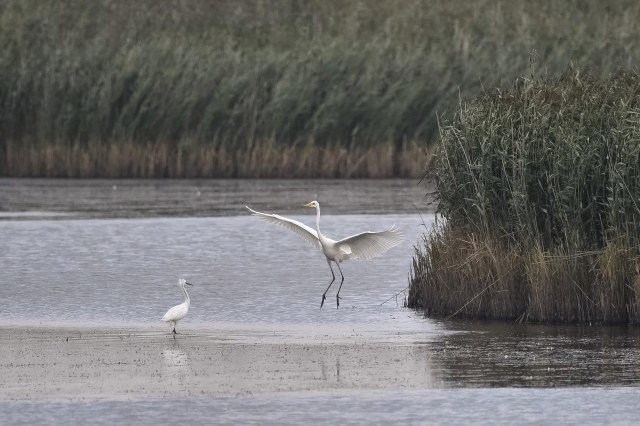
great-white-little-egrets

Great & Little Egrets

The headline news at Singleton today was the presence of a Great White Egret. It had been a while since I’d last seen one back at Welney Wetlands Centre in May, and I was glad to see one again today. There were loads of Little Egret and Heron about as well; at one point I counted no less than fifteen egrets on the water before me, (including the Great White) and about five Heron.

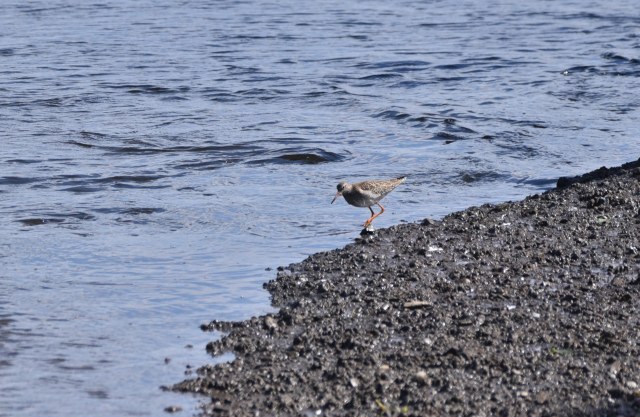
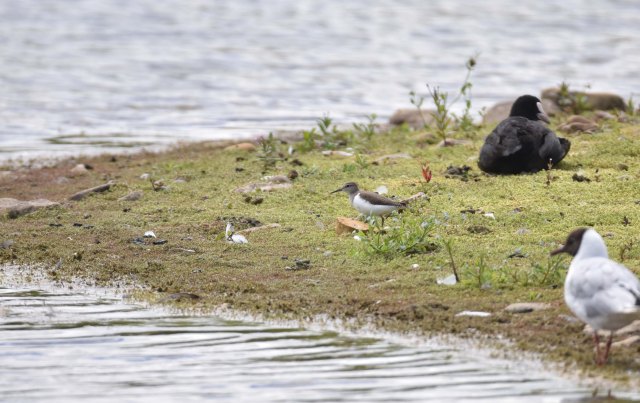
Other birds in large numbers were Black Tailed Godwit, Spotted Redshank and Common Redshank. There were also a smattering of Ruff and Snipe on one of the islands.

I watched all the birds for a good hour or so. Several times the Great White Egret was very closely-approached by one or more Heron. These birds often clash over their feeding territory and I sat poised, ready for any squabbling between them, but this Great White Egret was either very docile or the Herons were too afraid to challenge its dominance. At one point the Great White did ‘bully’ a Little White Egret briefly, but otherwise good behaviour prevailed! Drat!!

I moved up to Marshlands Hide next to see what was going on up there. In passing, I briefly looked-in at First Hide and Xerox Hide, but both seemed very quiet today. At Marshlands Hide I discovered the water level to be very low indeed. The water’s edge is usually about twenty to twenty five feet from the front of the hide. Today it was about double that with much of the mud being bone-dry.

However, there were a good many birds to be seen once I looked carefully; a large number of Lapwing were clearly visible, but it was only after peering very closely at the mud-bank for a while that I began to make out a number of Snipe roosting there. Their camouflage is so good that they were barely visible.

A flock of mid-moult Goldfinches landed briefly on one of the islands. It’s been a while since I’ve seen any of those too. I managed to capture a couple of half-decent images of the flock in flight. I really love the way my Nikon D750 can lock-on focus so quickly. Similarly, my Sigma 150-600 lens is really good at isolating birds in flight against an out-of-focus background. As with most things in this world ‘you get what you pay for’. There’s no doubt that the quality of the images I’m able to achieve is largely down to the quality of my kit.

Let’s hope my next birding ‘expedition’ produces more good images.

Posted in Uncategorized | Leave a comment

Old Moor – 06 Sep 2016

It was coming up to two months since my last visit to Old Moor, so I thought I’d best go there today to see if it was still there!

It was a warm day for September, but a bit muggy and overcast with it.

The Old Moor sightings blog has been keeping me up to date whilst I’ve been in Scotland this last month, and I was aware that there have been a great many sightings of Kingfishers on both Field Pool West and from the Bittern Hide. Since it’s now September and I had yet to even glimpse a Kingfisher so far this year, I set myself the task of spotting one today!

I briefly looked-in at the Family Hide before going to Field Pool West, where I had taken my ‘best-so-far’ Kingfisher image almost a year ago. Although I waited patiently for a good half hour, there was no sign of a Kingfisher here today, alas. There were, however,  loads of huge dragonflies buzzing about. They’re very hard to photograph sharply-focussed in flight, so I tried very hard to resist the temptation. I did manage to get one half-decent image, however. I was just glad I had the hide to myself whilst I waved my camera about like a madman trying to keep the dragonflies in my viewfinder!

Moving on to the Wader Scrape next allowed me to see how much the water levels have dropped at long last. The islands on the Mere have almost all joined together by this point. A gravel path has been added since my last visit, to allow livestock to cross over to the islands to graze the grass. Not much in the way of birds here today, but I did spot a very distant Common Sandpiper.

Wath Ings was my next port of call. There was a flock of several hundred Lapwing on the mud to the right of the hide. I spotted a single Golden Plover hiding amongst them; their numbers will start to swell in the coming weeks now, so I shall be on ‘Goldie Watch’ from now on. Also present, but not close-enough for any decent photographs were a pair of Green Sandpiper and three Ruff.

As I walked back down Green Lane I felt as though today had been a bit disappointing. Having been absent from Old Moor for all-but two months I really felt that all manner of different bird-species ought to have been out putting-on a dazzling display to welcome me back! I resolved to try the Bittern Hide before departing as I’ve had several good Kingfisher sightings here in the past.

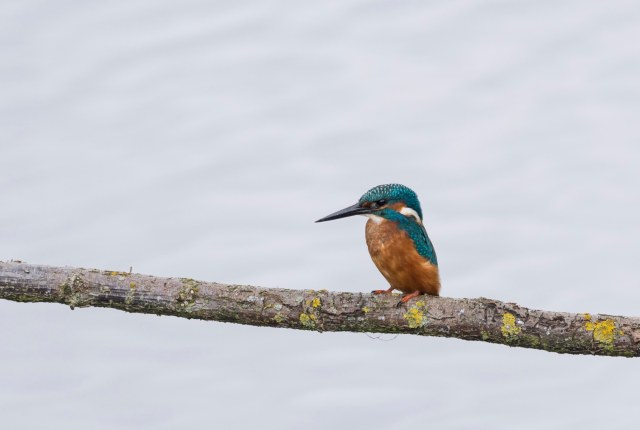
When I reached the hide there were about eight other people present who seemed to have the same idea as me. My timing was good though, because within five minutes of my arrival a beautiful Kingfisher flew in and landed on a perch immediately in front of the hide. Success!

kingfisher

A Kingfisher watches for fish from its perch

I watched the Kingfisher for a good 10-15 minutes before it finally flew off. During that time I was able to capture a good number of images of the bird, of which I am really pleased. My only slight grumble is that, having watched the bird for all this time, I had brieflty taken my eye off it for the critical moment when it dived into the water and caught a fish! Bother!

Like I’ve said before, Old Moor never disappoints; one bird, at least, pulled-out all the stops to welcome me back after my long absence!

Posted in Uncategorized | Leave a comment

Loch Garten – 01 Sep 2016

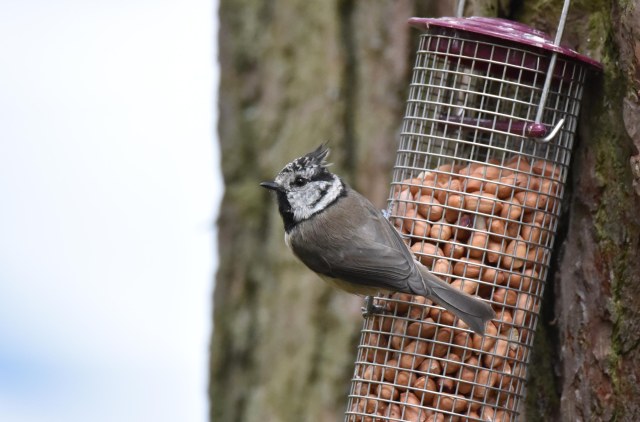
176 – Crested Tit

Crested Tit

Crested Tit

At long, long last I got to visit Loch Garten yesterday. Like the Loch of the Lowes, Scotland’s other Osprey centre, it’s a place I’ve wanted to visit since ever I can remember. Since we were staying at nearby Columbridge Hotel, Helen and I decided that yesterday was the day.

We were aware that this year’s Osprey breeding season was over and that the Ospreys had recently left for their African Winter home, but I personally hoped to see one of the area’s other fantastic inhabitants: the Crested Tit.

When we arrived at the reserve we found there is a reception kiosk (only in use during the Osprey breeding season). The reason I mention the kiosk is because there were some feeders set up on the trees around the kiosk, and as we walked towards it, the first bird I set eyes on was a Crested Tit! Success straight away!

As we walked along the path towards the main Osprey Visitor Centre we saw huge numbers of little birds in the trees around us. It was very difficult to photograph them, however, due to their rapid flitting about in the treetops, but we could see a large number of Coal Tits, amongst others. We also saw a few less common birds including a Great Spotted Woodpecker and a Treecreeper, both of which we were able to photograph successfully.

On the feeders by the Visitor Centre there were several Red Squirrels which posed very nicely for us. It’s always a pleasure to see those, and I’ve had loads of Red Squirrel sightings whilst being in Scotland this Summer.

Back at the entry kiosk again, Helen and I stood for twenty minutes or so during which we managed to take lots more pictures of a Crested Tit, along with Blue Tits, Great Tits, Chaffinches and the near ubiquitous Coal Tits.

It was a magical visit to Loch Garten. We very much want to visit there again, preferably during the Osprey season next time.

Posted in Uncategorized | Leave a comment

Arbroath Cliffs & Coastline – 30 Aug 2016

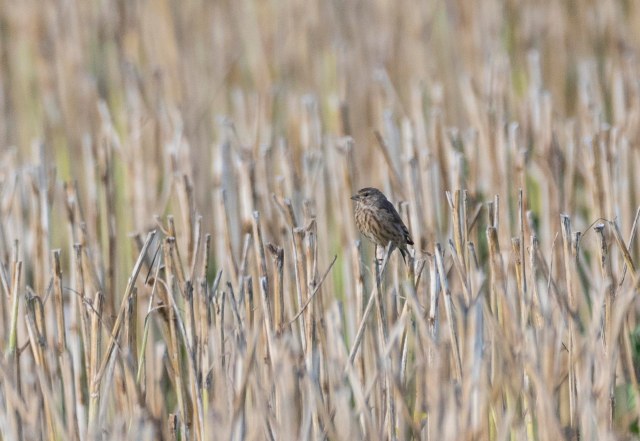
175Twite

Helen and I went to Arbroath today. At Victoria Park there is about a mile and a half of coastline immediately adjacent to King’s Drive which leads to the cliff-top path. Last week I got some fab pics of waders etc along here and I hoped we would see more of the same today. We were not disappointed.

Twite

A Twite in the stubble of a corn field

The weather was glorious and we spent an hour or so photographing birds along the shoreline. We saw: Ringed Plover, Dunlin, Sanderling, Turnstone, Curlew, Kittiwake, Redshank, Oystercatcher, Sandwich Tern, Herring Gull, Black Headed Gull, Lesser Black Backed Gull, House Martin, Pied Wagtail, Rock Pipit. Quite a haul!

Afterwards, we walked along the cliff-top path for a few minutes; it was a little bit windy up there so we didn’t go far! It was whilst we were walking along the path that we noticed some ‘small brown jobs’ in the corn stubble in the field on the other side of the path. They were a little bit distant, but they turned out to be Twite. Another new bird for me!

Good old Arbroath! I shall definitely be keeping an eye on the seafront here when I’m visiting Scotland in the future.

Posted in Uncategorized | Leave a comment

Morton Lochs & Arbroath Coastline – 21 Aug 2016

I went to a new reserve today – Morton Lochs in Tentsmuir Forest at the North-East corner of Fife.

There are four hides at Morton Lochs, three overlooking the lochs themselves and a fourth one which looks into woodland and has feeders set-up to attract small birds – and squirrels!

I visited two of the the lochside hides and watched a number of assorted waterfowl, several Herons and a distant Buzzard. A Kingfisher, not a very commonly-occuring species in Scotland generally, had been seen recently and there were a number of keen-eyed birders in the hides today hoping for a glimpse of the bird.

DSC_4473

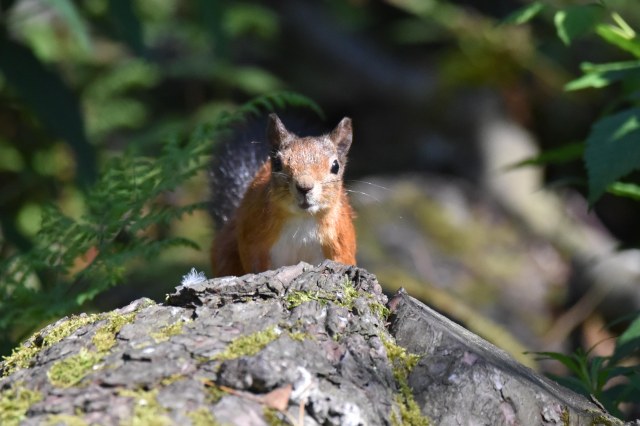
A cheeky Red Squirrel at Morton Lochs

My greatest successes of the visit, however, were at the woodland hide where I watched a pair of young squirrels helping themselves to the nuts in the feeders, and a good many small birds which were showing nicely in the afternoon sunshine.

DSC_4500

Morton Lochs, being located within the boundaries of the vast Tentsmuir Forest (50 square miles!) has great birding-potential; the woodland walk between the hides being a superb example. I’ll certainly be visiting here again. Furthermore, Tentsmuir beach is renowned for its wide range of (often exotic) passage-migrants – definitely an area to return to.

After visiting Morton Lochs, I decided to visit Victoria Park in Arbroath. The park runs alongside the seashore and leads to Arbroath Cliffs. On previous (non-birding) visits I have seen a large variety of seashore birds and I thought it might be worth a look. Wow did my hunch pay off!

DSC_5277

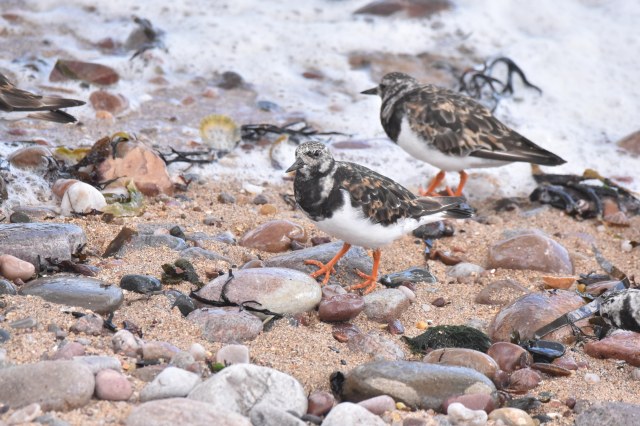
A pair of Turnstone from a flock of about a dozen birds wary of the incoming tide

Over the course of an hour or so I photographed a large number of seashore birds – many quite close-up. My ‘haul’ included: Redshank, Oystercatcher, Dunlin, Ruff, Turnstone, Ringed Plover, Lesser Black-Backed Gull, Herring Gull, Pied Wagtail, Rock Pipit, Common Tern & Sandwich Tern. All of these I photographed whilst standing a few feet from my car – a very sedentary birding experience altogether!

DSC_5171

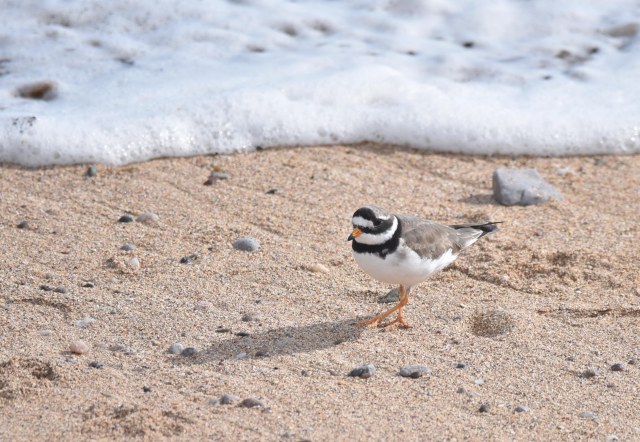
A beautiful Ringed Plover

On previous visits, whilst walking along the cliffs at Arbroath, I have commonly seen Kittiwake, Rock Doves, Fulmar and Shag. All things considered, Arbroath is a pretty excellent birding location!

Posted in Uncategorized | Leave a comment

Loch of the Lowes – 09 Aug 2016

I’ve wanted to visit the Loch of the Lowes since I was a little boy. I must have passed near the reserve hundreds of times in the past, enroute to Pitlochry or back home to Forfar, but it wasn’t until today that I finally visited it.

The Loch of the Lowes is famous as one of the two reserves where Ospreys returned to breed in Scotland in the late 1960s and has had breeding success there ever since.

The current breeding pair have successfully raised three chicks this year, and at this point in August all five birds are still present and active on the reserve. The young birds are now fully-fledged and are preparing for their first migration to Africa around the end of this month.

On walking from the car park to the Visitor Centre I was met by the ‘greeter’, a Red Squirrel which was perched on the fence post in front of me. I was able to fire-off a few shots of it before it disappeared into the undergrowth. This was a good start to the day and was my second Red Squirrel in two days.

In the Visitor Centre there is a huge panoramic window which looks out onto a woodland area with lots of bird feeders just outside the window. Almost the second I arrived at the window someone shouted-out that a Great Spotted Woodpecker had alighted on a tree just to my right. A few more frames ‘in the bag’ and I realised that today was shaping-up well so far!

There are two hides at the Loch of the Lowes; both are within spitting-distance of the Visitor Centre. One is a double-decker hide. That’s the one I chose to visit first.

I mounted the stairs and opened the door of the upper portion of the hide to find a number of visitors already present. Three spotting scopes are permanently attached to the bench at the front of the hide, and the one I sat down behind was already trained on two young Ospreys sitting in a tree directly in front of me, and about 200 metres away. The spotting-scopes gave an excellent view of the young birds as they preened themselves, getting their flight feathers in good condition ready for learning to fish on the loch, and for a life on the wing. The birds looked virtually indistinguishable from adult birds, having rapidly matured by eating lots of the trout from the loch already.

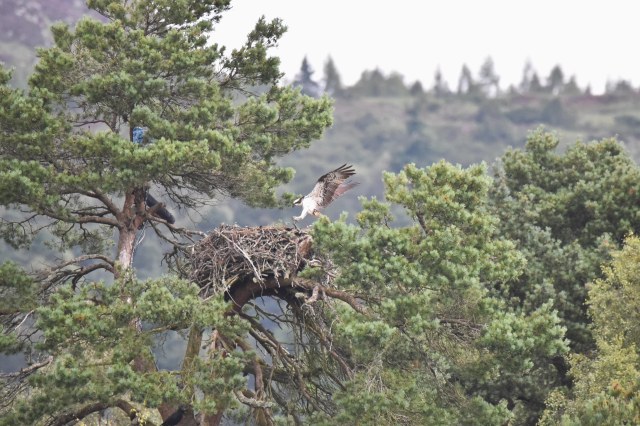
In a tree over to my left I noticed the nest, complete with one bird which I took to be an adult, sitting atop the great pile of assorted twigs and branches which comprised the huge nest platform.

DSC_4374

As I watched, the bird on the nest took off and joined another bird flying overhead. Over the next twenty minutes or so I watched spellbound as the two birds chased each other through the sky and performed a number of close passes, all within 100 metres or so of my position in the hide. Fantastic!

The second hide – the Crannog Hide, is a circular hide down near the water’s surface. I could well-imagine that this hide will be an excellent vantage point in the Winter months when the loch plays host to huge numbers of over-wintering  birds including Whooper Swans and Pink-Footed Geese. I made a mental note to return in December or January.

The Loch of the Lowes is a truly remarkable reserve and I’ll definitely be back before long!

Posted in Uncategorized | Leave a comment

The Lurgies (Montrose Basin) & the Loch of Kinnordy – 08 Aug 2016

I’m up in Forfar again just now and took the opportunity today to visit two of my favourite local birding venues – Montrose Basin and the RSPB’s Loch of Kinnordy reserve.

I hadn’t been to Montrose Basin for a while and was glad to be able to visit it again today. It was a lovely, sunny August morning when I arrived, but quite windy with it. It was low tide and so there was a vast expanse of mud stretching out before me as I looked out over the Lurgies area of the reserve. I could see large numbers of birds on the mud some distance from me, but unfortunately there was very little up close.

Not to be daunted, I walked along the path in the direction of the Bridge of Dun. Along the path here I’ve previously seen a large assortment of small birds in the trees and bushes to the left of the path, but unfortunately the strength of the wind was too great for any small birds to put in an appearance today.

A large number of Canada Geese were flying around over the mudflats as I watched, and a beautiful sunlit Cormorant flew diectly overhead, but the only decent sighting I had in my brief visit to the Basin today was of a beautiful Spotted Redshank as I returned along the path in the direction of the car.

DSC_3544

Spotted Redshank

As the day was still young I decided to drive to the Loch of Kinnordy near Kirriemuir. I’ve been to this reserve several times now and have had great success seeing Ospreys catching fish on the loch, along with other good raptors sightings including Marsh Harriers and Buzzards.

It was still breezy at Kinnordy, but being further inland, the wind was less strong.

The really striking thing about Kinnordy today was how overgrown everything was! The reeds had grown so tall that much of the loch was by now hidden from view. The only water birds visible here today were a few distant Mute Swans and a few ducks that were much too distant to be identifiable!

I decide to walk down to East Hide, passing the bird feeders as I went. This is where I had my best photographic successes of the day.

There were myriad small birds at the feeders; I saw Blue Tits, a Coal Tit, several Chaffinches and, something of a surprise – a Siskin. The greatest ‘poser’ of the day though was a Red Squirrel tucking into peanuts in one of the bird feeders, which didn’t seem to mind me gradually (and stealthily!) approaching ever closer to it, snapping away at it throughout.

Not one of my most productive birding days, then, but it’s always a pleasure to be out and about enjoying the countryside in all its glory.

Posted in Uncategorized | Leave a comment

Frampton Marsh – 30 Jul 2016

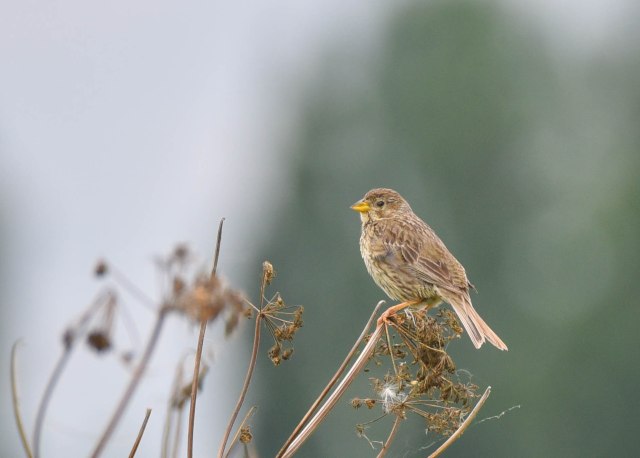
174 – Corn Bunting

DSC_3048

Corn Bunting

Helen and I went to Frampton Marsh today. It was a bright and fairly warm day with just a light breeze blowing – just perfect for a walk round one of our favourite reserves. I’d been watching the Frampton Marsh blog over the last few days and was aware of the huge numbers (and variety) of waders that were reported to be currently present on-site. A few days ago, in fact, no fewer than twenty-one different wader speciess were recorded from the 360° Hide alone! We wanted some of that!

On arrival we decided to walk down to the sea-wall first of all. We’ve had lots of sightings of good birds down there in the past and thought it would be a good place to start.

Immediately, we were able to see large numbers of Dunlin and Black Tailed Godwit on the marsh to the left of the path as we approached the sea-wall. Water levels have reduced dramatically since my last visit and this has created ideal wader conditions.

Our first real treat, though, was when we climbed the steps to the sea-wall and looked out over the salt marsh towards the Wash. In a bush just in front of us was a very tame Sedge Warbler which posed for us for a good couple of minutes. The bird was only a few feet away from us which allowed us to get some very detailed close-up images of it, albeit always partially obscured by annoying bits of shrubbery, as usual! A great start to the day though.
As we walked around the sea-wall in the direction of East Hide we saw a great many birds including a lovely Little Ringed Plover. I was particularly pleased to capture some images of that bird as my previous ‘best’ shot of a LRP left a fair bit to be desired!

Today’s sightings really started to mount-up though when we entered East Hide. There were at least fifteen other birders there already when we arrived, and we had to wait patiently for our turn to get anywhere near the front of the pack. The wait was well worth it though; just in front of the hide were a number of Ringed Plover, including two quite recently hatched chicks which were darting around the muddy margins of the water, pecking constantly at their feet to try to pick up any juicy morsels they could find. They were very fragile-looking bundles of fluff basically – but very nimble and agile with it. There were various cooing noises coming from the direction of some of the ladies present!

Other great birds we could see from East Hide included about a dozen Little Egrets, several Cormorants, a huge number of distant Black Tailed Godwits, a Spotted Redshank, several Mute Swans and a single Common Tern (which I didn’t notice at the time but discovered later at home on two of my images!).

After a half hour or so we left the hide and carried-on our circular walk in the direction of the 360° Hide. There are regularly-reported sightings of Corn Buntings in this area of the reserve, and Helen and I had yet to see one. However, today was our lucky day as a pair of Corn Buntings were perched atop some weeds along the trail and we were lucky enough to capture quite a few images of this new bird over the course of the next ten minutes or so.

As we left the spot where the birds were, we met some other birders coming in the opposite direction. I took the liberty of informing them of the presence of the Buntings, telling them exactly where to find them so that they could also enjoy the sighting. I mention this fact because it’s one of the great things about birding – the willingness to share information with complete strangers who obviously have a common interest. Wherever I’ve been birding I’ve always found it incredibly easy to strike-up conversation with fellow-birders, and to share information on what birds are present on the reserve on that day and where they were last seen. Birders really are lovely people!

Anyway – back to the plot! The 360° Hide was very busy today – and little wonder! Just in front of the hide, where Helen and I have previously had excellent wader sightings in the past, a large group of Dunlin were feeding on the mud right under our noses! The birds were totally oblivious to the birders in the hide and carried-on feeding regardless. A number of Black Tailed Godwits soon joined them and we had the most intimate, close-up views of these marvellous birds that we’d ever had. There were other birds also present including Avocet and Ruff, but it was the antics of the Godwits as they jostled each other for position that was most enjoyable to watch. They can be surprisingly noisy (and quite boisterous) when you’re up close to a group of them.

All too soon our time was up and we had to reluctantly head back towards the car park to drive back home. Today had been my tenth visit to Frampton Marsh. It is a truly fabulous reserve and continues to rank very highly in my list of favourite birding locations.

Posted in Uncategorized | Leave a comment

Blacktoft Sands – 19 Jul 2016

It was back to Blacktoft Sands this evening on the hottest day of the year so far. I couldn’t go during the day as the heat was just oppressive. As it was when I left my house at about 4pm the thermometer in my car was measuring the outside temperature as 39° celsius!

I picked up Helen and we arrived at Blacktoft at about 6.30pm. It was still over 30° C at that time so we decided we wouldn’t walk too far on this visit.

Our first port of call was Xerox Hide where I had seen a small flock of Spotted Redshank on my last visit. There was no sign of the Redshanks here today but we did see a fantastic aerial display by two Marsh Harriers right in front of the hide. The male had caught a small bird and passed it to the female before they both flew beyond where we could see them. After a while I noticed two Green Sandpipers off to the right of the hide. These were probably the same birds I had photographed on my last visit here three days ago.

It was when we went up to Marshlands Hide that we found a collection of waders – a mixed group of Spotted Redshank, Greenshank and Common Redshank were all present and showing really well in the evening sun towards the front of the lagoon. A Little Egret and some Lapwing completed the species variety we saw there. All the birds looked great with the evening sunshine on them.

We walked down past Reception Hide and First Hide to visit Townend Hide for the last few minutes of our visit. Although it was now about 7.30pm, it was still quite warm outside. A few Herons and a couple of Greylag Geese were about all we saw from this hide this evening. As we watched it gradually began to cloud over a bit and the light became rather too poor to take any more photographs.

As we left the hide and rejoined the main path back toward the car-park, our final bird-sighting of the night was a ‘flock’ of Wrens in one of the trees near the hide. Helen and I remarked that we couldn’t ever remember seeing a grouping of Wrens together before, and surmised that perhaps they were a family of recent hatchlings sticking together for now. Not a bad scheme little birds – there’s safety in numbers after all!

Posted in Uncategorized | Leave a comment

Hatfield Moors & Blacktoft Sands – 16 Jul 2016

I went somewhere new today – Hatfield Moors National Nature Reserve, near Doncaster. I hadn’t really meant to go there but thought I would call in for a quick look with a view to making a more thorough investigation of the reserve at a future date. As I had no reserve map with me, and there being no facility to obtain one whilst there, I only made a brief stop, visiting Boston Hide which is only a few yards from the car park.

It’s always interesting entering a new hide for the first time, wondering quite what you’ll see when you open the wooden shutters in order to look out. As I approached Boston Hide I had no idea what to expect as the area was dense with trees and shrubs which I couldn’t see beyond. As I lifted the wooden shutters I looked out onto quite a sizeable expanse of water with quite a few birds visible and many more singing in the nearby greenery.

I scoured the water margins nearby and quickly spotted a Common Sandpiper about 60 yards away from me. I took a few shots of it before it disappeared from view. Waders are probably my favourite bird, so I was pleased to have seen this bird.

DSC_2315b

A Common Sandpiper at Hatfield Moors

I spent about twenty minutes watching from the hide, but as nothing else of great interest appeared during that time, I decided to move on to Blacktoft Sands about twenty miles away.

At Blacktoft I decided first off to go up to Marshlands Lagoon. I’ve enjoyed many excellent bird sightings here in the past and hoped that today would be equally rewarding.

As I stepped in the door of the hide, the first thing I noticed was how much lower the water level was than I’d seen it in a long time. There was much more mud showing in front of the hide which meant much more wader-potential at long last.

As I settled in and started scouring everywhere I could see, another birder in the hide pointed out a group of Bearded Tits in the reeds off to my right. I took several photos of the rather distant birds, but at least they can be positively identified as Beardies!

DSC_2340

I know they’re hard to see but there are three Bearded Tits near the centre of this shot!

Also from Marshlands I coud see a pair of Snipe, on the nearest island, showing well in the sunshine despite their fabulous camouflage. A couple of Ruff were also present towards the back of the hide with a few Lapwings.

My next stop was Xerox hide which was pretty full of birders today. I always try to get to the upstairs level of this double-decker hide, if possible, but that wasn’t happening today! The reason was that there was a large, assorted group of Spotted Redshank, Common Redshank and Ruff all showing very well at the hide-side of the lagoon today. I couldn’t get a clear view of them over the tops of the reeds from my downstairs vantage point, but occasionally I could see a head or two popping above the level I was sitting at. My attention was soon distracted anyway by a lovely female Marsh Harrier which was sweeping back and forth overhead in search of prey. Today was my 25th visit to Blacktoft, and only on one of those previous occasions did I fail to see a single Marsh Harrier. They’re pretty-much guaranteed at Blacktoft Sands nowadays – a great species-recovery success story.

Next I called into First Hide where I watched a Little Grebe parent with a couple of chicks. Every time I come into this hide I’m reminded of the occasion this time last year when Helen and I sat here and watched a Heron steal a Little Grebe chick from its nest and swallow it whole, all whilst the distraught parent bird watched, powerless to stop the carnage. Horrible, but that’s nature for you, ‘Red in tooth and claw’ to quote Alfred Lord Tennyson.

My final stop of the day was at Townend Hide. Last year the lagoon here was completely resculpted to provide what is now a perfect wader habitat. There didn’t seem to be a lot here, at first, but as I continued to watch I became aware of a pair of Green Sandpiper off to the left-hand side of the lagoon, near the front. Little by little they edged closer and closer to the front of the lagoon until I had a really good sighting of them. I took a good many photos of them before they eventually upped and flew off.

I saw more different types of waders today than at any other time this year so far. Perhaps the Autumn will be a real bumper wader season this year??

Posted in Uncategorized | Leave a comment